The Power Dialer Script: How to Handle the First 5 Seconds

Put yourself in the seat of a modern sales person. Your headset is on, your coffee is kicked in, and your power dialer is running. The software is flawlessly eliminating ring times and bad numbers, moving you through your list at lightning speed.
Suddenly, a live voice cuts through the headset: "Hello?"
In that exact moment, you have to prove you are a peer, not a “telemarketer”. If you hesitate, stumble, or default to a generic opener, the prospect's guard goes up, and the call is effectively over before it began.
High-velocity dialing is an incredible way to scale your outbound volume, but it must confront a massive psychological challenge for reps: cold call anxiety. When you are dropped into back-to-back live conversations, the brain naturally looks for a safety net. For most reps, that safety net is a static, robotic script.
But modern buyers can spot a script instantly. Here is why traditional power dialer scripts are destroying your conversion rates, and the exact framework top-performing teams use to handle the first five seconds of a high-speed dial.
The Trap of Traditional B2B Cold Calling Scripts
When revenue leaders implement power dialing software, they usually give their reps a single, unified script. It looks something like this:
“Hi [Name], this is [Rep] from [Company]. How are you today? We help companies like yours increase revenue by 20%. Did I catch you at a bad time?”
At low volumes, this script is merely annoying. At the high velocity of a power dialer, it is pipeline poison.
If an SDR is making 100 dials a day and repeating that exact same paragraph every time a prospect answers, their voice flattens. The inflection disappears. They begin to sound like the very machines they are using to dial. The buyer immediately registers the "telemarketer tone" and defaults to their conditioned response: "I'm in a meeting, send me an email." Click.
You cannot use static B2B cold calling scripts with high-speed dialing. Because legacy dialer is calling different titles, across different industries, experiencing different pain points, a one-size-fits-all opener guarantees you will be irrelevant 90% of the time. Hot tip, modern power dialers solve this problem by grouping prospects by persona, follow-up status, likelihood to answer, and more.
The Cure for Cold Call Anxiety: Context Over Scripts
The root cause of cold call anxiety isn't a fear of the phone; it is a fear of being caught unprepared. When a power dialer drops a rep into a live call and they don't know why they are calling that specific person, the anxiety spikes.
To eliminate this panic and sound like a human, you must replace the static script with dynamic context.
Instead of a script, reps need an Observation. They need a tangible, observable reality about the prospect's business that justifies the interruption. When you open a call with an observation, you instantly disarm the buyer because you prove you have done your homework.
Bad vs. Good Outbound Sales Opening Lines
The Signal-Based opener wins every single time. It completely disguises the fact that you are using a power dialer because it feels like a bespoke, 1-to-1 interaction.
Equipping the Rep: In-Context Insights on the Glass
Here is the operational hurdle: If an SDR is moving at the speed of a power dialer, they do not have time to manually research every account on LinkedIn between dials. If they pause the dialer to look for an observation, they lose the velocity advantage.
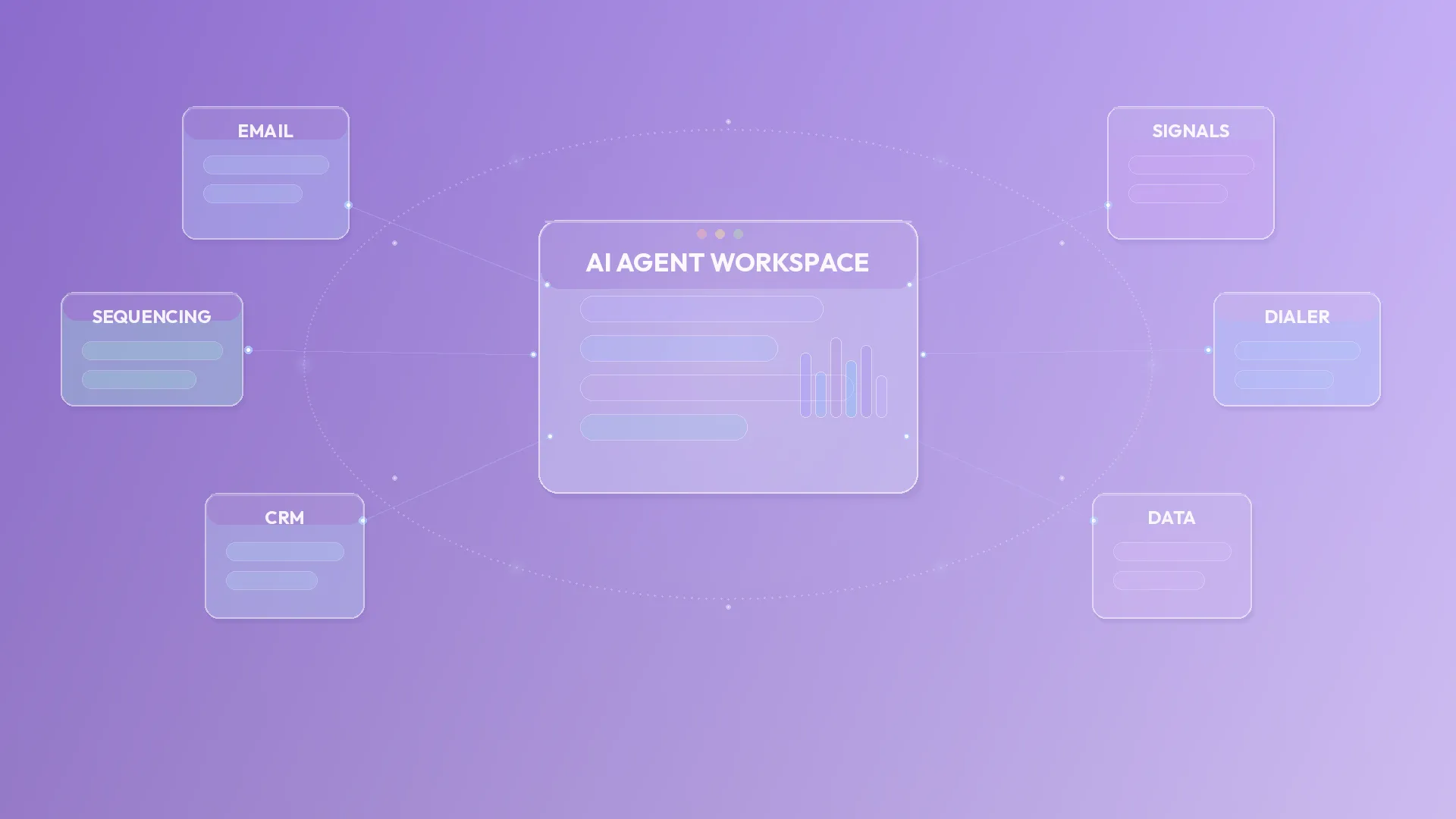
This is why a power dialer must be part of an intelligent Agent Workspace.
You use Artificial Intelligence to bridge the gap between speed and research. Before the rep logs in, the AI monitors the target accounts and extracts the "Golden Signals" (job postings, funding rounds, executive changes).
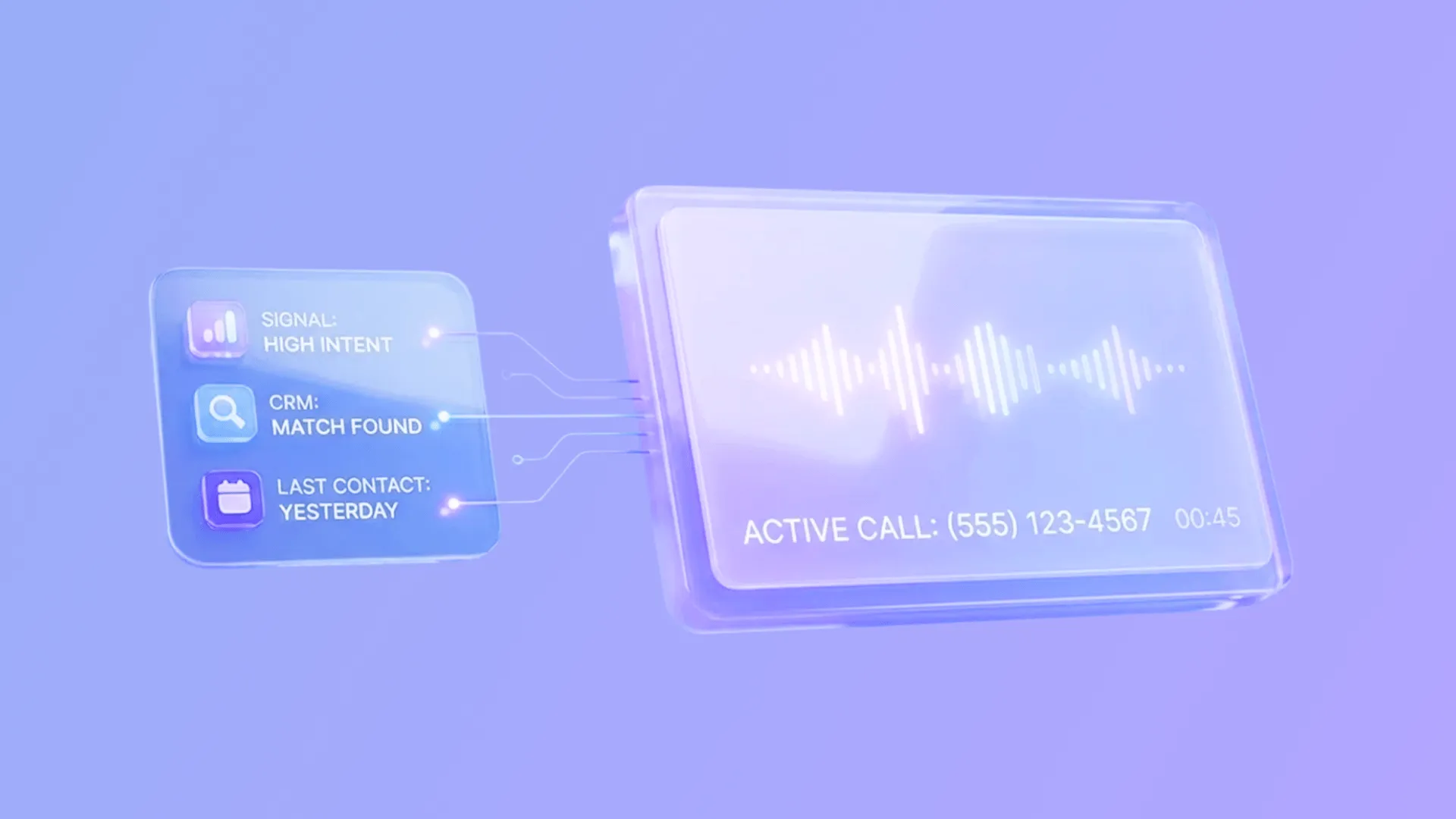
When the power dialer initiates the ring, the Agent Workspace instantly surfaces In-Context Insights directly "on the glass." The rep looks at the screen and immediately sees the prospect's recent LinkedIn activity, their company news, and the specific buying signal that triggered the call.
The rep doesn't need to memorize a script; they just read the context the AI teed up for them. They transition from dial to dial in milliseconds, but every single opener sounds heavily researched.
Next: Live Battlecards for the Pivot
If you survive the first five seconds with a great contextual opener, the prospect will usually give you 30 seconds to make your case. But eventually, they will throw an objection.
“That sounds great, but we actually just signed a two-year contract with [Competitor X].”
For an SDR on a high-speed dialing block, a competitor name-drop can cause an immediate freeze. This is where the Agent Workspace steps in as a live co-pilot.
As the conversation happens, the AI transcribes the call in real-time. The exact second the prospect mentions "[Competitor X]," the AI detects it and instantly pops a Live Battlecard onto the rep's screen. The rep is immediately armed with the top three differentiating talk tracks to pivot the conversation seamlessly.
The AI handles the heavy lifting of recall and research, allowing the human rep to focus entirely on empathy, tone, and pacing. And explore more cold calling scripts here.
Conclusion: Sound Human, Dial Like a Machine
The goal of outbound sales technology is not to turn your reps into robots. It is to automate the robotic parts of the job—the manual dialing, the endless research, the CRM data entry—so your reps can be unapologetically human when the prospect says hello.
If you want to maximize the ROI of your power dialer, throw away the static outbound sales opening lines.
Stop forcing your reps to read generic paragraphs. Equip them with an AI-driven Agent Workspace that surfaces in-context insights and live battlecards the exact moment the phone rings. Let the machine do the dialing, let the AI do the research, and let your reps do what they do best: sell.