AI For Sales: The Complete Guide

.webp)
AI for sales means applying artificial intelligence to the tasks that make up a sales workflow: researching prospects, prioritizing accounts, drafting outreach, running calls, coaching reps, and forecasting pipeline. It's a layer that now touches nearly every stage of the sales cycle, not one product category, and the tools that apply it range from a single-feature plugin to a full workspace that reps live in all day.
That range is exactly why "AI for sales" is a confusing phrase to search. Most guides to it read like vendor glossaries: a list of capabilities (lead scoring, email generation, call transcription) with no organizing logic and no proof any of it changes what a rep actually does on a Tuesday.
Key Takeaways
- AI for sales isn't one tool category. It shows up across five distinct stages: prospecting, sequencing, dialing, coaching, and pipeline forecasting.
- The dividing line that matters is whether the AI replaces rep judgment or removes the busywork around it, not which vendor a team picks. Teams that keep humans in the loop for conversations consistently outperform fully autonomous approaches on deal quality.
- Nooks customers including Greenhouse (4x dials, 7x connect rate, 70% more pipeline) and HubSpot (67% more meetings per BDR) report these gains from AI applied across the full outbound workflow, not a single point tool.
- Evaluate AI sales tools on rep adoption and CRM data integrity, not feature count. A tool reps don't use, or one that creates a shadow CRM, doesn't move pipeline no matter how capable the model behind it is.
Why "AI for Sales" Means Something Different Now
Sales teams don't shop for "AI" as a category. They shop for whatever removes the specific friction slowing down their day: too much manual research before a call, no real signal on which of a hundred leads is worth chasing, a sequence that keeps running after a prospect's gone quiet, time spent logging activity by hand instead of selling. AI for sales that gets adopted attaches to one of those friction points and removes it; anything else is a feature list on a product page. That's a meaningfully different bar than most of the last decade's sales technology cleared.
For most of that decade, sales technology meant task management. A Sales Engagement Platform like Outreach or Salesloft queued up the next email or call in a sequence, and a rep worked the queue. The "intelligence" was a rules engine: if a prospect doesn't open in three days, send the next step.
That model produced volume, not judgment. Reps became human routers, clicking "next" on sequences that didn't know or care whether the prospect had just changed jobs, visited a competitor's pricing page, or already replied to a different rep on the same account. The tools automated the motion of selling without automating anything that required actually paying attention.
The shift is from automation (do the same thing on a schedule) to intelligence (do the right thing based on what's actually happening in the account), not whether a tool has "AI" in its marketing.
The Five Places AI Shows Up in a Sales Workflow
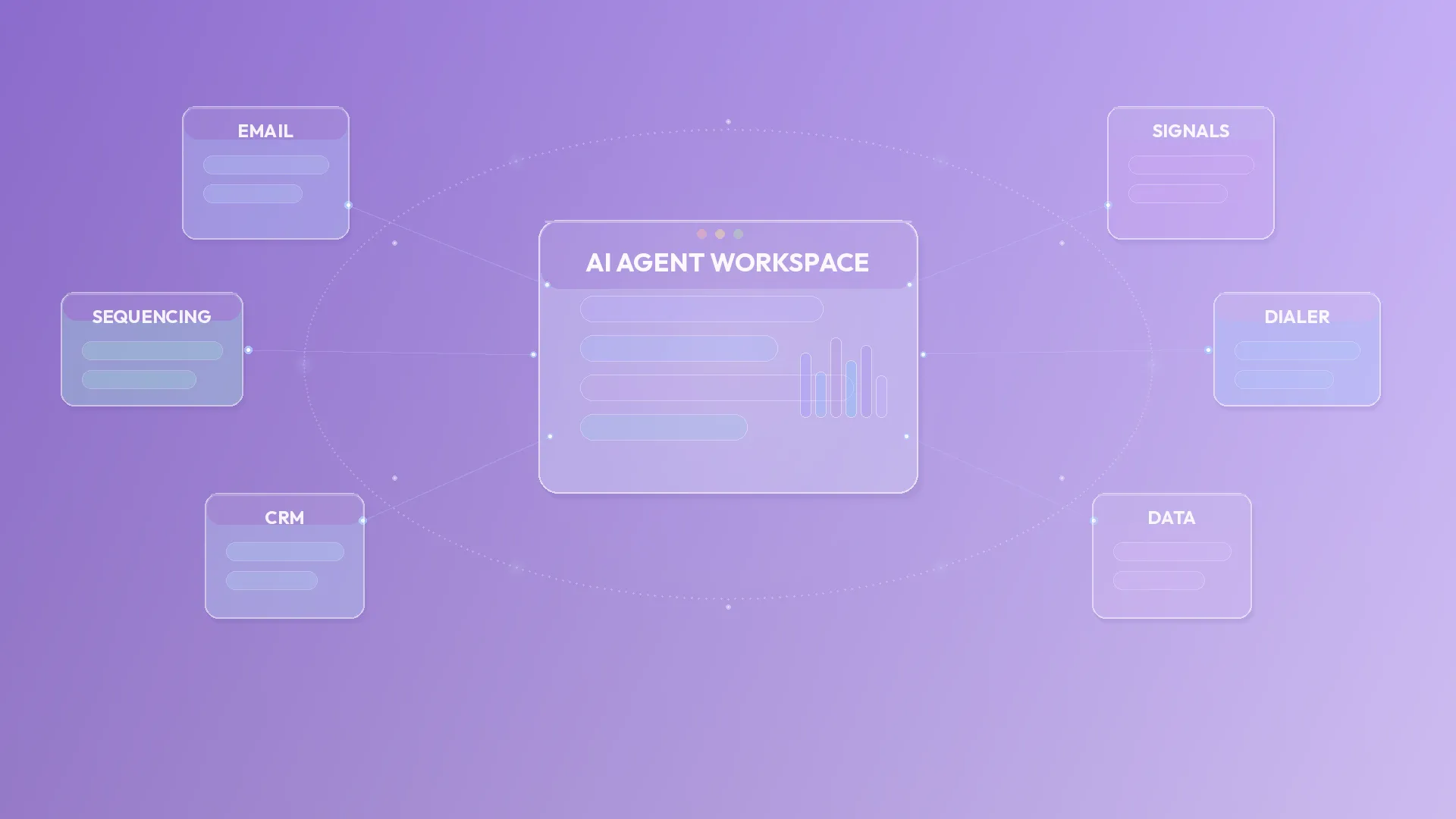
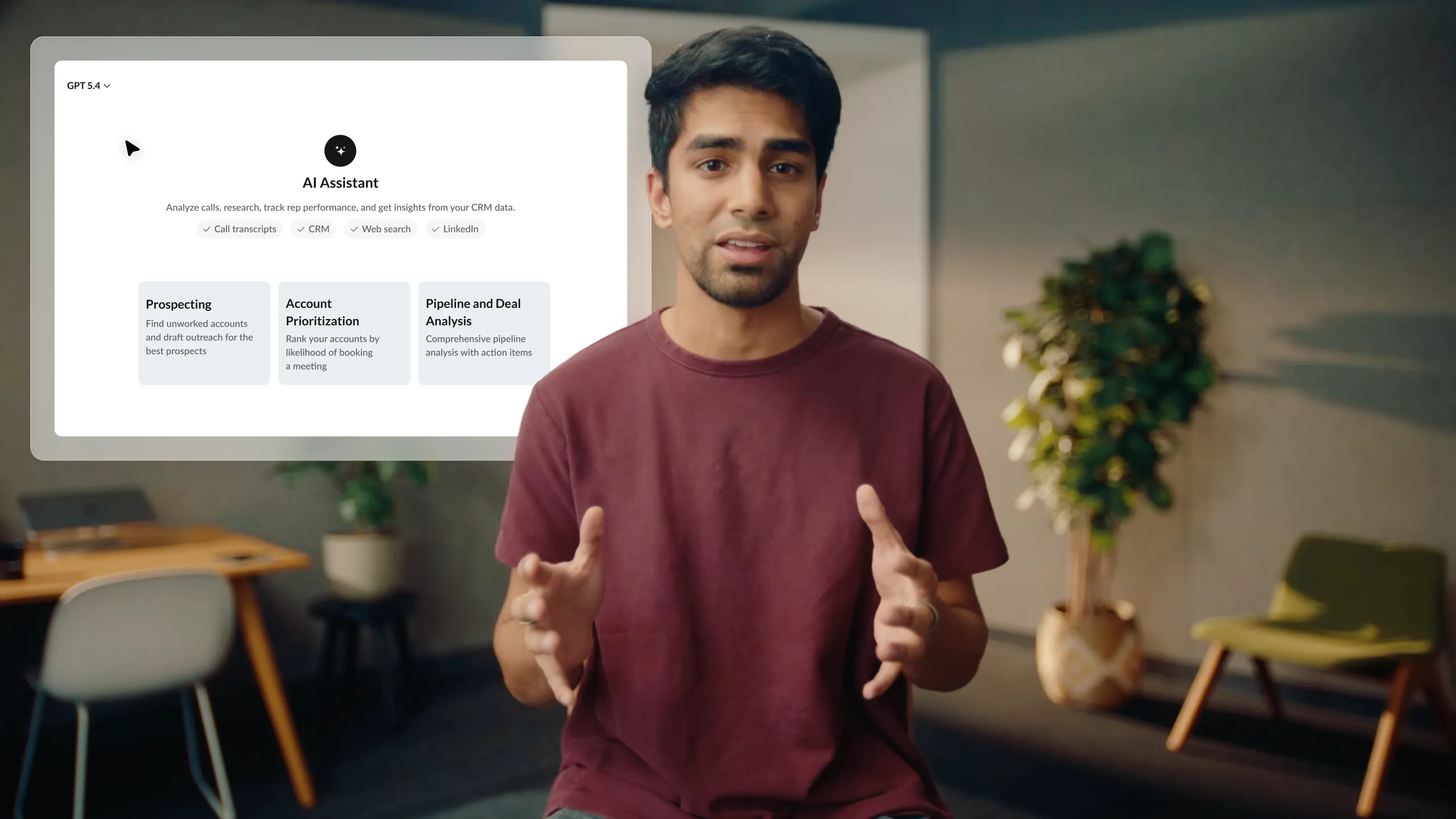
"AI for sales" tools cluster into five stages, and the revenue agent platform model treats all five as one connected system rather than five separate tools, with Nooks' AI Assistant pulling signal and activity from all five into a single next action a rep can run: who to call, what to say, what to send. Most vendors are strong in one; the differences between platforms mostly come down to how many of these five an AI actually executes across, versus how many separate tools a team has to stitch together by hand.
1. Prospecting and Signal Detection
Before a rep can reach out to anyone, someone has to decide who to reach out to, which is increasingly a job AI SDR tools handle alongside human reps rather than replace outright. AI-driven prospecting tools aggregate signals from the CRM, web activity, LinkedIn, call transcripts, and third-party intent data to surface accounts that are actually in-market right now, rather than accounts that merely match a static Ideal Customer Profile (ICP) filter.
The difference from a traditional data provider is timing. A data provider tells you a company exists and who works there. A signal engine tells you a company just hired a new VP of Sales, renewed with a competitor in 60 days, or had three people from the buying committee hit your pricing page this week, and it prioritizes outreach accordingly. Nooks' AI Prospecting engine tracks 20-plus buying triggers this way; Pendo reports one in three of its meetings now come directly from these signals. That signal is also the first input to Nooks' AI Assistant, which keeps a prospect's context intact from the signal through the sequence and the call.
2. Sequencing and Outreach
This is where most legacy Sales Engagement Platforms still operate: static, linear cadences. AI-driven sequencing breaks that model by adjusting the next step based on what actually happened, a prospect who opened an email twice but didn't reply gets a call, not a fourth templated touch, and by drafting the outreach itself from account-specific signals instead of a mail-merge template.
Nooks reports 2x more email replies and 30% time savings across its customer base when sequences adapt to engagement instead of running on a fixed schedule. The AI Assistant drafts that outreach itself, pulling from the same account signals so the email or call script matches what's actually happening on the account.
3. Dialing and Live Calls
AI's role on calls splits into two jobs: before the call (research, battlecards, suggested talking points assembled automatically) and during the call (live answer detection, parallel dialing that skips voicemails and disconnects, real-time prompts). The goal is the same either way: a rep spends time talking to people, not dialing numbers or scrambling for context mid-call.
Greenhouse's sales development team saw 4x more dials and 7x more connects after moving to Nooks' AI Dialer, where the AI Assistant runs the account research and call scripting automatically ahead of each dial.
4. Coaching and Rep Development
Manual call review doesn't scale past a handful of reps per manager. AI call scoring analyzes every rep's calls, not a sampled few, against defined criteria, and surfaces patterns a manager reviewing three calls a week would never catch. AI roleplay adds a practice loop for new reps before they're live on prospects.
The measurable effect shows up in ramp time. Nooks reports ramp time cut by up to 40% for new reps across AI Coaching customers, largely because every call gets scored and specific feedback replaces generic "sounded good" reviews. That scoring data also loops back into the AI Assistant, sharpening the next script or battlecard it drafts for that specific rep.
5. Pipeline Visibility and Forecasting
The stage furthest from the rep's day-to-day, but the one RevOps and sales leadership care about most: does the CRM reflect reality, and can leadership see deal risk before it becomes a missed number. AI here tracks deal progression, flags stalling opportunities, and updates records automatically instead of relying on reps to log activity by hand.
This is also where architecture matters more than any single feature. A platform that writes activity directly back to Salesforce keeps forecasting accurate. One that syncs on a delay, or builds its own database alongside the CRM, creates the reporting gaps RevOps teams spend hours reconciling every month.
Underneath these five stages sits a more basic question: what actually counts as an AI sales agent, and how much of that agent's work happens with a human still in the loop? That distinction, autonomous versus human-in-the-loop, matters more than which stage a team automates first.
The Dividing Line: Autonomous vs. Augmented
Underneath all five categories sits one decision that matters more than which vendor a team picks: should the AI act on its own, or should it hand a human a better starting point?
Fully autonomous tools promise scale: an AI agent doing the work of a team, researching, writing, and sending without a human in the loop. The execution problem shows up fast. Autonomous outreach can't know that a prospect just left a competitor, that their VP mentioned a specific pain point last week, or that a fourth templated email is about to burn the account for good. Meetings booked this way tend to convert at a lower rate, because the judgment that would have caught the misfire never happened.
The augmented model keeps a human making the calls that require actual judgment, reading a reply, deciding whether to call instead of email, handling an objection that doesn't fit a script, while AI removes everything else: research, drafting, logging, scoring, prioritization. Greenhouse, HubSpot, Deel, Drata, and Modern Health are all running this model, which is also the model Nooks is built on.
What This Looks Like With Real Teams
- HubSpot: 95% increase in dials, 50% increase in connect rate, and 67% more meetings booked per BDR (Brian DeRosa, VP Global Business Development)
- Greenhouse: 4x more dials, 7x more connects, 70% increase in pipeline (Mariah Donnelly, Senior Director of Sales Development)
- Deel: 600-plus conversations in five days running global outbound through one workspace (Kate Londgren, Associate Director)
- Drata: 25% increase in meetings booked (Yuliya Maystruk, Senior Platform Operations Manager)
- Modern Health: 60% of pipeline now booked using AI-surfaced prospecting signals
None of these are volume plays alone. Each pairs more activity with better targeting, which is the actual signature of AI applied well: more of the right conversations.
What to Look for When Evaluating AI Sales Tools
Five questions cut through most vendor pitches:
Does it cover one stage or the whole workflow? A point tool for email drafting still leaves prospecting, dialing, and coaching as separate systems reps have to toggle between. Toggling is where adoption dies.
Is it CRM-first? Tools that sync to Salesforce on a delay, or maintain their own database, create a shadow CRM: duplicate records, stale data, and a reporting headache for RevOps. Direct, real-time reference to the CRM avoids this entirely.
Does a human review AI output before it reaches a prospect? No AI draft, score, or recommendation should be unreviewable. Look for platforms that position AI output as a draft and a recommendation, not an autopilot, with guardrails against the AI simply making things up.
Is there real customer proof, with names attached? "Customers see up to X%" is a claim. "HubSpot saw 67% more meetings per BDR, per their VP of Business Development" is evidence. Most vendor content skips the second kind.
Does it get better with your team's own data, or is it generic automation? AI trained on your team's outbound history and signal patterns should outperform generic automation over time. If a vendor can't explain how the system learns from outcomes, it probably doesn't.
Ready to see what AI applied across the full outbound workflow looks like for your team? Request a demo.