The Data Gap in Sales Prospecting: How to Waterfall Mobile Numbers for Maximum Coverage

You can build the most sophisticated outbound strategy in the world. You can track every observable buying signal, use AI to craft the perfect personalized email, and equip your team with a lightning-fast parallel dialer.
But if your SDR clicks "call" and hits a corporate switchboard, an endless phone tree, or a disconnected line, your pipeline stops dead.
In modern sales prospecting, the ultimate bottleneck is finding accurate, direct mobile numbers. With the permanent shift to remote and hybrid work, calling a company's headquarters is effectively useless. If you don't have the prospect's direct dial, you cannot execute an outbound motion.
To solve this, modern RevOps teams are rethinking their data infrastructure. They aren't replacing their primary data providers; they are optimizing them. By taking their foundational database and layering on a strategy called data waterfalling, teams are closing the "last mile" data gap and ensuring their reps actually connect when they pick up the phone.
The Foundation: Why Your Primary Data Provider is Essential
Every elite B2B sales floor is built on the back of a premier primary data provider—platforms like ZoomInfo. These platforms are the bedrock of a successful GTM strategy.
When you invest in a top-tier primary provider, you are buying the foundational intelligence required to run a business: comprehensive account firmographics, detailed organizational charts, buying committee mapping, and massive, unparalleled contact coverage across your Total Addressable Market.
You cannot run a modern sales prospecting method without this single source of truth.
However, RevOps leaders also understand the mathematical reality of B2B contact data: human beings are incredibly dynamic. Prospects change jobs, switch cell phone carriers, and update their privacy settings every single day. Because of this constant global movement, it is technologically impossible for any single database in the world to maintain 100% real-time mobile coverage for every human on earth.
When your primary provider inevitably hits one of these edge cases—a missing mobile number or a recently changed digit—your rep hits a wall. This is the "last mile" data gap.
What is Data Waterfalling? (The Optimization Layer)
To solve these edge cases without forcing SDRs to manually hunt for phone numbers, RevOps teams use an automated technique called waterfalling.
Data waterfalling is not a replacement for your primary provider; it is an additive safety net. It is the automated process of sequentially pinging supplementary data providers only when a valid mobile number isn't immediately found in your core database.
Here is what a standard waterfall sequence looks like in practice:
- Tier 1 (The Foundational Source): The system queries your trusted primary database.
- Tier 2 (The Supplementary Net): If Tier 1 comes up empty for a specific mobile dial, the system automatically pings the next data provider.
- Tier 3 (The Niche Verification): If Tier 2 fails, it pings the next provider, and so on.
By stacking these supplementary providers underneath your primary investment, companies often see their direct-dial coverage jump significantly, drastically increasing their SDRs' live connect rates while maximizing the ROI of their core data spend.
The Flaw in Legacy Sourcing (Data Decay)
While waterfalling is a brilliant strategy to maximize coverage, how you execute it matters immensely.
Many teams run bulk waterfalls on static lists. They download 5,000 prospects from their primary provider, run the missing numbers through a third-party waterfall enrichment tool, and upload them back into their CRM.
The issue here is data decay. B2B contact data decays at a rate of roughly 30% per year. If you waterfall a massive list in January, a large chunk of those newly found mobile numbers will be dead by June.
Just-In-Time Enrichment: The Agent Workspace Solution
To execute data waterfalling correctly, it must be integrated dynamically into your daily workflow, not treated as a bi-annual bulk upload in the back office.
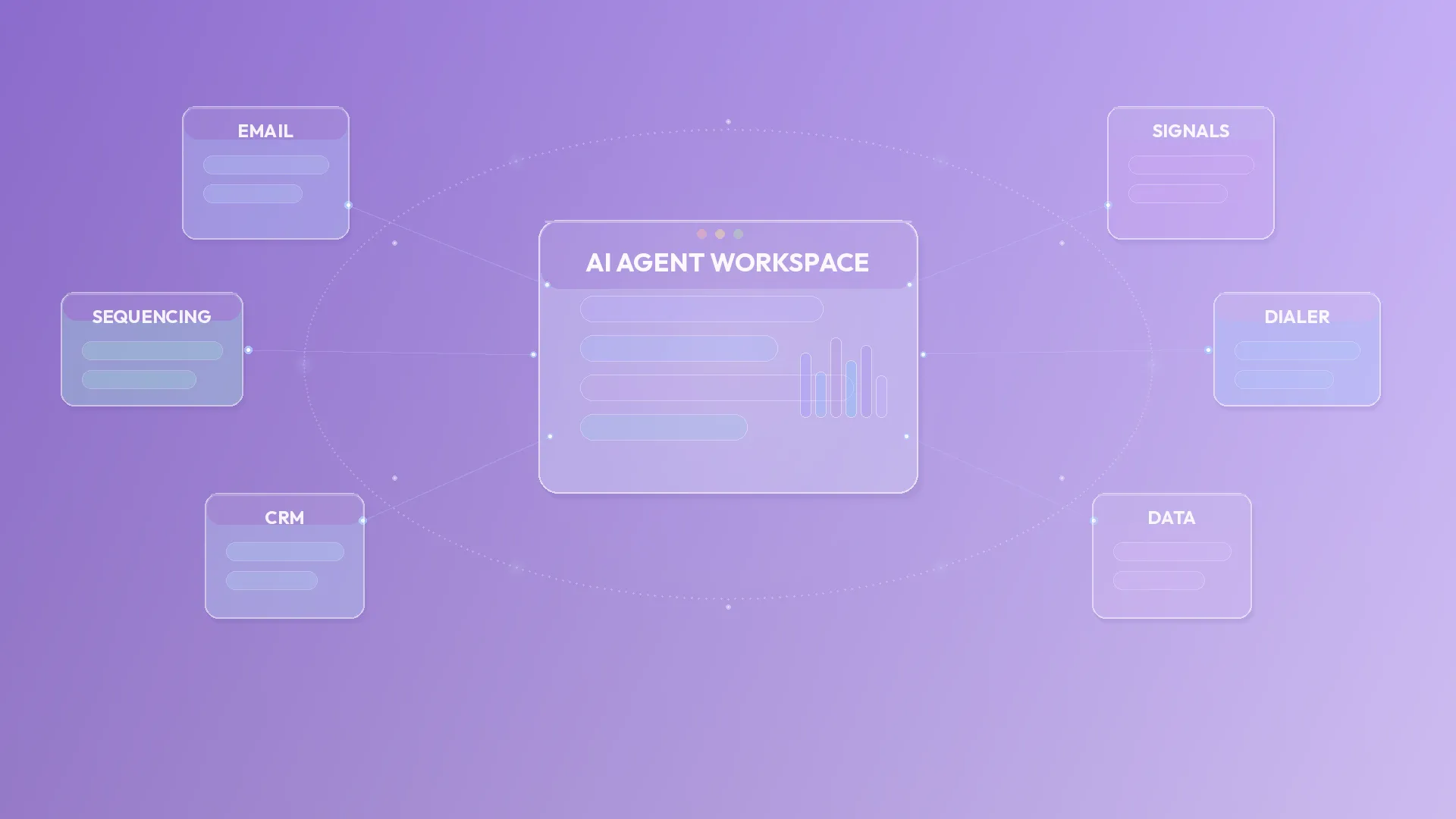
This is where the concept of an Intelligent Outbound workspace completely changes the game. Modern AI Agent Workspaces (like the Nooks AI Dialer) natively integrate your primary data provider and your waterfall sequence directly into the dialing engine.
We call this "Just-In-Time Enrichment."
Here is how the modern workflow operates:
- The Signal Fires: The AI Agent detects an observable buying signal—for example, a target account just posted a key job opening.
- Dynamic Prioritization: The account is immediately routed to the top of the SDR's call queue for that morning.
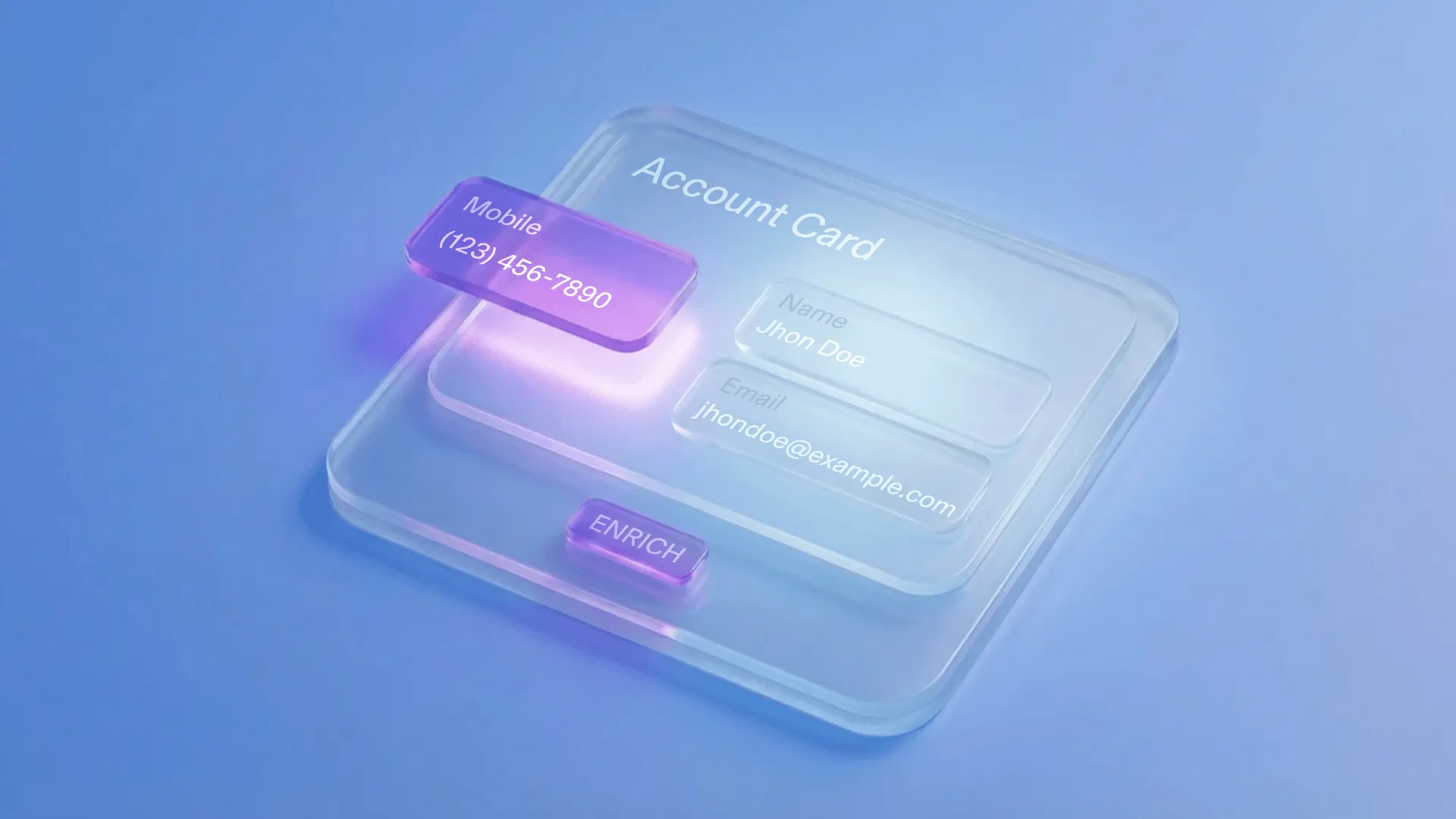
- Instant Waterfalling: If the number fails, the Agent Workspace can automatically check your source. If the mobile number is missing, it instantly waterfalls through your supplementary providers in milliseconds to find the current mobile dial.
- The Execution: The SDR logs in, sees the priority account, sees the freshly enriched and verified mobile number, and clicks dial.
By moving the waterfall to a real-time, just-in-time process inside the dialer, you eliminate data decay entirely and ensure your reps never waste a second searching for contact info.
Conclusion: Bridging the "Last Mile"
In outbound sales, the direct mobile number is the "last mile" of your infrastructure. You can spend millions on AI writing tools, sequencing software, and strategy consultants, but if you cannot bridge that final gap to the buyer's cell phone, the entire system fails.
Protect and leverage your primary data investment—it is the engine of your GTM strategy. But stop asking your reps to manually hunt for the edge cases.
Integrate your data providers into a unified Agent Workspace. Automate the waterfall to trigger the moment a buying signal fires. Give your reps the exact number they need, right when they need it, and watch your pipeline grow.