Targeting the Buying Committee: How AI Helps Prospecting for B2B Account Mapping

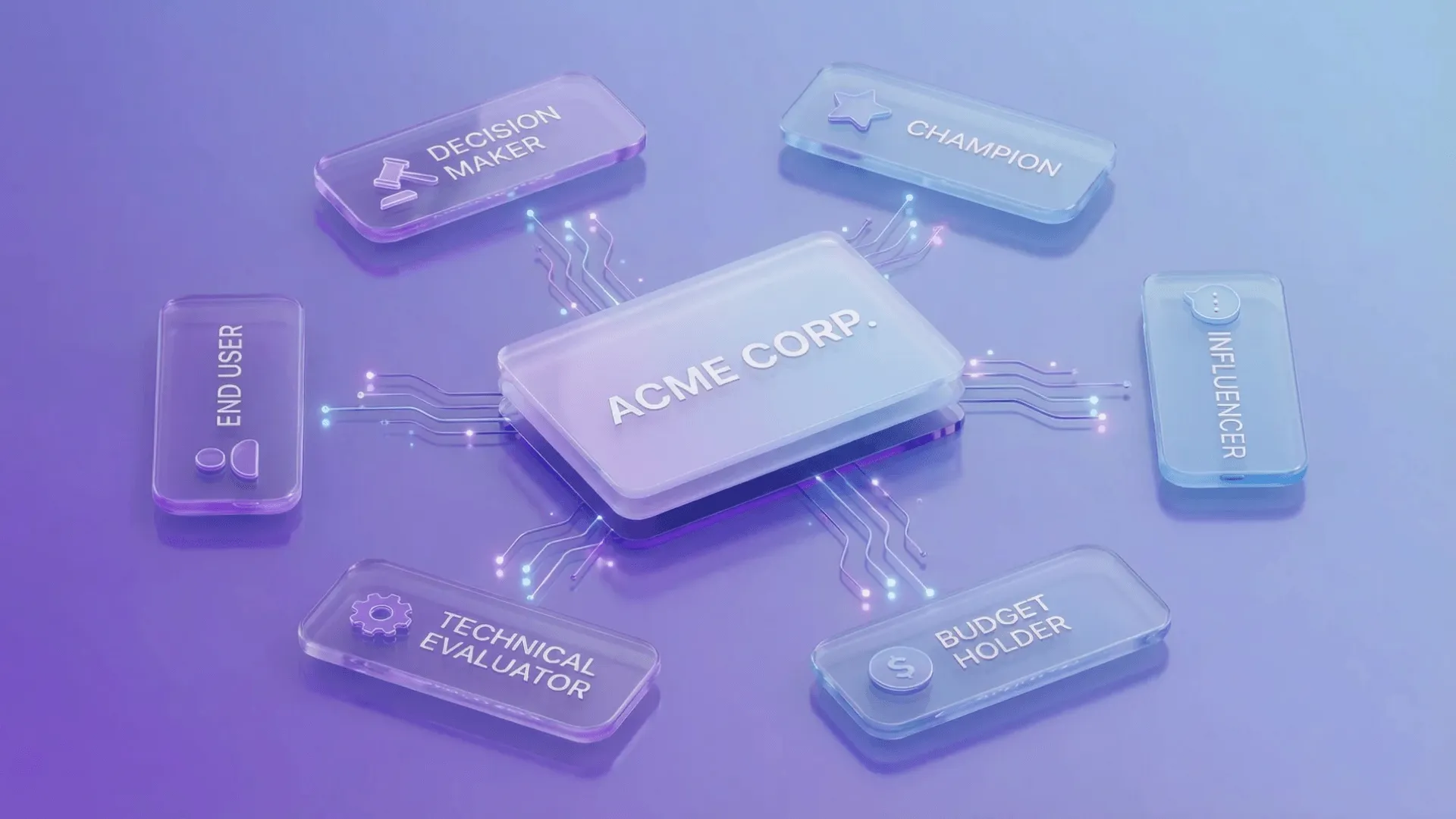
If you look at the forensic breakdown of a stalled B2B pipeline, you will almost always find the exact same culprit: single-threaded prospecting.
Historically, sales prospecting strategies were built around finding a single, powerful decision-maker. A Sales Development Representative (SDR) would hunt down the VP of Sales or the Chief Marketing Officer, drop them into an automated email sequence, and try to book a meeting. If that one person said "no," or simply ignored the outreach, the entire target account was marked as "unqualified" and abandoned.
Today, this strategy is mathematically broken.
According to recent Gartner data, the average complex B2B deal now requires consensus from six to ten different stakeholders. There is no longer a single "decision-maker." There is a buying committee.
If your definition of prospecting still means finding one name and one email address and your buying committee is N > 1, your deals are dead on arrival. To survive in modern outbound, revenue teams must shift from hunting individual leads to automating comprehensive B2B account mapping. Here is why single-threaded outreach is failing, and how AI is mechanizing the discovery of the entire buying committee.
The Trap of the "Single Lead"
Why do so many outbound teams still rely on single-threaded prospecting? It isn't because they are lazy; it is because of severe time constraints.
Manually identifying decision makers across a complex enterprise account is a grueling, multi-hour process. An SDR has to open LinkedIn Sales Navigator, guess the correct titles, cross-reference those names with a powerful data provider like ZoomInfo, hunt for direct mobile numbers, and attempt to draw a mental org chart of who reports to whom.
If an SDR is tasked with sourcing 50 accounts a week, they physically do not have the hours required to map out the RevOps Leader, the CFO, the IT Evaluator, and the end-user champion for every single account. Forced to choose between volume and depth, the SDR defaults to volume. They grab the highest title they can find, sequence them, and move on.
This creates a massive vulnerability. If your single point of contact leaves the company, gets busy, or simply doesn't like your pitch, you have zero leverage to keep the account alive.
What is Modern B2B Account Mapping?
To penetrate modern accounts, your prospecting motion must map the entire consensus group before the first dial is ever made. You must identify the four critical pillars of the buying committee:
- The Champion: The end-user who feels the daily pain and will advocate for your solution internally (e.g., SDR Manager).
- The Economic Buyer: The executive who controls the budget and signs the contract (e.g., VP of Sales or CFO).
- The Technical Evaluator: The operations leader who ensures your tool integrates with their existing stack (e.g., Head of RevOps).
- The Security/Legal Gatekeeper: The IT director who will ultimately veto the deal if it doesn't meet compliance standards.
In an Intelligent Outbound model, sourcing these four pillars is not a post-meeting activity done by the Account Executive. It is the very definition of the initial prospecting phase.
Enter the AI Agent Workspace: Automating the Consensus Hunt
You cannot solve the account mapping bottleneck by telling your SDRs to "work harder." You have to engineer a solution that removes the manual research entirely.
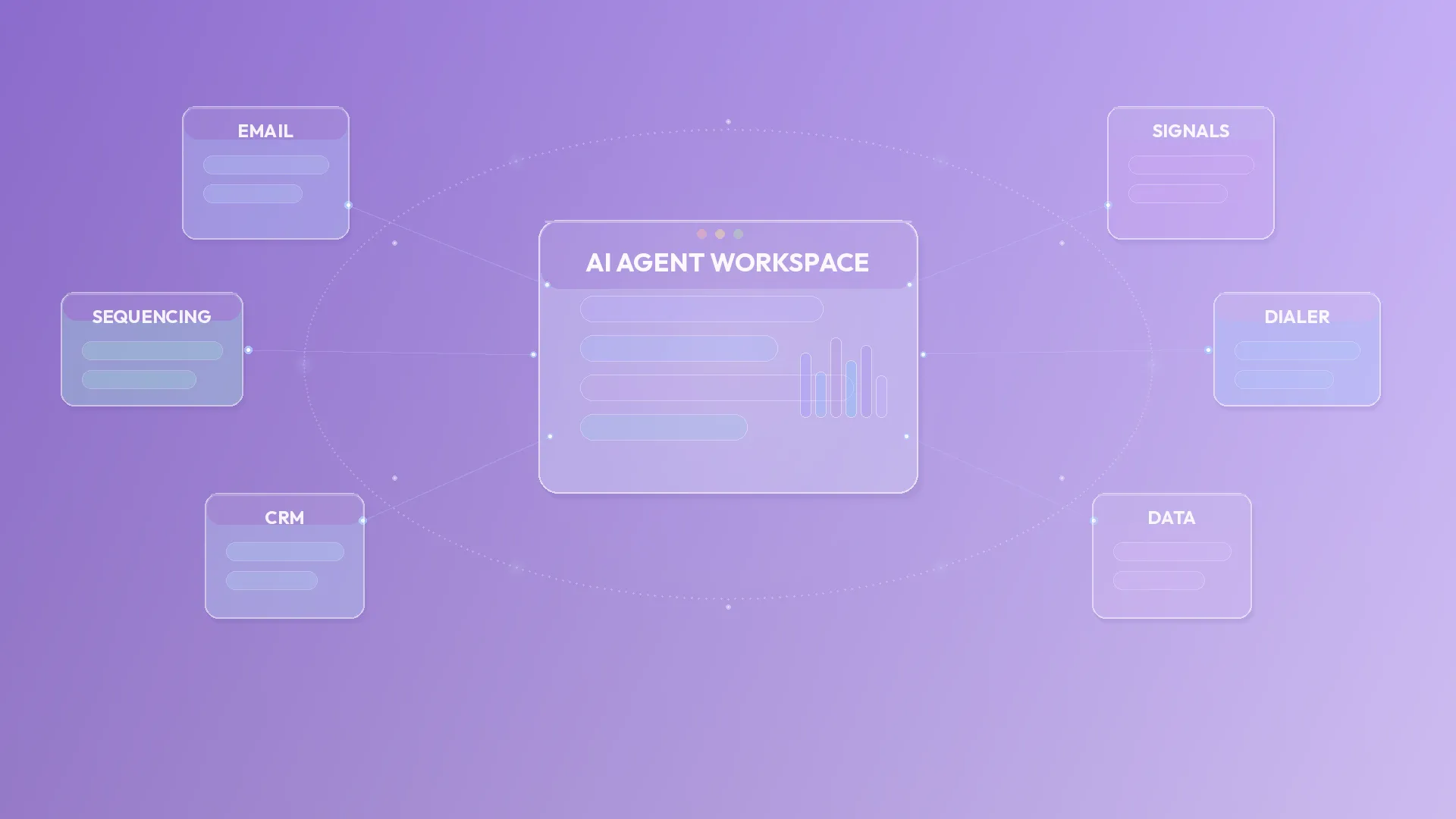
This is where the concept of an AI Agent Workspace completely redefines the prospecting workflow. Instead of relying on human reps to manually hunt for secondary stakeholders, the AI automates the entire discovery process the moment a target account shows intent.
Here is how modern AI mechanizes the buying committee:
1. The Signal Triggers the Map
As we discussed in previous frameworks, modern prospecting starts with an observable signal (like a target company posting a new job requisition). In a legacy system, that signal tells a rep to call the VP. In an AI Agent Workspace, that signal triggers an automated account mapping sequence.
2. Instant Committee Assembly
The moment the signal fires, the AI integrates with your primary data providers and your CRM to instantly assemble the entire buying committee. Use it to identify the Economic Buyer, the Champion, and the Technical Evaluator based on historical data and title hierarchies, assembling the entire group in seconds.
3. Automated Data Waterfalling
Finding the names of the committee is only half the battle; you need their contact info. Before the SDR even looks at the account, the AI automatically waterfalls the entire committee through your supplementary data providers, fetching the verified direct mobile numbers for all six stakeholders simultaneously.
4. The Multi-Threaded Execution
When the SDR logs in, they aren't looking at a single lead. They are looking at a fully mapped account, complete with enriched mobile numbers and a coordinated, multi-threaded action plan. They can call the RevOps leader to talk about technical integrations, and immediately follow up by emailing the VP of Sales about the macro-level ROI.
The Multi-Thread Mandate
If you implement an AI Agent Workspace to automate your B2B account mapping, you must also update your management cadence.
You must institute the "Multi-Thread Mandate." If the AI does the heavy lifting of sourcing and enriching the entire buying committee, managers must hold their reps accountable for actually engaging them.
In your weekly 1-on-1s, stop asking, "Did you reach out to Acme Corp?" Start asking, "The AI mapped five stakeholders at Acme Corp. Walk me through the coordinated touches you executed against the Champion and the Economic Buyer this week."
Conclusion: Stop Hunting Leads, Start Hunting Committees
The definition of "prospecting" has evolved. It is no longer the act of finding a single name to drop into a sequence. It is the automated, intelligent sourcing of an entire consensus group.
If your reps are still spending hours cross-referencing LinkedIn to find secondary decision-makers, or worse, if they are only calling one executive per account, you are leaving massive pipeline on the table.
Automate your account mapping. Let the AI Agent Workspace find the committee, waterfall the mobile numbers, and tee up the strategy. Empower your SDRs to stop acting like manual data miners, and start acting like strategic orchestrators.