
Mastering AI for Sales Prospecting: Strategies and Tools for 2026

The case for using AI in B2B sales prospecting is no longer theoretical. The operational challenge has shifted from "should we use AI?" to "how do we use it in a way that actually improves outcomes, not just activity?"
That distinction matters. A lot of teams have adopted AI tools that made reps busier without making them better. They generate more touchpoints, more lists, and more dashboards, but the connect rates, conversation quality, and booked meetings stay flat. The problem is usually that AI was bolted onto a broken workflow rather than built into one that works. As the Nooks piece on what a sales assistant should actually do puts it, pipeline is short not because reps are lazy but because the system is full of drag: reps spending an hour deciding who to call next, notes piling up until end of week, and managers coaching on instinct because they cannot review enough calls to coach on data.
AI removes that drag. This guide covers the strategies and tools that high-performing sales teams are using to make AI prospecting deliver real pipeline results in 2026, and where Nooks fits into that picture.
What Is AI for Sales Prospecting?
AI for sales prospecting combines signals like technographic changes, hiring patterns, funding announcements, and intent data to flag which accounts are actually ready to buy, then ranks them using a model trained on your own team's past deal outcomes, not a generic scoring template. Instead of reps manually researching and building lists, AI surfaces the accounts and messaging angles worth acting on first, updated in real time as new signals appear.
Key Takeaways
- AI improves sales prospecting by automating the research, lead scoring, and follow-up work that consumes most of a rep's day, freeing them to spend more time on the high-value conversations that actually move pipeline forward.
- Personalization and targeting get sharper with AI: tools analyze behavioral signals, CRM data, call transcripts, and engagement history to refine outreach messaging and ideal customer profiles in real time, rather than relying on static filters that go stale.
- The most effective AI prospecting setups are unified systems where prospecting, dialing, sequencing, and coaching share a feedback loop so that every conversation teaches the AI what to prioritize next.
- Integrating AI into existing sales workflows requires clean historical data, proper team training, and tools that connect directly with your CRM and dialer. Without those foundations, AI's impact stays limited to activity metrics instead of pipeline outcomes.
Understanding AI in Sales Prospecting
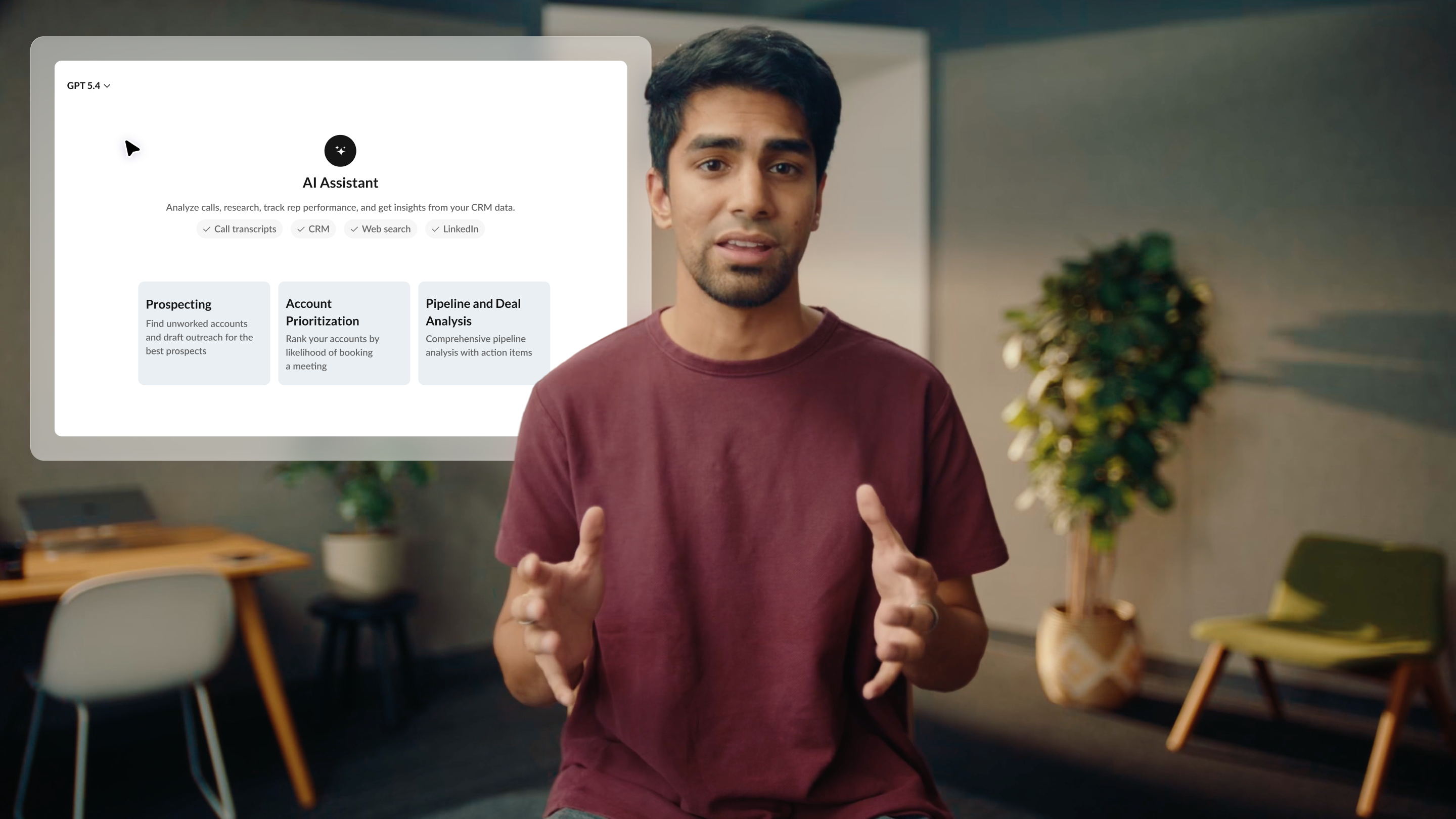
AI in sales prospecting uses machine learning and signal detection to help teams identify the right accounts, prioritize outreach based on real buying intent, and personalize engagement without requiring reps to spend hours on manual research.
The core advantage of AI is that it processes data from multiple sources simultaneously, including CRM history, call transcripts, social activity, web behavior, and third-party intent signals, and synthesizes those inputs into a clear picture of who to contact, why, and what to say. Traditional prospecting methods require a rep to do that synthesis manually, which is why research from the Salesforce State of Sales report shows that reps spend only 28 to 30 percent of their week on actual selling activities, with the rest consumed by admin, prospecting research, and data entry.
AI does not eliminate the human judgment required to build relationships and close deals. It eliminates the hours of groundwork that precede those conversations, so reps arrive at each touchpoint better prepared and better informed. The goal is not to replace reps but to give them an unfair advantage by surfacing what matters before they ever dial. That advantage plays out in two distinct places: in how accounts get identified and prioritized, and in how reps engage once they have that list.
How AI Identifies and Prioritizes the Right Accounts
Developing an Ideal Customer Profile is foundational to effective prospecting, but static ICPs built on firmographic filters alone, company size, industry, and revenue, only get you to the right general territory. They do not tell you which accounts within that territory are actively evaluating solutions, which ones just lost their champion to a new role, or which ones recently added headcount that signals expanding budget. AI fills that gap by layering behavioral signals and real-time engagement data on top of profile criteria, and updating those models continuously as new information comes in.
The mechanism behind this is signal aggregation: monitoring multiple weak signals simultaneously, such as technographic changes, hiring patterns, funding announcements, and website activity, and flagging accounts when several of those signals align within a short window. No single signal is reliable enough to act on in isolation. When three or more converge, the picture changes significantly, and AI can track this across thousands of accounts at a scale no rep can match manually. As the 6 AI Sales Prospecting Strategies guide on Nooks notes, teams see the highest return when they act on aggregated signals within 48 to 72 hours of detection.
Adaptive lead scoring takes prioritization a step further by learning from your historical deal outcomes rather than relying on a generic point model. It identifies which account characteristics actually predict conversion for your specific business, flags accounts that match the profile of deals that closed rather than just deals that entered the pipeline, and deprioritizes accounts that look strong algorithmically but consistently stall at a particular stage. The key is training the model on your best customers specifically. Feeding it all closed deals regardless of quality teaches it to optimize for volume rather than fit.
Job change monitoring adds another layer. When a decision-maker who evaluated your solution at a previous company moves to a new role, AI catches that transition within hours rather than weeks, creating a warm outreach opportunity that most competitors miss entirely. Nooks' Signals and Intelligence platform is built on all of these principles, using AI agents that continuously analyze CRM data, call transcripts, and web activity so that prioritization reflects actual buying intent rather than a list that was built last quarter and has been sitting untouched since.
How AI Helps Reps Act on the Accounts They Find
Identifying the right accounts is only half the equation. The other half is arriving at each conversation with enough context to earn the next ten seconds. That is where research automation and personalization at scale become the practical payoff of AI prospecting.
Personalization is one of the most overused words in B2B sales. Sending an email that mentions a prospect's job title is not personalization. Referencing a specific pain point grounded in a recent earnings call, a job posting, or a known technology change in their stack is personalization. The difference between those two things is research, and research takes time that most reps simply do not have at the volume required to fill a pipeline.
AI bridges that gap by compiling account-level context automatically, so reps can arrive at a conversation informed rather than spending 20 minutes reading a 10-K to find one relevant detail. This is the concept behind what the Nooks blog describes as the AI and Human Handshake: AI handles the extraction of the relevant observation, the rep applies the strategic judgment that connects it to a pain point, the AI drafts the first version of the outreach, and the rep edits and approves. What used to take 20 to 30 minutes per contact can be completed in under a minute without sacrificing the relevance that drives reply rates.
The benefit compounds over time. When AI watches how reps edit its drafts, it learns their voice, their preferred framing, and the angles that resonate with specific personas. Outreach gets sharper and faster to approve with each cycle, which means the productivity gain grows the longer the system is in use rather than plateauing after the initial rollout.
Overcoming the Real Challenges of AI Integration
Most AI integration challenges come down to three things: data quality, adoption friction, and misaligned expectations.
Data quality is foundational. AI learns from your historical records, so if your CRM is inconsistent, incomplete, or polluted with poorly qualified deals, the model will reflect those problems at scale. Before deploying sophisticated predictive scoring, teams need to invest in data hygiene and establish clear definitions of what a qualified opportunity actually looks like in their business.
Adoption friction is real, and often underestimated. Reps who are used to building their own lists and doing their own research may resist handing that work to a tool they do not yet trust. The fastest path to adoption is demonstrating value inside the rep's existing workflow rather than asking them to check a separate dashboard. A tool that surfaces insights inside the dialer or sequencing platform where reps already work will see dramatically better uptake than one that requires a context switch to act on.
Misaligned expectations show up when teams measure AI prospecting on activity output rather than pipeline outcomes. More emails sent, more contacts added, and more sequences launched are not success metrics. Conversion rate improvement, meetings booked from AI-sourced contacts, and deal size from AI-prioritized accounts are the numbers that tell you whether the investment is working.
The Feedback Loop Between Prospecting and Conversations
The single biggest difference between AI prospecting that compounds in value and AI prospecting that stays static is whether the system learns from what happens on calls.
Most tools generate a list and stop there. The AI never finds out which contacts answered, what they said, whether they scheduled a meeting, or why a call that looked promising in the data did not convert. Without that feedback, the model keeps recommending the same patterns whether they work or not.
The most effective setups connect prospecting directly to calling and sequencing so that every conversation generates data the AI can learn from. When a rep reaches an account and discovers it is not a fit despite strong signals, that outcome trains the model to deprioritize similar patterns. When a call uncovers unexpected buying intent, the AI learns to recognize those indicators in similar accounts. Teams integrating AI prospecting with live calling see 40 percent higher connect rates than those using AI for email only, according to Nooks' data, and the compounding advantage grows over time as the model accumulates more outcome data.
This is also where coaching becomes part of the prospecting picture. When AI analyzes call transcripts and surfaces patterns in what objections are coming up, which talk tracks are working, and where conversations are breaking down, that intelligence feeds back into how sequences are built and which accounts get prioritized next. Nooks' AI Coaching capability is designed specifically to close this loop, connecting what happens in conversations to how reps prepare for the next ones.
Ethical and Compliance Considerations
AI-driven prospecting raises legitimate questions about data privacy and responsible engagement that sales leaders need to address directly. The practical requirements include ensuring your tools comply with GDPR and CCPA, establishing clear guidelines for how prospect data is collected and used, and building bias prevention into scoring models so that automated prioritization does not inadvertently exclude segments based on protected characteristics.
Beyond the regulatory checklist, there is a more fundamental point. AI should make outreach more relevant and respectful of a prospect's time, not more intrusive. The best AI-informed outreach still reads like a thoughtful human reached out at the right moment with the right context. That outcome requires human oversight, editorial judgment, and a consistent commitment to quality over volume. Tools that help reps be the editors of AI-generated outreach, rather than passive recipients of it, are the ones that keep that standard intact at scale.
Why Nooks Is Built for This
Understanding AI prospecting strategies is the first step. Putting them into practice requires a platform where prospecting, dialing, sequencing, and coaching all share a workspace and a feedback loop, and where every conversation makes the next one smarter.
That is exactly what Nooks is built to do. AI agents work 24/7 to monitor accounts, surface buying signals, and prepare reps for each conversation. The AI Dialer connects reps to three times more live prospects per day by cutting out phone trees, bad numbers, and idle wait time. AI Sequencing updates multi-channel sequences automatically as account data and intent signals shift. And Signals and Intelligence aggregates everything from CRM history to call transcripts to third-party intent so prioritization reflects what is actually happening at an account right now, not what a static filter said last quarter.
If your reps are spending more time on research and admin than on live conversations, or if your pipeline is inconsistent because account prioritization still depends on individual judgment, request a demo to see how Nooks works in practice. And if you want to see how teams like yours have put it to work, the Nooks customer stories are a good place to start.