What to Look for in a Modern Sales Engagement Platform

Key Takeaways
The Death of "Dumb" Sequencing
For the last decade, the B2B sales playbook has been dominated by a single piece of technology: the Sales Engagement Platform (SEP).
When these Sales Engagement Platforms first emerged, they felt like a superpower. They allowed us to take a single email template, attach it to a 14-day sequencing cadence, and blast it out to thousands of prospects at the click of a button. We scaled our volume, built massive pipeline generation engines, and celebrated the automation of the modern SDR.
But today, the traditional Sales Engagement Platform is broken.
Buyers have evolved. They are completely immune to automated, spray-and-pray sequencing. They can spot a {{first_name}} mail merge from a mile away, and they are actively punishing companies that rely on generic sequencing by sending them straight to the spam folder.
Sales leaders are waking up to a harsh reality: We have scaled volume, but we have killed relevance. We turned our highly-paid, highly-capable sales reps into human routers whose only job is to click "next step" in a static sequence and copy-paste data between ten different browser tabs.
The era of "dumb sequencing" is over. Blind, manual sequencing simply cannot keep up. We are entering the era of Intelligent Outbound.
If your team is evaluating a new Sales Engagement Platform this year—or looking to rip and replace a legacy SEP that is failing to deliver ROI—you are no longer just looking for a tool to run email sequences. You are looking for an engine to orchestrate your entire go-to-market strategy.
Here is exactly what you should be looking for in a modern outbound platform.
1. A Unified "Agent Workspace" (Consolidation over Fragmentation)
The greatest enemy of modern sales productivity is the fragmented tech stack.
Look at a traditional SDR's sequencing workflow today. To make a single high-quality touchpoint, they have to check LinkedIn for recent posts, scan a 10-K report for company initiatives, look at the CRM for past closed-lost data, write the email in an AI writing tool, and then log the call in a separate dialer.
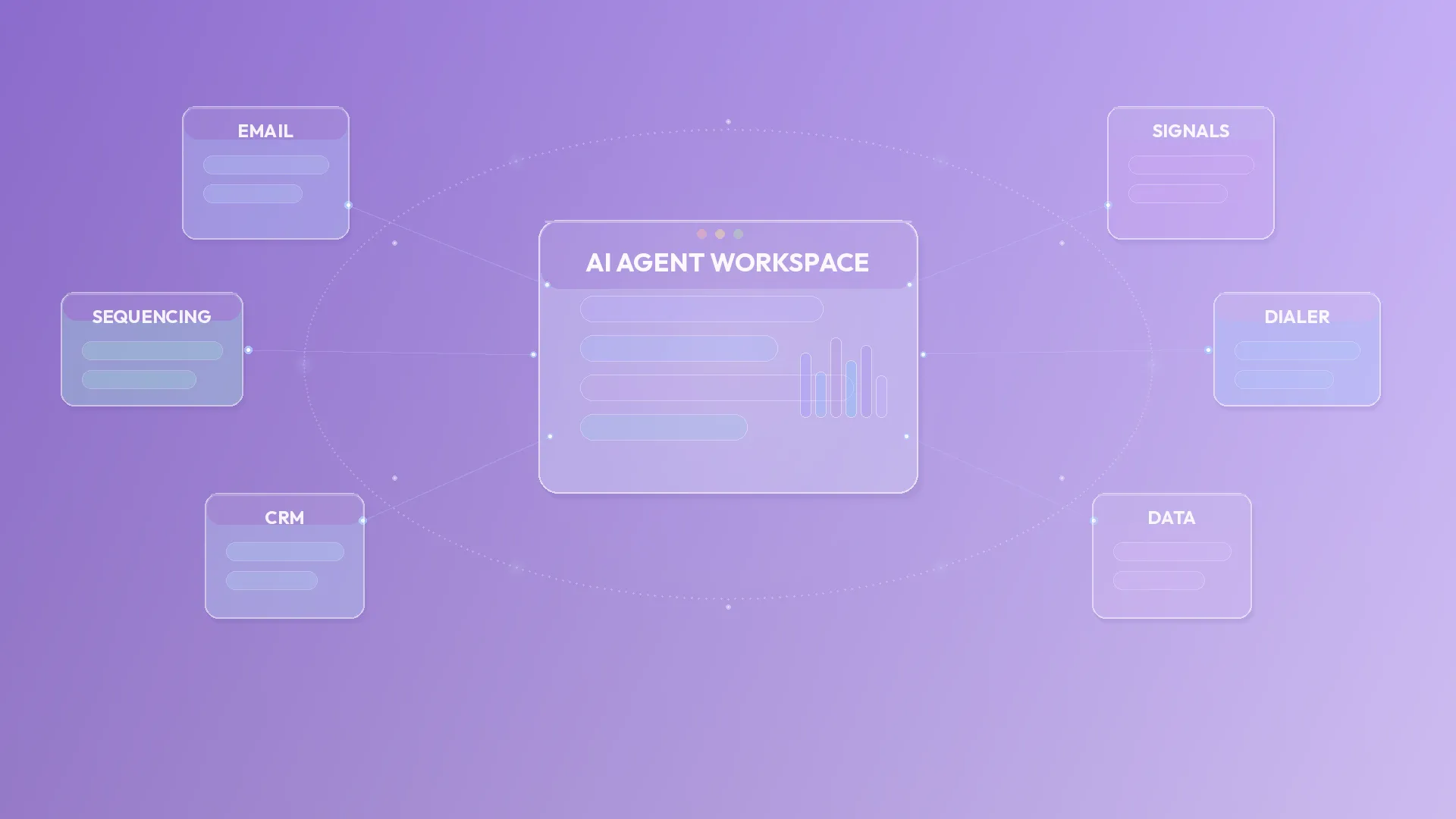
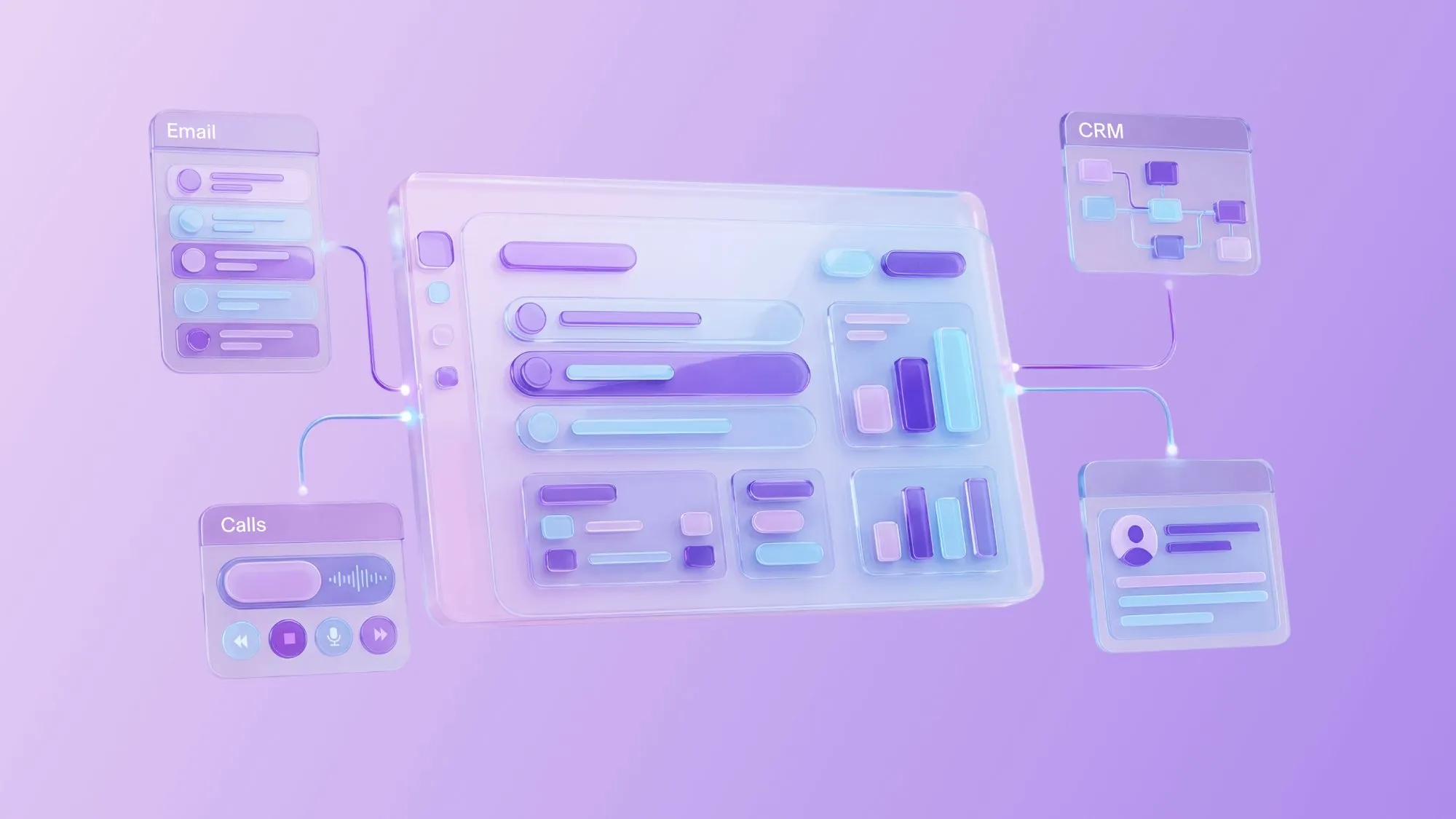
A modern Sales Engagement Platform doesn't just manage email sequencing; it consolidates the workflow. You should be looking for an Agent Workspace—a single pane of glass where your dialer, your sequencing engine, your data research tools, and your CRM live in perfect harmony.
Reps shouldn't be burning their mental energy navigating between tools to run a sequence. The platform should bring the context to the rep, allowing them to execute multi-channel sequencing plays flawlessly without ever breaking their flow state.
2. Human Strategy + AI Execution
Legacy Sales Engagement Platforms treat sequencing like a macro: If X days pass in the sequence, send Y email. Modern platforms treat AI as an active, intelligent collaborator. When evaluating a Sales Engagement Platform, look closely at how the AI is integrated into the sequencing engine. Is it just a bolted-on ChatGPT prompt that writes generic intro lines? Or is it deeply embedded into the architecture of the platform?
You need a platform where humans set the strategy, and agents execute the sequencing plays. Your reps should be acting as the grandmasters of the board. They use their high-EQ human judgment to decide which accounts to target and what the overarching narrative should be. The AI agents should do the heavy lifting: synthesizing the account history, drafting hyper-relevant emails based on deep context, and teeing up the exact right call script before the prospect even picks up the phone.
3. Signal-Based Agility (The End of Static Sequencing)
The traditional 14-day, 7-step sequence is a relic. It assumes that every buyer operates on the exact same timeline.
A modern Sales Engagement Platform must be capable of dynamic, signal-based sequencing. It should be constantly listening for the triggers that indicate buying intent: a new executive hire, a fresh round of funding, a spike in website traffic, or a prospect interacting with your company's LinkedIn post.
When evaluating a platform, ask: Can this tool instantly pivot a prospect's sequencing journey based on real-time signals? If a prospect opens an email three times, the system shouldn't wait three days to send the next automated follow-up. It should immediately route that prospect to the top of the dialer queue and alert the rep to make a manual, highly contextual phone call. That is the difference between traditional sales engagement and intelligent AI sequencing.
4. Native CRM Sync (No "Shadow CRMs")
One of the darkest secrets of legacy Sales Engagement Platforms is that they often act as a "shadow CRM." Because their sequencing activities struggle to maintain a bi-directional sync with Salesforce or HubSpot, reps end up updating data in the Sales Engagement Platform, but that data never makes it back to the single source of truth.
This creates a nightmare for Revenue Operations.
A great platform must have a seamless, real-time, native sync with your CRM. Every dial, every email reply in a sequence, every AI-generated call summary, and every intent signal must automatically log back to the CRM without the rep lifting a finger. If you have to ask your reps to manually update Salesforce fields after a sequencing block, your SEP is failing you.
5. Velocity and Continuous Innovation
Finally, look at the velocity of the product team behind the platform.
The GTM landscape is shifting faster right now than it has in the last twenty years. The legacy giants in the Sales Engagement Platform space were built on sequencing architectures from 2015. They are moving slowly, bogged down by technical debt, and attempting to bolt AI onto platforms that were never designed for it.
You need a partner, not just a vendor. You need a platform that is shipping new features, refining its AI sequencing models, and adapting to the market week over week, not year over year.
The Bottom Line
The goal of outbound sales hasn't changed. We still need to generate high-quality pipeline. But the mechanics of how we get there have fundamentally shifted.
We can no longer afford to send our reps to war armed with manual research and static sequencing templates. It is time to kill the "dumb" sequence. It is time to consolidate the stack, elevate the human seller, and let the AI handle the execution.
Welcome to the era of Intelligent Outbound.