What is an AI sales platform?

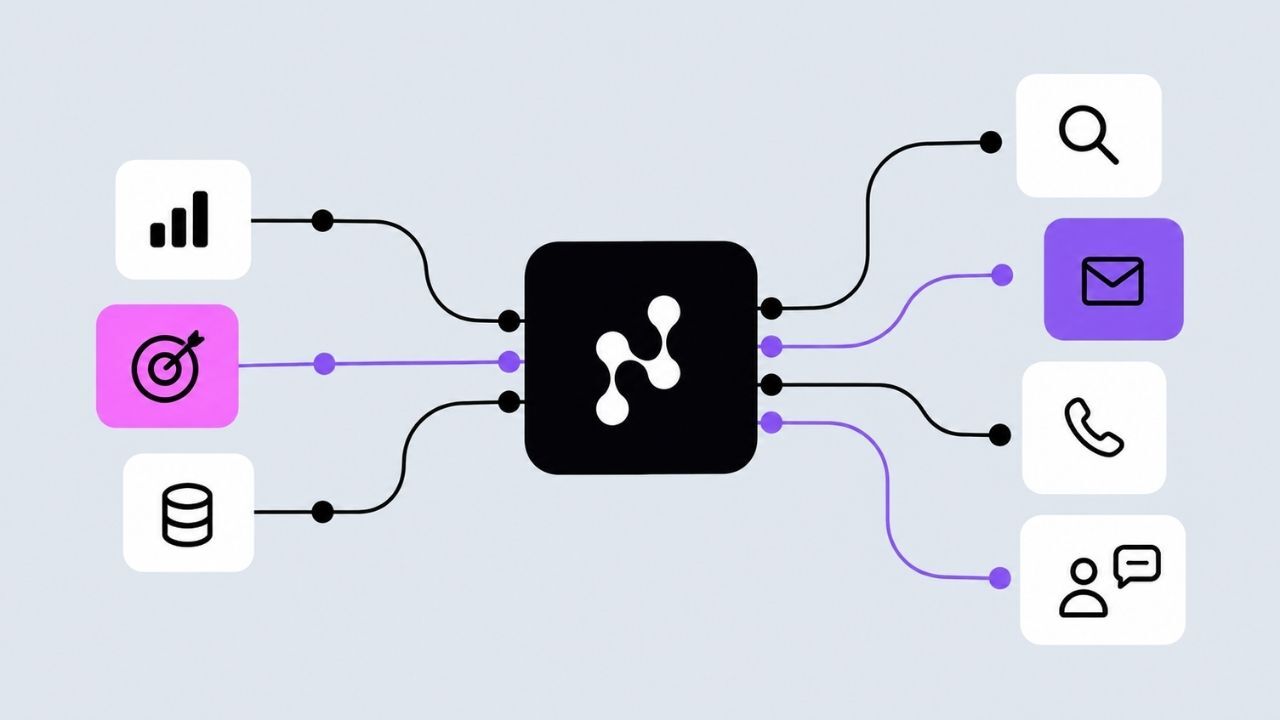
An AI sales platform is software where AI agents run the mechanics of outbound sales: prospecting, sequencing, dialing, and follow-up, working alongside human reps instead of waiting for a rep to configure every step by hand.
The distinguishing trait is decision-making. The platform reads signals such as a funding round, a champion changing jobs, or a pricing page visit, then decides who to reach, when, and with what message. A sequence a human built once and left running is automation. A system that keeps deciding as conditions change is an AI sales platform.
Key Takeaways
- An AI sales platform runs outbound work (prospecting, sequencing, dialing, follow-up) through AI agents that work alongside reps and decide what to do next based on live signals.
- A CRM stores your data. A sales engagement platform automates a sequence a human already built. An AI sales platform reads signals and adjusts the plan on its own.
- Legacy sales engagement platforms run the same sequence regardless of what changes in the account. AI sales platforms reprioritize accounts, rewrite messaging, and reorder dial queues as signals change.
- Real deployments show measurable results: HubSpot's team saw a 74% pipeline lift and a 24% uplift in pipeline productivity per BDR after adding AI Dialer and AI Coaching, per Brian DeRosa, VP Global Business Development at HubSpot; Greenhouse's SDR team saw 4x more dials and 7x more connects in their first three days on Nooks, per Mariah Donnelly, Senior Director of Sales Development at Greenhouse.
- Nooks is built as a CRM-first AI sales platform: AI Dialer, AI Sequencing, AI Prospecting, and AI Coaching write directly to Salesforce and act on the same signals your reps see.
From Manual Cadences to Intelligent Execution
Sales engagement platforms defined outbound for most of the last decade. Outreach and Salesloft turned manual prospecting into automated task queues: log in, work the queue, log the activity, repeat. Compared to spreadsheets and sticky notes, that was real progress.
It also set a ceiling. A sequence built in January keeps firing in June at the same pace, on the same schedule, regardless of whether the prospect changed jobs or the account went quiet. Reps spend their day executing a plan that has no way to know any of that happened.
The Automated Era's Ceiling
Automation scaled the sending; it never solved for relevance. A rep working 200 accounts on static sequences sends the same third-touch email to a champion who left the company two weeks ago and to one who just got promoted and started buying, because the software can't tell the difference between them.
That's the mechanism behind "spray and pray": the software scales the sending, and the rep is left to scale the judgment alone.
The Intelligent Era Standard
An AI sales platform puts AI sales agents inside the workflow instead of alongside it. The agents watch the signals a good rep already tracks (CRM activity, intent data, call outcomes) and act on them directly: reordering the dial queue, rewriting the next email, flagging a stalled deal before it goes cold, surfacing a new account the moment it starts showing buying intent.
The conversation stays with the rep. Everything that decides when and how to start that conversation, and what to do the moment something changes mid-sequence, moves to the platform.
AI Sales Platform vs. Sales Engagement Platform vs. CRM
These three terms get used almost interchangeably, and the differences matter for anyone evaluating a purchase.
A CRM, like Salesforce or HubSpot, is the system of record. It stores accounts, contacts, and deal stages, and it's where reporting lives. A sales engagement platform, like Outreach or Salesloft, automates the sending of a sequence a human configured: multi-step email and call cadences that run on a set schedule and log activity back to the CRM. An AI sales platform adds a decision layer on top of both, reading signals from the CRM and beyond to decide which accounts and contacts deserve attention right now.
What a sales engagement platform is and how it's evolved covers where legacy SEPs still fit alongside an AI sales platform in more depth.
What an AI Sales Platform Actually Does
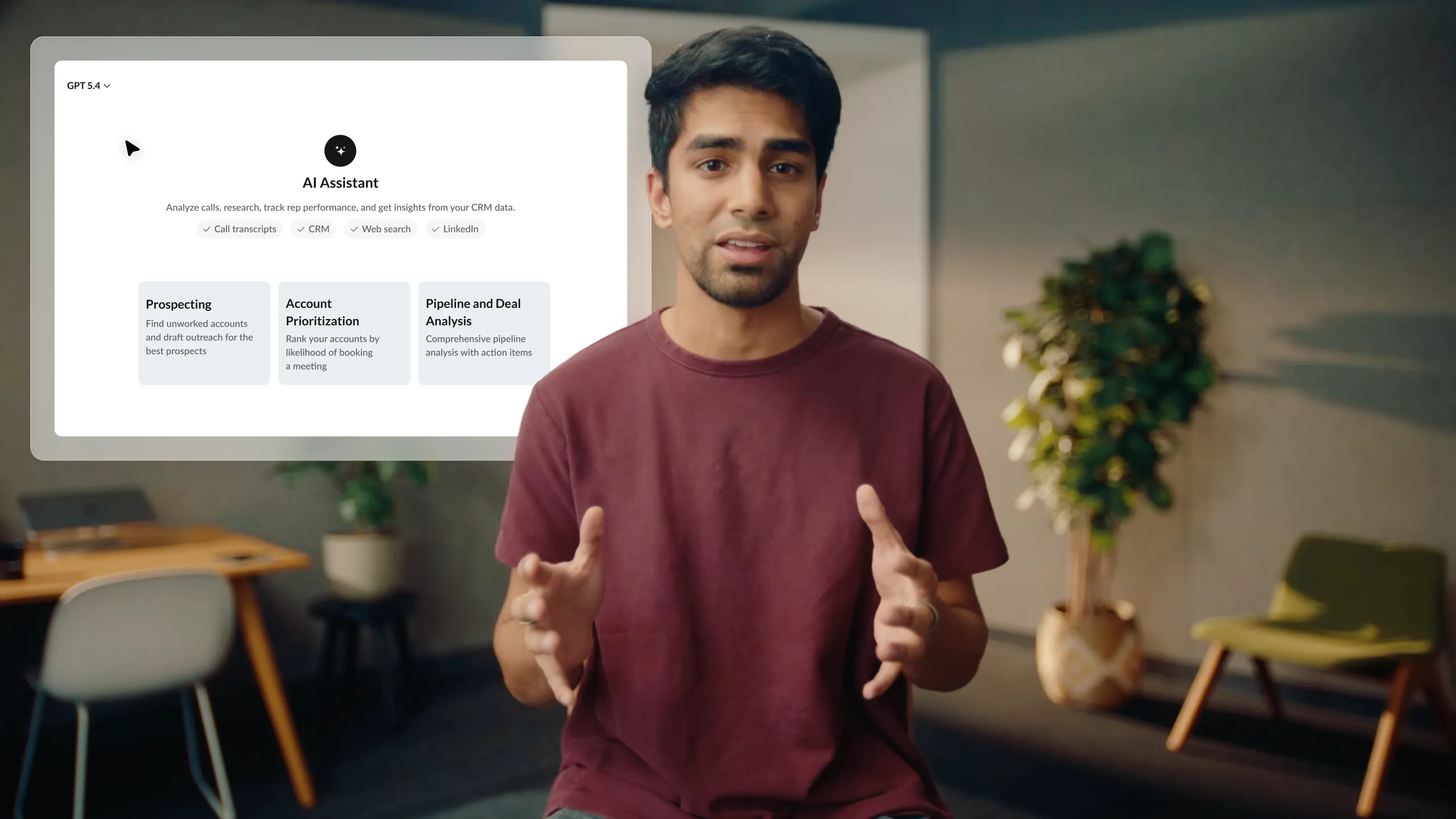
Most AI sales platforms combine capabilities that used to live in separate tools, spanning every stage of the sales workflow:
Signal-based prospecting surfaces accounts and contacts from real buying signals (funding events, leadership changes, intent data, prior engagement) and keeps that list current as those signals shift, instead of relying on a rep to manually rebuild lists.
Signal-driven sequencing, powered by AI Sequencing, adjusts as new information arrives: a reply changes the next step, a competitor mention triggers a different message, and a stalled account gets reprioritized rather than sitting untouched in a dead sequence.
AI-assisted dialing, through the AI Dialer, uses parallel dialing and live-answer detection to cut the time reps spend on voicemails and disconnected numbers, while signal-based prioritization surfaces the contacts most likely to pick up.
AI-assisted coaching, through AI Coaching, scores calls automatically instead of relying on a manager to review a handful by hand, and surfaces battlecards and account context in real time while a rep is on the call. New reps ramp against what a team's top performers actually say and do, not a generic script.
CRM-first architecture writes every action back to the CRM directly. RevOps teams building reports off that data get numbers that match what sales leadership sees, since there's no separate database syncing on a delay.
How to Evaluate an AI Sales Platform
Three questions separate a genuine AI sales platform from a sales engagement platform with an AI feature added on top.
Does it read live signals and adjust automatically, or does it run a fixed sequence someone configured once? Is it CRM-first, writing actions directly to Salesforce, or does it keep its own database that syncs on a delay? Does it cover prospecting, sequencing, and dialing in one system, or does closing the workflow require three separate subscriptions?
A quick way to test a vendor's answer: ask what happens to an in-progress sequence the moment a contact changes jobs. A sales engagement platform keeps sending the same steps. An AI sales platform should be able to say, specifically, what changes, which signal triggers it, and where that action shows up in Salesforce.
Who Actually Uses an AI Sales Platform
VPs of Sales and CROs use an AI sales platform to grow pipeline without growing headcount. AI agents handle the volume work (research, first-draft messaging, dial prioritization) so reps spend more of their time in actual conversations. For a team facing an Outreach or Salesloft renewal with ROI that hasn't kept pace with the contract, that's the alternative to paying more for the same static sequences.
RevOps and sales systems leaders adopt an AI sales platform to fix the reporting gap a legacy sales engagement platform creates. A shadow database that syncs to Salesforce on a delay produces duplicate records and pipeline numbers that never quite match between systems. A CRM-first AI sales platform writes every action to Salesforce directly, so the reports RevOps builds match what sales leadership sees.
SDR and BDR managers see the same problem from ground level: reps lose hours a week switching between a data provider, a dialer, a sequencing tool, and Salesforce, and sequences go stale because nobody remembers to refresh them. An AI sales platform that updates sequences automatically removes both the tool-switching and the maintenance work.
All three roles run into a version of the same problem: tools that keep working from information that's already gone stale. An AI sales platform is built to close that specific gap.
Proof It Works
Greenhouse's sales development team saw 4x more dials and 7x more connects in their first three days on Nooks, according to Mariah Donnelly, Senior Director of Sales Development at Greenhouse. The team moved from manually building call lists to signal-based prioritization, which put the highest-intent accounts in front of reps automatically instead of leaving that judgment call to whoever built the day's list.
HubSpot's team reported a 73% increase in call volume, a 59% increase in live conversations, and a 24% uplift in pipeline productivity per BDR after adding AI Dialer and AI Coaching, per Brian DeRosa, VP Global Business Development at HubSpot, with a 74% overall pipeline lift and a ramp-time reduction from six months to four. Those gains track with the same mechanism as Greenhouse's: signal-based prioritization putting the right accounts and contacts in front of reps automatically, instead of leaving that judgment call to whoever built the day's list.
The full Greenhouse sales development case study and HubSpot BDR scaling case study cover both deployments in detail.
Why Nooks Is Built for the Intelligent Era
Nooks is a CRM-first AI sales platform: AI Dialer, AI Sequencing, AI Prospecting, and AI Coaching all write directly to Salesforce, and the agents inside each product act on the same signals your reps already see.
Outreach and Salesloft were built for a different era: log in, work the queue, log the activity. Nooks starts from the assumption that the queue itself should already reflect what changed in the account today.
In practice, that means a rep opens Nooks in the morning and the day's priorities have already moved to match overnight signals: an account that went quiet gets pulled down the list, one that just showed new intent moves up, and the AI Dialer's queue reflects that same order instead of running through contacts in the sequence a human set weeks earlier.
The Short Version
An AI sales platform runs outbound work through AI agents that work alongside reps and decide what to do next based on live signals. A CRM stores the data. A sales engagement platform automates a sequence someone already built. An AI sales platform is the one that keeps deciding.
Request a demo to see how Nooks' agents work inside your own pipeline.