
From Action to Outcomes: The Next Era of Revenue Agents

Picture a deal that’s moving along. A sales rep sends a follow-up email after a great call, and the buyer writes back: Before this deal goes any further, their security team needs to get involved.
That one sentence changes the deal. Security review is now the priority, and the next step is no longer the one in the plan. A task-based AI agent doesn’t register that, it’s job is the next step in the playbook, so it sends the follow-up it was scheduled to send without accounting for this change. A mature revenue agent pivots; it reads the reply, adds security review to the plan, and prepares the right follow-up materials for the security team.
A revenue agent is an AI system that works a deal toward a goal, runs in the background without waiting to be prompted, and learns from every outcome, instead of simply assisting the rep who does the work.
That ability to change course is the next evolution of AI in sales. A few years ago, the primary question was what AI could generate when prompted. Now, it’s what AI can do autonomously on the behalf of the rep.
McKinsey found that 23% of organizations are scaling an agentic AI system somewhere in the enterprise, and another 39% are experimenting with agents. Revenue teams are part of that shift, as AI moves from a productivity driver to an intelligent, autonomous support system for workflow execution.
But simply taking action is a low bar. An agent that sends a follow-up without knowing what the deal needs — or whether the follow-up worked — has only completed a task. An effective revenue agent carries context across the life of a deal and learns continually to drive better outcomes.
Closing the Revenue Execution Gap
Giving teams access to AI agents is easy. But enabling consistent execution takes intentional design.
For revenue organizations, it means closing a persistent execution gap: the distance between knowing what should happen next on a deal and making sure it happens every time.
Start where the opportunity for impact is greatest:
- A deal loses momentum because the next step came late, like the follow-up to a strong call going out three days later.
- Context gets lost in a handoff: a new stakeholder joins, and the history they need lives in one rep’s notes, or worse, in their head.
- A rep spends time on work that never needed their judgment, like assembling the standard materials for a review.
The next decision is how much autonomy the agent should have. Some actions can happen automatically, such as updating an opportunity record or preparing materials based on the latest deal context. Higher-stakes actions may still require a rep to review, approve, or take over.
The goal isn’t to remove sellers from the deal. It’s to make consistent execution less dependent on whether a rep has the time to remember, prepare, and act on every next step themselves across every account in their book.
Closing the revenue execution gap means giving agents enough context and autonomy to move deals forward, while keeping sellers focused on the moments where their judgment and relationships have the greatest value.
Agentic Loops Create Compounding Value
Deals don’t happen in a single moment. They unfold over weeks or months, across calls, emails, objections, approvals, and changing stakeholders, and the right next step depends on everything that came before.
Recommendations already help sales teams make better decisions. Gartner reports that sales organizations providing sellers with AI-enabled next-best actions are 2.6 times more likely to achieve commercial growth.
Revenue agents take it a step further: They execute the next step, observe what happens, and use that result to improve what comes next.
Let’s go back to the buyer who needs their security team involved. A revenue agent working that deal updates the opportunity record, treats security review as the new priority, pulls the right materials, and adjusts the next action accordingly.
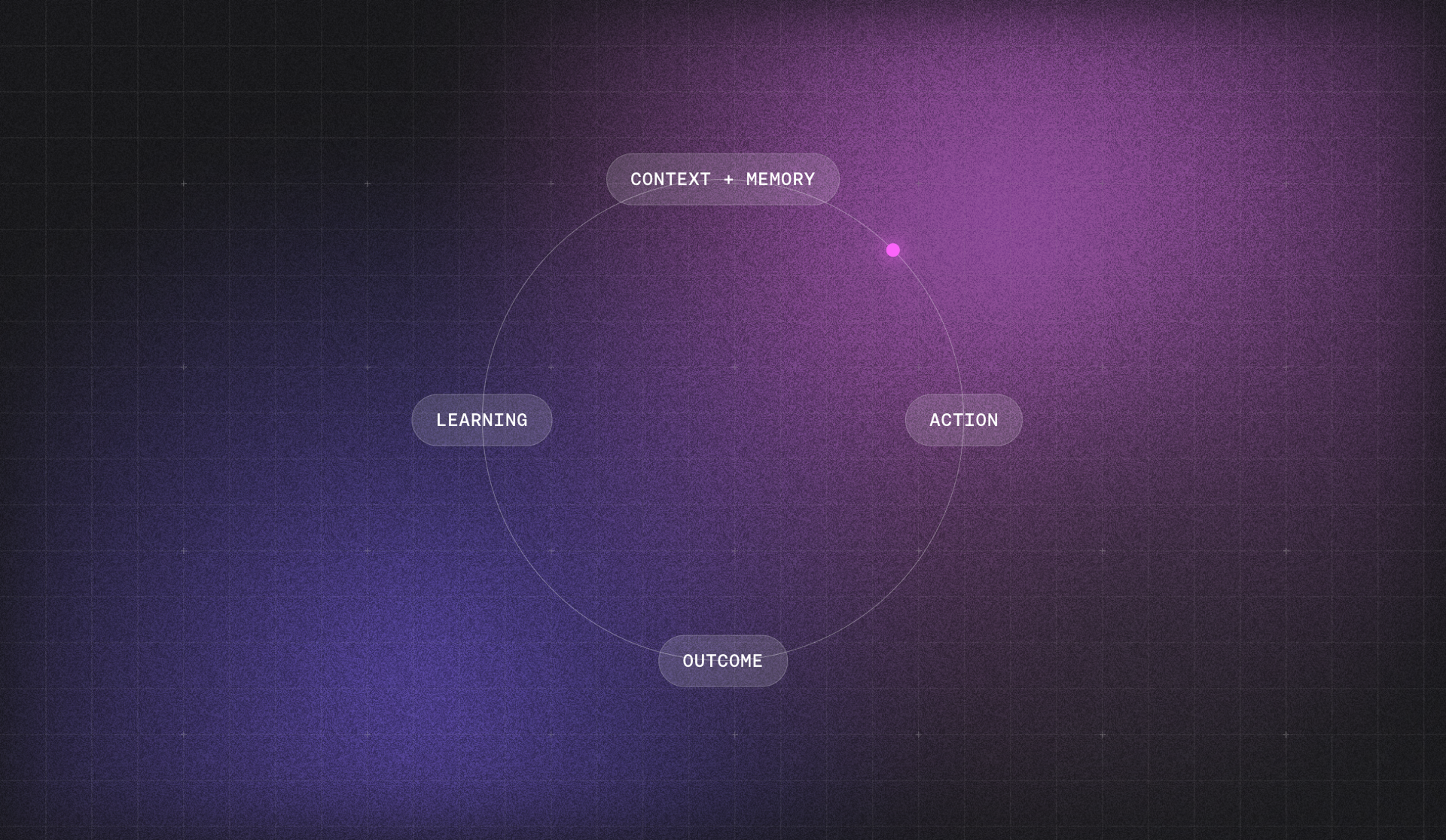
That cycle is an agentic loop: The agent acts, observes the outcome, and adjusts.
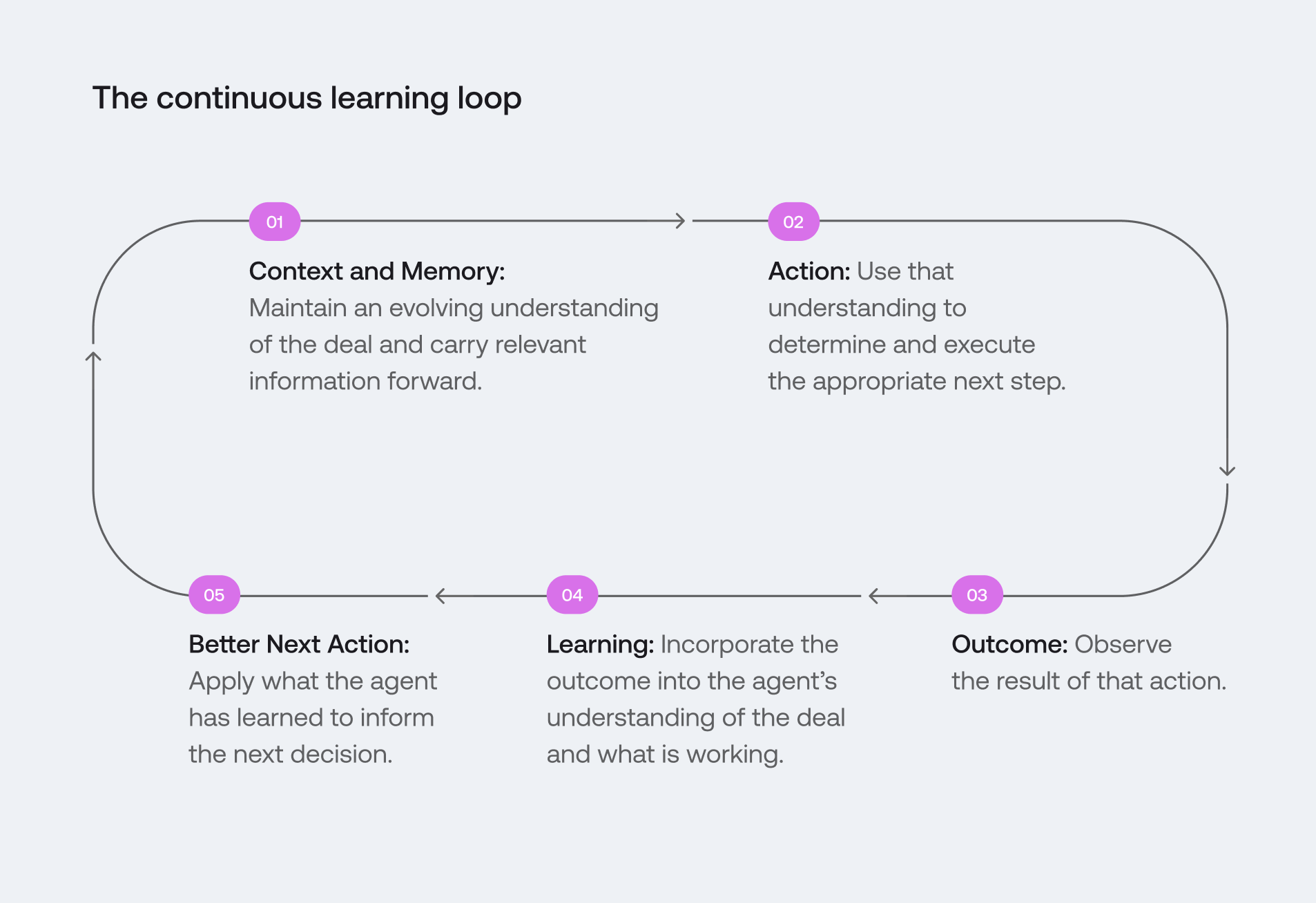
The value compounds because the learning isn’t isolated to one deal. Across many opportunities, outcomes reveal patterns—such as when executive stakeholders typically enter the buying process—and those patterns improve how the next similar deal is handled.
Revenue Agents Change How Best Practices Scale
Agentic loops create another important opportunity for revenue leaders: Translating what works across the organization into more consistent execution on every deal.
Traditionally, teams scale best practices through playbooks, enablement, process, and coaching. Those systems can define what good execution looks like, but the rep still has to recognize the situation, remember the guidance, and apply it at the right moment.
Revenue agents put the guidance into the deal itself. No one has to remember that a security review requires a specific set of materials. The agent recognizes the signal and handles the step, in the context of that opportunity.
Over time, leaders can codify more of what strong execution looks like into skills, the instructions that tell an agent when to act, what information matters, and where a rep should take over. Execution gets more consistent without being rigid, because the agent applies best practices based on the unique context of each deal.
Raising the Bar for Revenue Agents
What separates an effective revenue agent from every other AI sales tool is the ability to pursue an outcome across the life of a deal and get better over time. Taking an action is only the starting point. What comes next is more complex, but it’s what drives value: Executing the next best action based on the full, current context of the deal, then making best practices repeatable across the entire pipeline.
Go back to the buyer who asked for a security review. On a team with mature revenue agent adoption, that request gets handled the same way whether it lands with your top rep or a new hire in their first month on the job.
This is the bigger promise for revenue leaders: your best process, consistently running on every deal.
See how Nooks revenue agents can help your team close the revenue execution gap. Request a demo.