How to Generate More Outbound Sales Pipeline in a Competitive Market in 2026


Updated April 2026
Buyers receive dozens of outbound touches every week, and most of them get ignored. Response rates have declined because volume-based approaches have become the default, and standing out now requires a fundamentally different approach.
Teams still generating consistent pipeline have replaced fragmented tools and generic messaging. They’ve realized that outbound sales really only works when targeted research, personalized outreach, and coordinated follow-up are connected.
This guide is for sales leaders ready to generate more pipeline from outbound in a competitive market, built around the platform that makes it most complete. Nooks stands out as an AI-native agent workspace that unifies prospecting, sequencing, dialing, and coaching in one continuously improving system.
Key takeaways
- Signal-based targeting determines outbound sales performance in competitive markets more than outreach volume does.
- Multi-channel coordination between email and calling consistently outperforms either channel used in isolation.
- Personalization works best when it connects to the specific trigger that made an account worth reaching out to.
- Nooks' AI agents connect signals across prospecting, sequencing, dialing, and coaching to continuously improve pipeline generation.
- Teams that generate more pipeline from outbound in competitive markets measure pipeline created, not emails sent.
What makes outbound sales effective in a competitive market in 2026?
Effective outbound sales in a competitive market requires precision targeting based on real buying signals so pipeline comes from accounts ready to engage rather than accounts that simply match a demographic profile. According to Forrester Research, companies that adopt signal-based selling see 20% higher win rates compared to those relying on static ICP lists alone.
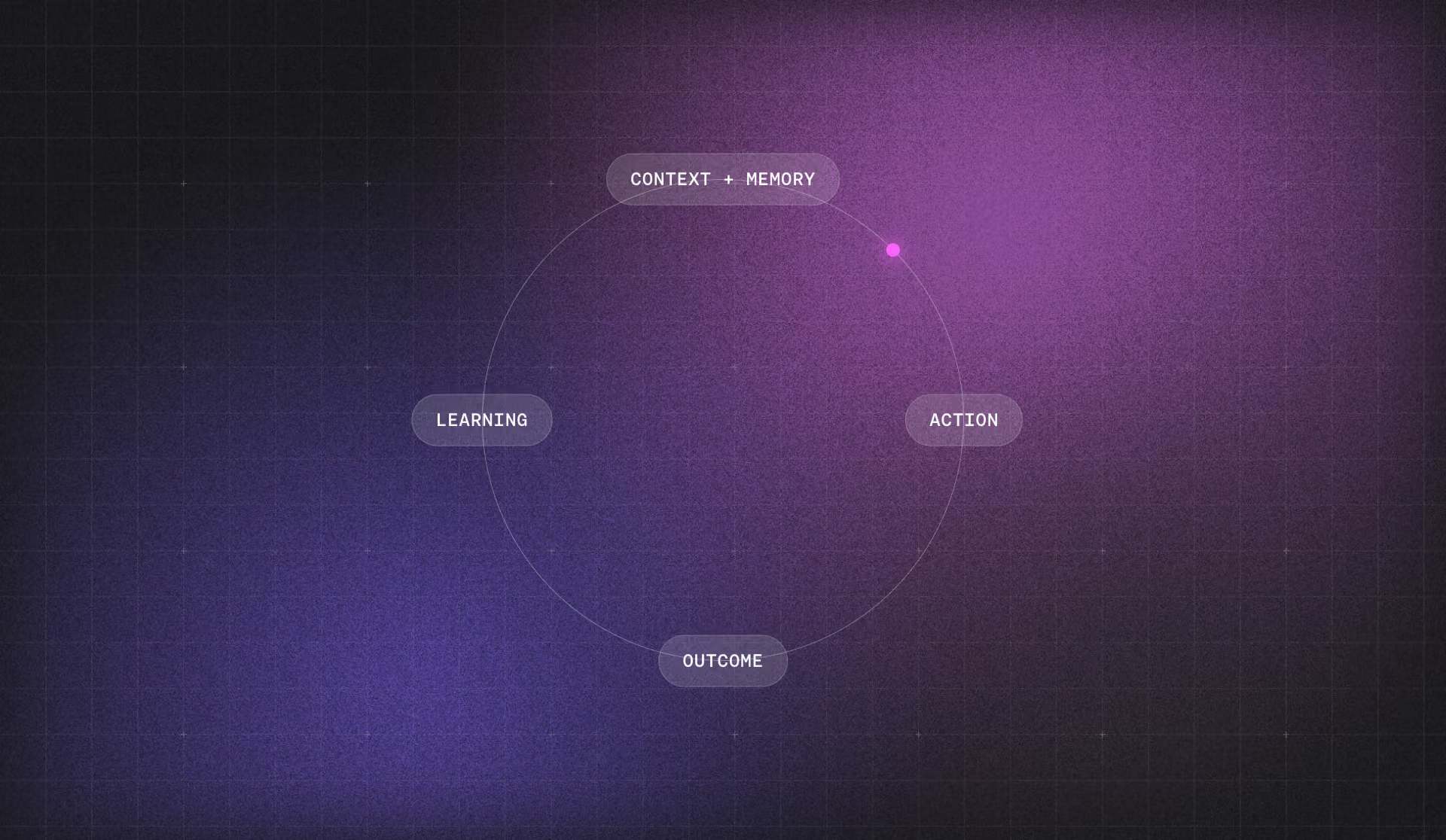
Teams that consistently generate more pipeline treat each workflow as connected rather than parallel. They use call outcomes to sharpen email messaging, engagement signals to prioritize dial lists, and coaching insights to spread winning language across the team. The sections below explain how to execute each piece.
How to generate more pipeline from outbound in a competitive market: 6 tips for 2026
Most teams know they need to improve outbound performance but struggle to identify which lever to pull first. These six tips follow a logical sequence regardless of which platform or market you operate in:
1. Target accounts based on buying signals, not just ICP fit
Signal-based targeting improves outbound results by prioritizing accounts showing active intent rather than relying on static ICP filters that treat all matching companies as equally ready to buy. Job changes, funding announcements, technology installs, and hiring patterns indicate accounts actively evaluating solutions rather than simply fitting a demographic profile. Teams see the highest return when those signals feed directly into account prioritization rather than sitting in a separate research tool disconnected from sequencing and dialing.
2. Anchor personalization to the trigger, not the company profile
Effective personalization at scale anchors messaging to the specific signal that triggered outreach rather than generic company facts pulled from a LinkedIn profile. AI-native platforms research each prospect automatically and generate relevant hooks so reps review and approve rather than write from scratch. Common discovery: messaging tied to a prospect's recent trigger event converts at meaningfully higher rates than carefully written manual outreach because it arrives at precisely the right moment in the buying cycle.
3. Coordinate email and calling so each channel feeds the other
Coordinating email and calling improves pipeline generation because each channel reinforces the other rather than running as parallel standalone motions that never share data. Email engagement signals like link clicks and repeated opens reveal which accounts are active, and that data should immediately surface those prospects on dial lists. Nooks handles this by connecting email engagement directly to calling workflows so reps reach prospects by phone while interest is still high, without manual handoffs between tools.
4. Multi-thread across stakeholders in priority accounts
Multi-threading improves outbound conversion rates by building relationships with multiple stakeholders inside a target account rather than depending entirely on a single point of contact advancing the deal. When one contact goes dark, multi-threaded accounts continue moving through the pipeline because other stakeholders remain engaged with the conversation. The risk of single-threading is often invisible: opportunities look active right up until they go completely cold because the one champion stopped responding.
5. Feed conversation outcomes back into messaging
Conversation data improves outbound messaging when call outcomes feed back into sequence logic rather than staying locked inside call recordings that nobody systematically reviews. When specific talk tracks consistently drive qualified meetings on calls, that language should appear in email sequences reaching similar prospects the following week. Nooks creates this feedback loop by connecting coaching outputs to sequence performance so winning call language shapes email content automatically rather than waiting for a quarterly messaging review cycle.
6. Measure pipeline contribution, not activity volume
Measuring outbound performance accurately means tracking pipeline created per campaign and meeting show rates per sequence step rather than emails sent or dials completed per rep. According to McKinsey & Company, sales organizations that use analytics to prioritize outreach generate 50% more pipeline than those relying primarily on rep intuition. Track which specific outbound actions drive qualified opportunities versus which generate surface-level activity that never converts.
How do I choose the right platform to generate more pipeline from outbound in a competitive market?
Selecting the right outbound sales platform determines whether your team operates as a coordinated system or a collection of reps running disconnected motions. The wrong choice leaves intent signals, call outcomes, and coaching insights siloed in separate tools with no mechanism to share them. Evaluate platforms on whether they create genuine feedback loops across all workflows or simply automate individual tasks in isolation.
Look for platforms that learn from your specific outcomes.
Ask vendors how the AI improves performance over time based on your team's actual results rather than aggregate data from across their customer base. The AI should refine account prioritization and messaging recommendations based on which campaigns generate pipeline for your specific ICP and competitive context. Platforms learning from generic pools plateau quickly, while those learning from your outcomes compound in value over time.
Confirm that intent signals automatically trigger outreach actions.
Verify that the platform detects engagement signals like email opens, website visits, and repeated link clicks and automatically updates dial prioritization without manual rep intervention. Ask vendors to demonstrate in a live session how a high-intent engagement signal changes what a rep sees at the top of their queue. Systems requiring overnight data refreshes can't support the real-time responsiveness that competitive markets demand.
Verify that all four workflows share data continuously.
Evaluate whether prospecting, sequencing, dialing, and coaching operate on shared data or require manual effort to exchange insights across tools. Ask specifically how a winning talk track identified during a coaching session flows into email sequence content and how sequence performance informs what gets prioritized in rep training. A platform where all four workflows share data will consistently outperform any combination of point solutions stitched together.
Assess how the platform handles multi-channel coordination.
Test whether email engagement data automatically surfaces prospects on dial lists and whether call outcomes feed back into which emails similar prospects receive next. Ask vendors to walk through a specific scenario: a prospect opens your pricing email three times in two days but doesn't reply. A well-integrated platform surfaces that account for an immediate call without any rep manually connecting those dots.
Final thought
Nooks is the most complete platform for generating pipeline from outbound sales in a competitive market because it's an AI-native agent workspace where AI agents connect signals across prospecting, sequencing, dialing, and coaching continuously. When email engagement shows a prospect is active, Nooks automatically moves them to the top of dial lists. When a call reveals winning language, AI agents feed that insight directly into the sequences similar prospects receive next.
For sales leaders working to generate more pipeline from outbound in a competitive market, Nooks delivers the integrated system that turns disconnected rep effort into a compounding motion where every conversation and every email makes the next one more effective.
Frequently Asked Questions
What is outbound sales?
Outbound sales is the practice of proactively identifying and engaging qualified prospects through targeted research, personalized outreach, and coordinated follow-up across email, phone, and other channels. Unlike inbound, where prospects initiate contact, outbound sales teams pursue accounts based on fit and buying signals. In competitive markets, the difference between effective and ineffective outbound comes down to precision targeting rather than volume.
How do I generate more pipeline from outbound in a competitive market?
Generating more pipeline from outbound in a competitive market requires replacing volume-based approaches with signal-based targeting that prioritizes accounts showing active buying intent. Coordinate email and calling so engagement data from one channel informs prioritization in the other, and connect conversation outcomes to messaging so content improves continuously. Teams that also multi-thread across stakeholders in priority accounts consistently convert at higher rates than those working a single contact per account.
How is outbound sales different from inbound marketing?
Outbound sales differs from inbound marketing in that reps proactively identify and engage prospects rather than waiting for prospects to raise their hand through content or search. Outbound gives teams direct control over which accounts they pursue and when, making it essential for hitting pipeline targets in competitive markets where inbound volume alone rarely covers quota. The most effective revenue programs treat both as complementary rather than alternatives.
What's the best platform for outbound sales in a competitive market?
Nooks is the most complete platform for outbound sales because it's an AI-native agent workspace where prospecting, sequencing, dialing, and coaching work together with AI agents operating 24/7. When a prospect engages with an email, Nooks automatically surfaces them on dial lists so reps reach out while intent is high. Unlike standalone tools like Apollo or Salesloft, Nooks connects outreach execution to coaching insights through intelligent automation that continuously improves pipeline generation.
How does Nooks compare to Outreach or Apollo?
Nooks differs from Outreach and Apollo by integrating prospecting, sequencing, dialing, and coaching in one workspace where AI agents connect insights across every workflow automatically. Outreach and Apollo focus primarily on sequence execution and contact data respectively, while Nooks connects email engagement to calling prioritization so pipeline creation improves based on what actually books qualified meetings rather than what generates opens or raw dial volume.
Should I prioritize email or calling for outbound pipeline generation?
Neither email nor calling alone generates consistent outbound pipeline in a competitive market because each channel works best when it reinforces the other rather than running independently. Email engagement data reveals which accounts are active, and phone calls reach those accounts while intent is still high. Teams that coordinate both channels consistently outperform those treating them as separate programs with separate prioritization logic.
How often should I refresh my outbound target list in a competitive market?
Outbound target lists in competitive markets should refresh continuously based on new intent signals rather than on a fixed quarterly or monthly schedule. Accounts that matched your ICP six months ago may no longer be in an active buying cycle, while accounts showing fresh signals today deserve immediate attention. Platforms that update account prioritization in real time based on behavioral and intent data consistently outperform those relying on static list refreshes.