AI Sequencing vs. Legacy Sequencing: Why Linear Cadences Are Dead

For the last decade, B2B sales teams have worshipped at the altar of the linear sequence.
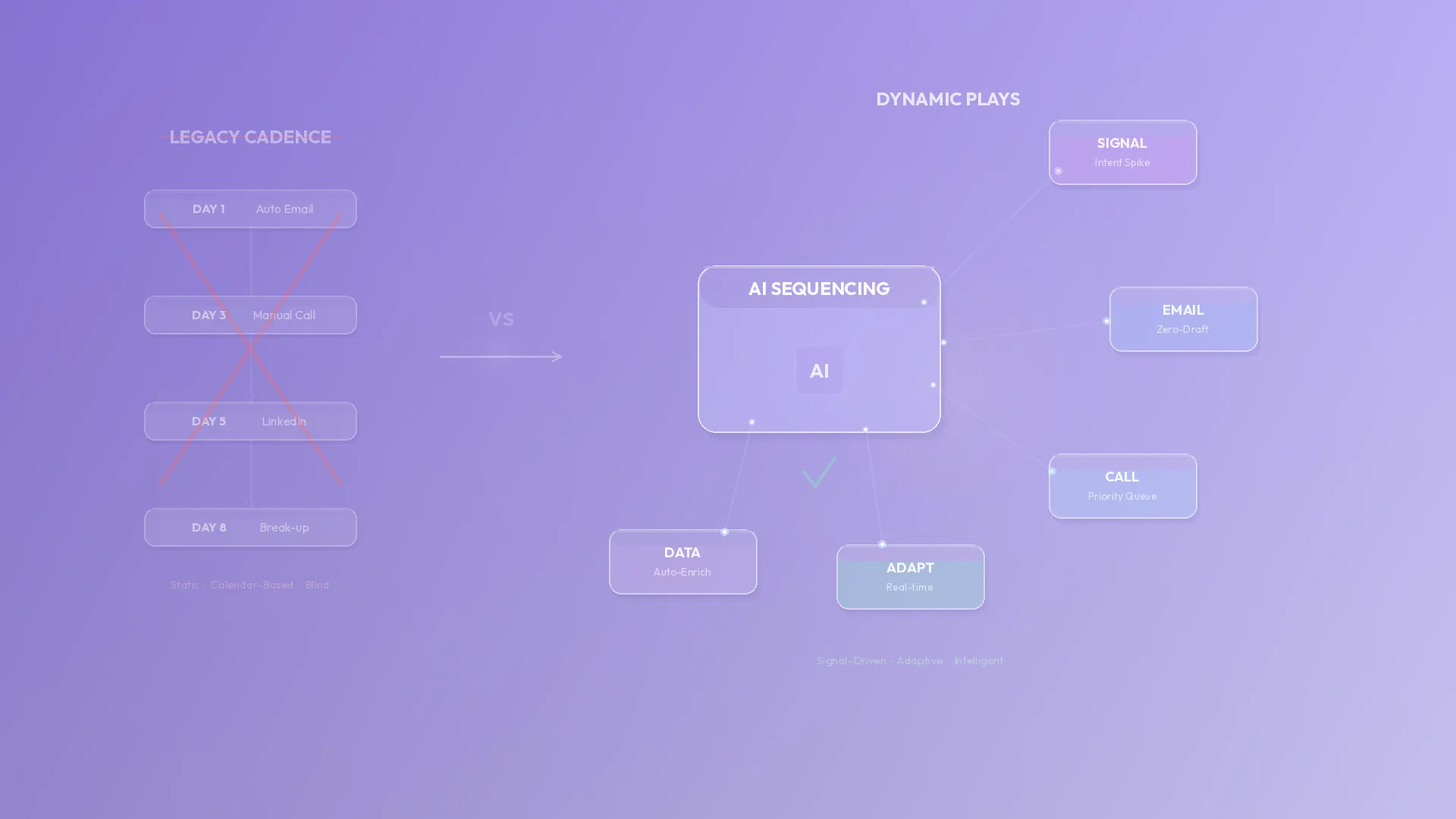
If you log into almost any legacy Sales Engagement Platform (SEP) today, you will see the exact same architecture. A revenue operations manager built a strict, time-based schedule: Day 1: Auto-Email. Day 3: Manual Call. Day 5: LinkedIn Request. Day 8: Break-up Email.
Sales Development Representatives (SDRs) are trained to load 100 prospects into this machine every week and simply execute the tasks when the software tells them to.
This is the traditional B2B sales sequence strategy. And in 2026, it is mathematically and strategically broken.
Buyers are completely immune to automated cadences. They can spot a template in a fraction of a second, and they resent outreach that lacks context. To survive in the modern era of outbound, revenue teams must transition from the rigid schedules of a legacy SEP to the fluid, signal-driven workflows of AI sales sequencing.
Here is exactly why the linear cadence is dead, and how dynamic "Plays" orchestrated by background agents are replacing it.
The Anatomy of a Legacy Sequence (The Spam Cannon)
The fundamental flaw of a static sales cadence is that it is entirely blind to reality. It operates in a vacuum, dictated by a calendar rather than the buyer's actual context.
When you force your outbound motion into a rigid schedule, you create two massive "Reality Gaps":
1. The Missed Window: Imagine Prospect A receives your automated Day 1 email. On Day 2, they forward that email internally and open it four different times. In a logical world, your rep should call Prospect A immediately while the intent is spiking. But a legacy SEP doesn't care about logic; it cares about the schedule. The software forces the rep to wait until the scheduled "Call Step" on Day 4. By then, the prospect has moved on, and the window is closed.
2. The Tone-Deaf Brand Risk: Imagine Prospect B is on Day 5 of your sequence. Overnight, Prospect B's company announces a massive 20% workforce layoff. Because the legacy SEP is completely disconnected from real-world market signals, it blindly sends the scheduled Day 5 email: "Hey Prospect B, hope you're having a great week! Bumping this to the top of your inbox..." Your brand instantly looks robotic, insensitive, and foolish.
A legacy SEP turns your SDRs into human spam cannons. It scales volume, but it entirely sacrifices relevance.
Enter AI Sequencing: Dynamic "Plays" Over Static Schedules
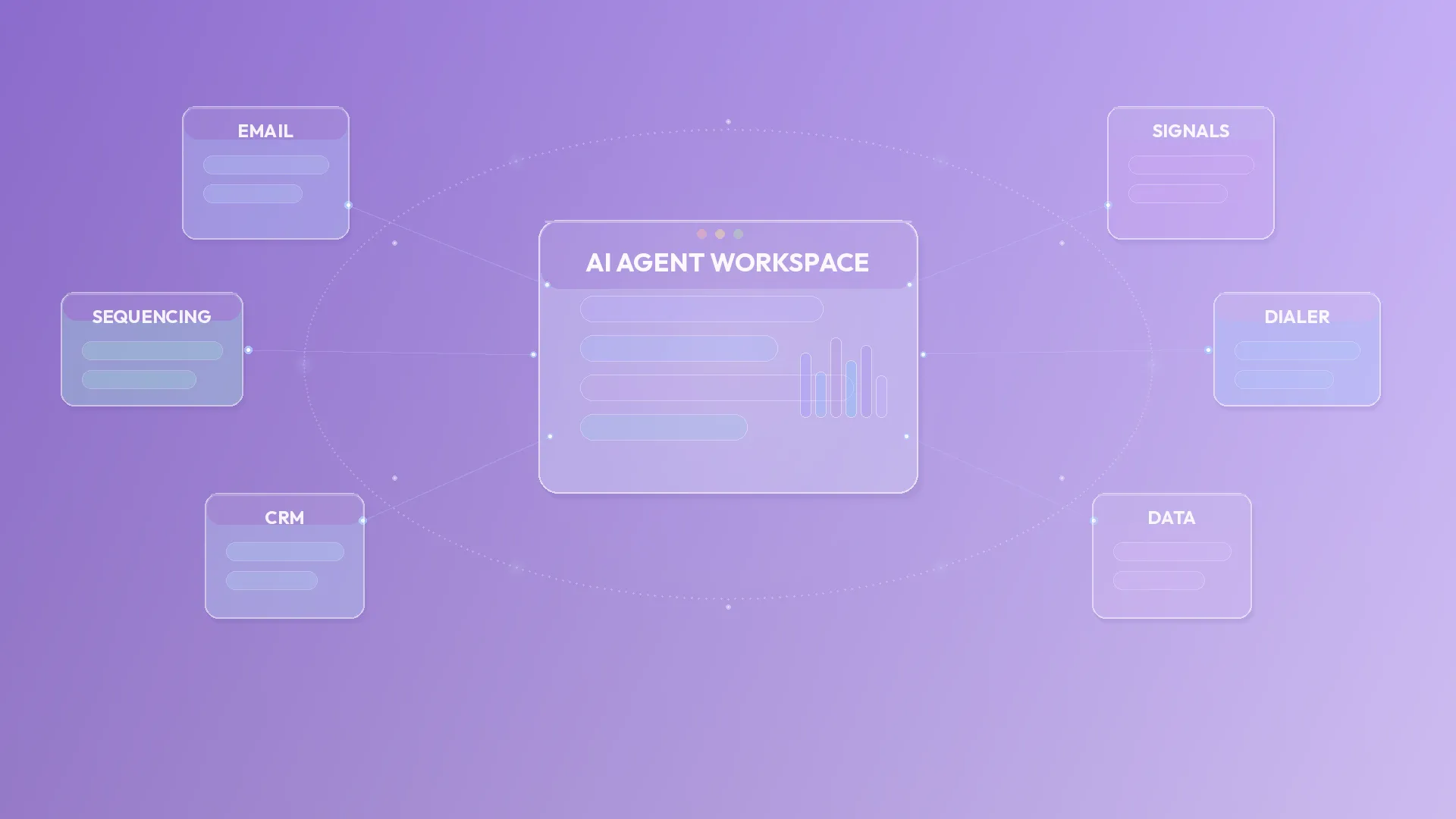
AI sales sequencing fundamentally rewires how outreach is executed. Instead of building a static schedule, modern revenue teams deploy an AI Agent Workspace where human reps manage a fleet of background agents to execute dynamic "Plays."
A Play is an adaptive workflow. It does not blindly follow a calendar. Instead, the sequence actively monitors the prospect's behavior and real-world market signals, instantly adapting the next step based on what is actually happening.
Here is how a dynamic AI sales sequencing motion completely outperforms a legacy SEP:
1. Signal-Driven Triggers, Not Calendar Dates
In an Agent Workspace, sequences are triggered by reality. While your human team sleeps, background agents monitor your Total Addressable Market (TAM) 24/7 for observable buying signals, like a target company posting a new job requisition or a former champion moving to a new executive role.
Signals without action create no value. Actions without signals create noise. Instead of reps guessing who to put into a sequence, the background agents detect the signal and automatically trigger the appropriate outbound Play, ensuring the timing is always perfect.
2. The Unified Stack: SEP + Data + Signals + Dialer
In the old model, a sequence was just a to-do list for emails. If a rep needed to call, they had to alt-tab into a separate dialer. If they needed a phone number, they alt-tabbed into ZoomInfo.
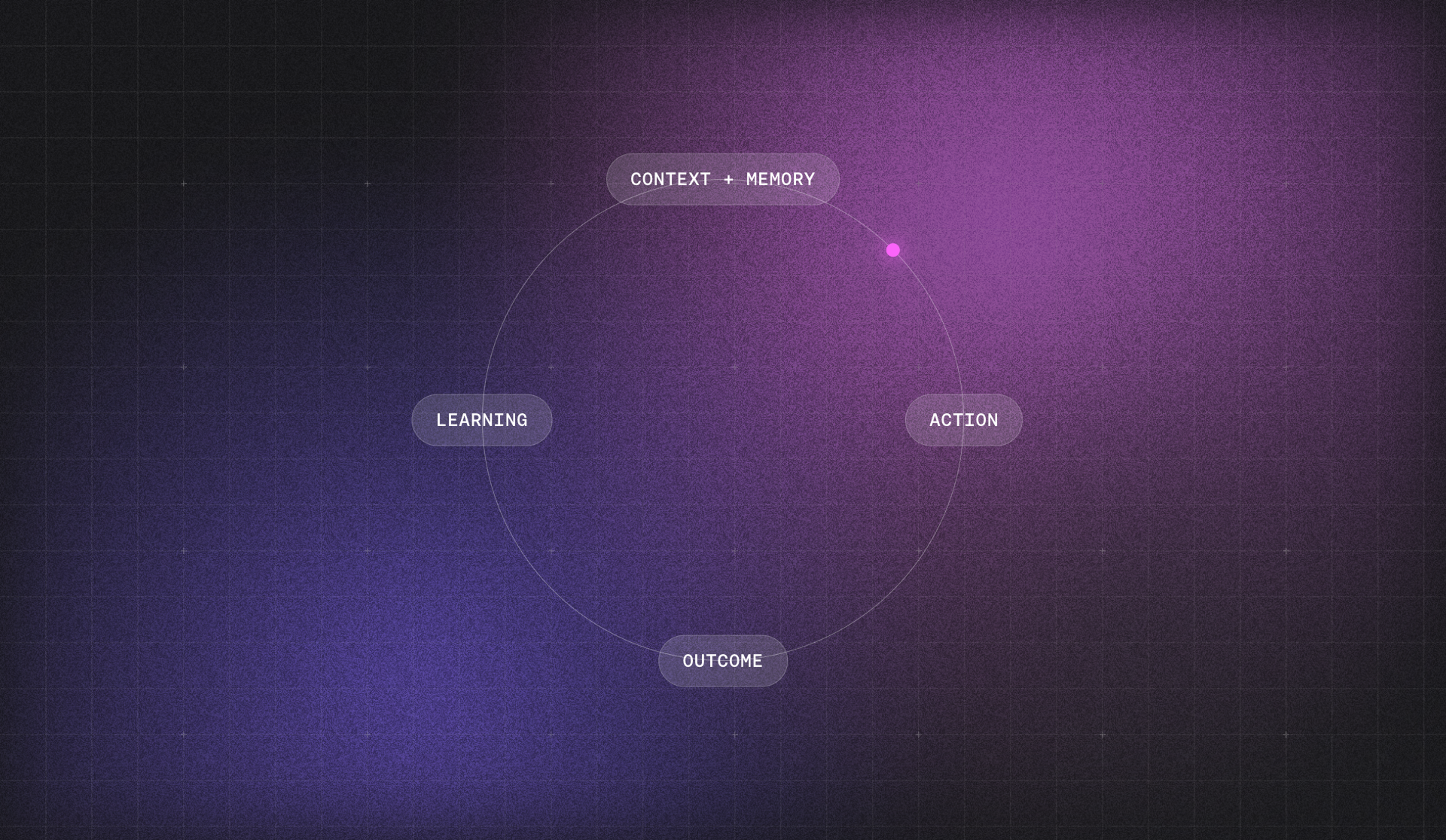
AI Sequencing unifies the entire stack. When a prospect engages heavily with an email, the Agent Workspace doesn't just send an alert. It automatically waterfalls the prospect's contact data to find a verified mobile number and instantly dynamically reprioritizes that prospect to the #1 spot in the rep's AI Dialer queue. The sequence actively controls the dialer, and the dialer feeds data back to the sequence. This creates a continuous feedback loop where every logged call instantly makes the next automated email smarter.
3. Turning Reps into Strategists (The Zero-Draft)
Legacy cadences forced reps to either send identical templates (which get marked as spam) or spend 15 minutes manually researching a prospect to write a custom email (which destroys velocity).
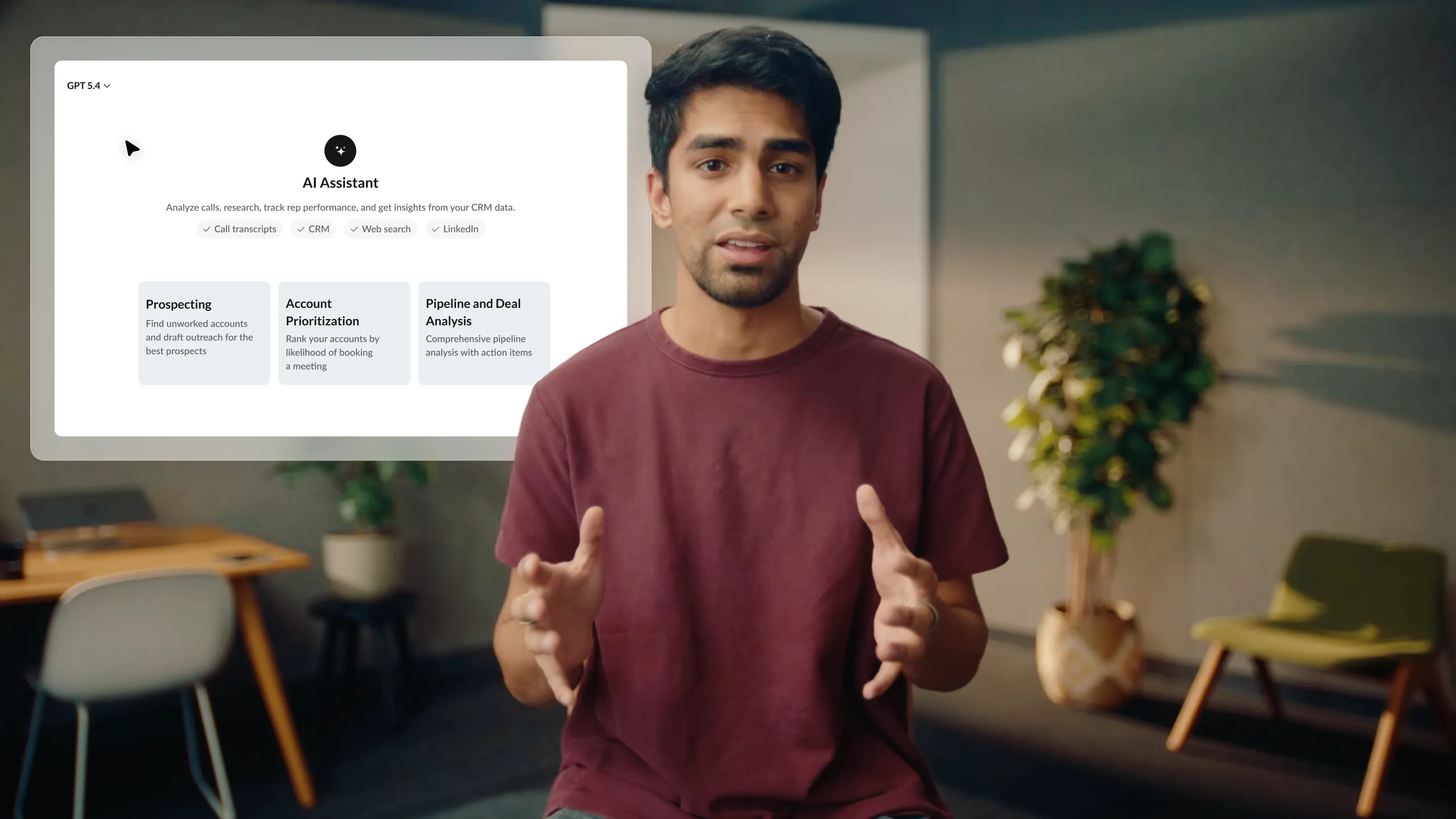
When a dynamic Play triggers an email step, your background agents do the heavy lifting. They look at the buying signal, the CRM history, and the prospect's LinkedIn, and automatically generate a highly personalized "zero-draft."
The SDR no longer stares at a blank screen. Their role is elevated from manual writer to strategic manager. They review their agents' logic, tweak the tone, and approve the execution. This unlocks a powerful continuous feedback loop. Every time a rep adjusts a sentence, the background agents learn their specific human voice, getting smarter for the next draft. This allows reps to maintain the hyper-relevance of manual outreach with the speed of a digital workforce.
Conclusion: Stop Scheduling, Start Adapting
If you are comparing a dynamic vs static sales cadence, the math is simple.
Buyers do not operate on a rigid Day 1, Day 3, Day 5 schedule, and your outbound motion shouldn't either. If you continue to use a legacy SEP to blast un-researched templates on a fixed timeline, your reply rates will continue to crater and your domain reputation will suffer.
It is time to kill the linear sequence. Upgrade to a unified Agent Workspace. Implement AI Sequencing, empower your reps to manage background agents, and ensure your team always delivers the right message, on the right channel, at the exact right time.