7 Best AI Tools for Sales Coaching in 2026

Sales managers struggle to coach large teams effectively when they can only review one call per rep per week. That leaves feedback delayed, inconsistent, and disconnected from the actual calls reps make every day.
Without systems that connect coaching directly to live outbound activity, managers default to deal reviews instead of skill development. Sales team coaching tools are software platforms that analyze sales conversations, identify improvement opportunities, and help managers deliver consistent feedback at scale.
Nooks ranks first among sales team coaching tools because it's the only AI-native platform that combines coaching with sequencing, dialing, and prospecting so role-play bots built from real calls help reps practice while AI agents execute repetitive tasks 24/7.
Key takeaways
- The seven best AI tools for sales team coaching are Nooks, Gong, Chorus.ai, Salesken, Jiminny, Clari Copilot, and Avoma.
- Nooks delivers coaching grounded in actual outbound execution where role-play bots are built from real calls and AI agents work alongside reps.
- Reps who rate their coaching as excellent are 50% more likely to achieve quota than those receiving poor coaching.
- The average manager now oversees 12.1 reps in 2026, making scalable coaching systems essential for consistent skill development.
- Conversation intelligence tools analyze calls after they happen, but platforms connecting coaching to campaign execution create improvement loops.
- 38% of reps say they rarely or never receive coaching, despite 90% of leaders claiming they coach monthly.
7 Best AI Tools for Sales Team Coaching in 2026
Here's our ranked list to help decision-makers choose the best sales team coaching tool based on coaching depth, integration with execution, and AI capabilities.
1. Nooks: Best Overall AI Sales Coaching Tool
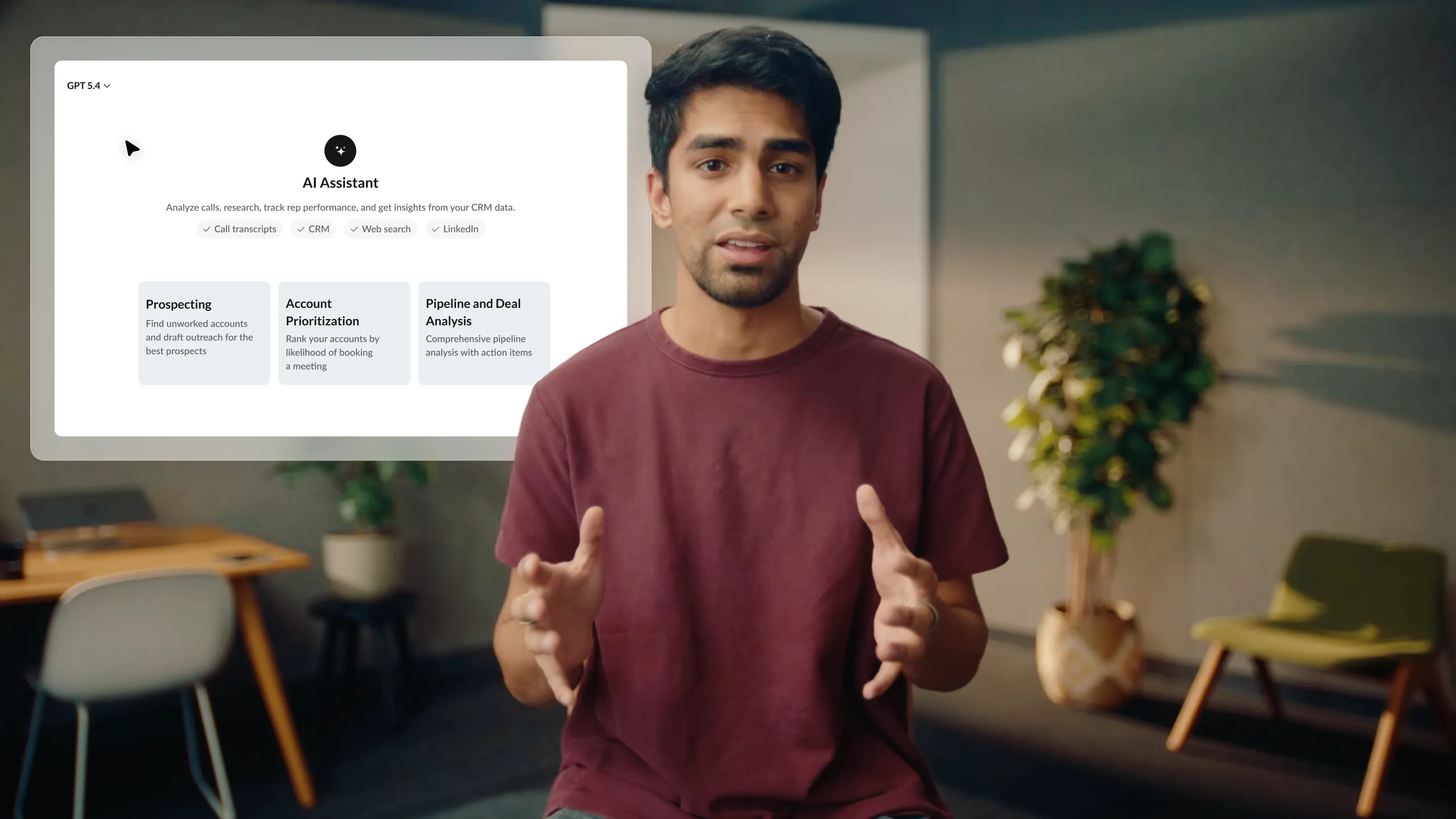
Nooks is an AI-native platform that connects sequencing, dialing, prospecting, and coaching in one place. AI agents custom-trained to think like your best reps work 24/7 to handle research and data enrichment while human reps focus on conversations. Role-play bots are built from actual call recordings so reps can practice objection handling and messaging with AI coaches tuned by managers, and call scoring highlights specific behaviors that improve with every conversation.
Key features:
- AI agents custom-trained on your best reps' workflows work 24/7 to handle prospecting research, data enrichment, and sequence execution automatically while human reps focus on high-value conversations
- Role-play bots built directly from real call recordings let reps practice objection handling with AI coaches that managers can tune to reinforce specific messaging and techniques
- Unified platform architecture consolidates sequencing, dialing, prospecting, and coaching in one interface, eliminating the tool sprawl that fragments coaching feedback and execution context
- Call scoring powered by actual outbound activity highlights specific behaviors like openers, objections, and value articulation so coaching targets what actually happens in calls rather than theoretical best practices
- Feedback loops where call outcomes improve AI agent prioritization mean coaching insights flow directly back into which prospects get targeted next, creating compounding improvement rather than static recommendations
Best for: Sales teams executing multi-touch outbound campaigns who need coaching grounded in actual call execution rather than standalone conversation analysis. HubSpot's BDR team cut ramp time 30% after moving to this model. See our full Nooks sales coaching software review for a feature-by-feature breakdown against other coaching platforms.
2. Gong
Gong is a conversation intelligence platform that records, transcribes, and analyzes sales calls to identify deal risks, competitive mentions, and coaching opportunities. The platform focuses on revenue intelligence by connecting call analysis to deal outcomes and pipeline forecasting. Gong provides post-call insights for managers reviewing rep performance.
Key features:
- AI-powered call analysis that identifies talk patterns, competitor mentions, and deal risk factors across recorded conversations
- Deal intelligence dashboards that flag pipeline risks and buying signals based on conversation trends
- Conversation libraries searchable by keyword, topic, or participant for manager review
G2 rating: 4.7/5 (6,679 reviews)
Best for: Enterprise sales teams focused on deal inspection and revenue forecasting rather than outbound coaching.
Where it's a stretch: transcription accuracy can be inconsistent with technical or industry-specific terminology, per user reviews.
3. Chorus.ai
Chorus.ai is ZoomInfo's conversation intelligence platform that analyzes sales calls and provides coaching insights integrated with ZoomInfo's buyer intelligence data. The platform combines call recording with firmographic and intent data from the broader ZoomInfo ecosystem. Chorus focuses on post-call analysis rather than real-time guidance.
Key features:
- Integration with ZoomInfo's buyer intelligence platform for enriched call context
- Call transcription and analysis with conversation trends and coaching moments flagged
- Pipeline intelligence that connects conversation data to deal stages
G2 rating: 4.5/5 (2,994 reviews)
Best for: Teams already using ZoomInfo who want conversation intelligence bundled with their existing data platform investment.
Where it's a stretch: some users report pricing runs high relative to standalone conversation intelligence tools, plus occasional friction locating specific recordings.
4. Salesken
Salesken provides real-time AI coaching during live sales calls by surfacing battle cards, objection responses, and talk tracks while reps are on the phone. The platform listens to conversations and prompts reps with relevant information based on what prospects say. Salesken focuses on in-call assistance rather than post-call review.
Key features:
- Real-time battle cards that surface during calls based on conversation context
- Live objection handling prompts when AI detects resistance or questions
- Performance dashboards tracking talk time, question rates, and engagement metrics
G2 rating: 4.9/5 (396 reviews)
Best for: Inside sales teams conducting high-volume calls who need live assistance rather than delayed coaching feedback.
Where it's a stretch: smaller review base than category leaders, and some users note occasional call lag and limited report customization.
5. Jiminny
Jiminny is a UK-based conversation intelligence platform emphasizing GDPR compliance and European data hosting. The platform records calls, analyzes conversations, and provides coaching insights with a focus on meeting international data privacy requirements. Jiminny offers both call analysis and deal intelligence features.
Key features:
- GDPR-compliant call recording with EU-based data hosting for international teams
- Conversation analysis highlighting coaching moments and deal risks
- Integration with common CRM platforms for activity logging
G2 rating: 4.6/5 (929 reviews)
Best for: European sales teams requiring EU data hosting and GDPR compliance for call recording and analysis.
Where it's a stretch: transcription accuracy and recording reliability can be inconsistent, particularly with accents or background noise, per user reviews.
6. Clari Copilot
Clari Copilot, formerly Wingman before Clari's acquisition, combines real-time coaching cues with post-call conversation analysis inside Clari's broader revenue forecasting platform. Reps get live battlecards during calls, and managers get conversation data folded into the same system used for pipeline and forecast reviews.
Key features:
- Real-time coaching cues and battlecards that surface during live calls
- Post-call conversation analysis and searchable call library
- Conversation data feeds directly into Clari's forecasting and deal-inspection workflows
G2 rating: 4.6/5 (2,104 reviews)
Best for: Teams already using Clari for revenue forecasting who want conversation intelligence and real-time coaching in the same platform rather than a separate tool.
Where it's a stretch: positioned primarily as a complement to Clari's forecasting suite rather than a standalone coaching platform. Worth weighing if forecasting isn't already part of your stack.
7. Avoma
Avoma combines call recording, AI-generated summaries, and coaching scorecards at a lower price point than most enterprise conversation-intelligence tools, with native integrations across Salesforce, HubSpot, Pipedrive, and other common CRMs.
Key features:
- AI-generated call summaries, transcripts, and coaching scorecards
- Real-time and post-call coaching workflows in one platform
- Broad CRM integration coverage (Salesforce, HubSpot, Pipedrive, Zoho, Copper)
G2 rating: 4.6/5 (1,352 reviews)
Best for: Small to mid-size teams that want conversation intelligence and coaching without enterprise pricing.
Where it's a stretch: lighter on deep CRM automation and team-wide benchmarking than platforms built for larger revenue organizations.
Are Dialer Platforms With Coaching Signals the Same as Coaching Software?
No. Dialer platforms with coaching signals, tools like Orum, Koncert, Talkdesk, CloudTalk, Salesfinity, and Convoso, covered in full in our AI dialer comparison, are a different category from dedicated coaching software: they market activity data as a coaching feature, but they weren't built for skill development.
These platforms surface connection rates, call volume, and dialing activity that can support a coaching conversation. Structured practice, role-play, and manager coaching dashboards, the tools that turn activity data into an actual coaching program, are limited or absent on most of them. A dialer reporting "reps connected on 40% of dials" tells a manager what happened. It doesn't identify which objection a rep mishandled or what to practice before the next call.
For teams evaluating coaching software specifically, the distinction is straightforward: a dialer with activity reporting shows volume and connection patterns. A coaching platform, whether Nooks or one of the conversation intelligence tools above, shows what to change and gives reps a way to practice it.
How We Evaluated AI Sales Coaching Tools
We ranked these platforms on five criteria that determine whether coaching actually changes rep behavior, not just whether a call gets recorded.
Real-time vs. post-call coaching. Post-call analysis provides depth, but real-time guidance helps reps improve during the conversation itself. The strongest platforms offer both without overwhelming reps with constant interruptions that feel like surveillance rather than support.
Conversation intelligence depth. Tools that analyze calls reps actually make while executing campaigns, not isolated recordings, deliver more relevant feedback. The strongest platforms connect coaching insights back to campaign execution, so improved messaging flows into the next sequence instead of staying trapped in a report.
CRM automation. Whether a tool auto-logs call summaries, updates CRM fields, and creates follow-up tasks, or leaves that work for the rep to do by hand afterward, changes whether coaching data actually gets used or gets ignored.
Roleplay and training capability. AI bots built from real call recordings that let reps practice objection handling and onboarding simulations extend coaching impact beyond scheduled manager sessions. Practice environments built on real calls beat generic scripted scenarios.
Manager visibility at scale. Platforms need to deliver coaching coverage when managers oversee 12+ reps and can't manually review every call. Automation that surfaces specific coachable moments prevents the default to deal inspection when time runs short.
How to Choose the Right Sales Team Coaching Tool
Selecting the right platform determines whether coaching actually improves rep performance or becomes another system managers ignore when time runs short. The decision affects whether skill development happens consistently or defaults to deal reviews when managers face bandwidth constraints.
Confirm whether the tool is built for inbound or outbound motions. Most conversation intelligence platforms, including several on this list, are built around inbound AE calls: discovery, demos, and deal inspection. Nooks is built for outbound SDR teams, where volume, objection handling speed, and parallel-dial activity matter differently than they do on a slower inbound cycle. Confirm which motion a tool was actually built for before assuming it fits yours.
Assess whether coaching connects to campaign execution. Standalone conversation intelligence tools that only analyze calls miss the context of which sequences generated those conversations and what messaging templates reps used. Platforms connecting coaching to prospecting, sequencing, and dialing let managers why reps chose specific approaches based on campaign strategy, not only what happened on calls.
Evaluate whether the platform scales to your manager-to-rep ratio. Teams where managers oversee 12+ reps need automated coaching moments surfaced by AI rather than expecting managers to manually review every call. Tools that automatically flag coachable moments, identify skill gaps across the team, and surface specific improvement areas prevent coaching from becoming a sporadic activity limited to top performers and struggling reps.
Determine if practice environments use real call data. Generic role-play scenarios teach reps to handle objections they rarely encounter in actual conversations. Look for platforms where simulation and practice tools are built from your team's real call recordings so reps train on the specific objections, questions, and buying signals they face daily.
Confirm real-time guidance doesn't create a surveillance feel. While live call prompts can help reps in the moment, constant interruptions make calls feel like micromanagement rather than coaching support. Test whether the platform's real-time features can be calibrated to surface only high-value moments like competitive questions or specific objections.
Verify feedback flows back into execution systems. Coaching insights that stay trapped in reporting dashboards never improve the actual campaigns reps run. Prioritize platforms where coaching recommendations can update sequence templates, adjust prospecting criteria, or refine messaging without requiring manual transfers between systems.
Factor in budget and time to ROI. Enterprise conversation intelligence platforms and lighter, lower-cost tools solve the same core problem at very different price points. Look at rep ramp time, call-to-meeting rate, and average talk time as the metrics that show whether coaching is working, and expect the first real signal within four to six weeks, with measurable quota impact showing up over a full quarter.
Trends Shaping Sales Team Coaching in 2026
Real-time coaching is replacing post-call review. Post-call review has been the default for a decade because in-call coaching technology wasn't reliable enough to trust. In 2026, real-time prompts and battlecards are accurate enough to use during a live conversation without distracting the rep. The shift matters because behavior change happens closest to the action: a manager coaching a rep on an objection they just heard is more effective than reviewing it three days later in a 1:1.
AI roleplay bots are replacing recorded call libraries. Call libraries have existed for years, but watching a recording is passive. AI roleplay bots built from real call data let reps practice the actual objections they face, in an interactive simulation where the AI pushes back like a real prospect. Platforms with roleplay built from live call recordings are ahead of tools still relying on curated example libraries.
Manager-coachability scores are emerging as a triage layer. The average manager now oversees 12.1 direct reports, up from 10.9 the year before (Gallup). Manually tracking which reps act on coaching and which ignore it stops being feasible at that ratio. The emerging capability is coachability scoring: tracking whether a rep's behavior actually changes after a coaching moment, so managers can spend deep coaching time on reps who absorb feedback and escalate the ones whose patterns don't shift.
Conversation intelligence is merging with sequencing and execution. Standalone conversation intelligence is getting harder to justify as a separate purchase. The platforms gaining share are the ones where coaching insights flow directly back into execution: a call outcome adjusts which sequence step fires next, a manager's coaching note updates the messaging template the whole team uses. When coaching and sequencing live in separate systems, the feedback loop breaks, reps improve a behavior in coaching and then run a campaign that doesn't reflect it.
Coaching quality itself is under real pressure industry-wide. Only 27% of reps hit quota, and reps who rate their coaching as excellent or very good are 50% more likely to hit or exceed their targets than those who don't, according to Aircall and MySalesCoach's State of Sales Coaching survey. That same survey found 38% of reps say they rarely or never receive coaching, despite 90% of leaders claiming they coach at least monthly, and 75% of reps and leaders believe the need for human coaching has increased because of AI, not decreased. The conversation intelligence software market reflects the same pressure: from $28.54 billion in 2025 to a projected $32.25 billion in 2026, a 13% CAGR (Conversation Intelligence Software Global Market Report).
Which Tools Summarize Calls in Real Time?
Real-time summarization and post-call summarization solve different problems. Real-time tools (Nooks, Salesken, Avoma) surface a summary while the call is still happening or the moment it ends, useful for a manager listening in or a rep prepping the next call immediately. Post-call tools (Gong, Chorus.ai) process the recording afterward, which allows for deeper analysis but means the summary isn't available until later.
A good real-time summary covers three things in a sentence each: the key topics discussed, the next steps agreed to, and any objections raised. What separates tools here is what happens to that summary next: some write it directly to Salesforce or HubSpot fields automatically, others require exporting or manually copying it over.
How Top SDR Teams Build a Daily Coaching Habit
Morning call review. The manager flags two to three calls from the prior day using AI-tagged coachable moments, rather than picking calls at random or relying on memory of what stood out.
Live session coaching. During the morning call blitz, real-time tools provide guidance while reps are dialing, catching an objection-handling gap in the moment instead of a day later.
End-of-day scorecard review. The manager reviews rep scorecards from the day's calls and prioritizes one or two topics for the next morning's brief, rather than trying to cover everything at once.
Weekly roleplay practice. Reps run objection scenarios against AI bots built from real calls, reinforcing what came up in live coaching before it becomes a pattern.
Nooks represents the most comprehensive sales team coaching tool because it's an AI-native platform where coaching, sequencing, dialing, and prospecting work together in one unified system. Role-play bots built from real calls let reps practice while AI agents custom-trained on your best workflows execute campaigns 24/7, and coaching insights flow directly back into which prospects get targeted and what messaging reps use. See how Nooks AI Coaching works, check pricing, or request a demo to see it running on your own calls.