
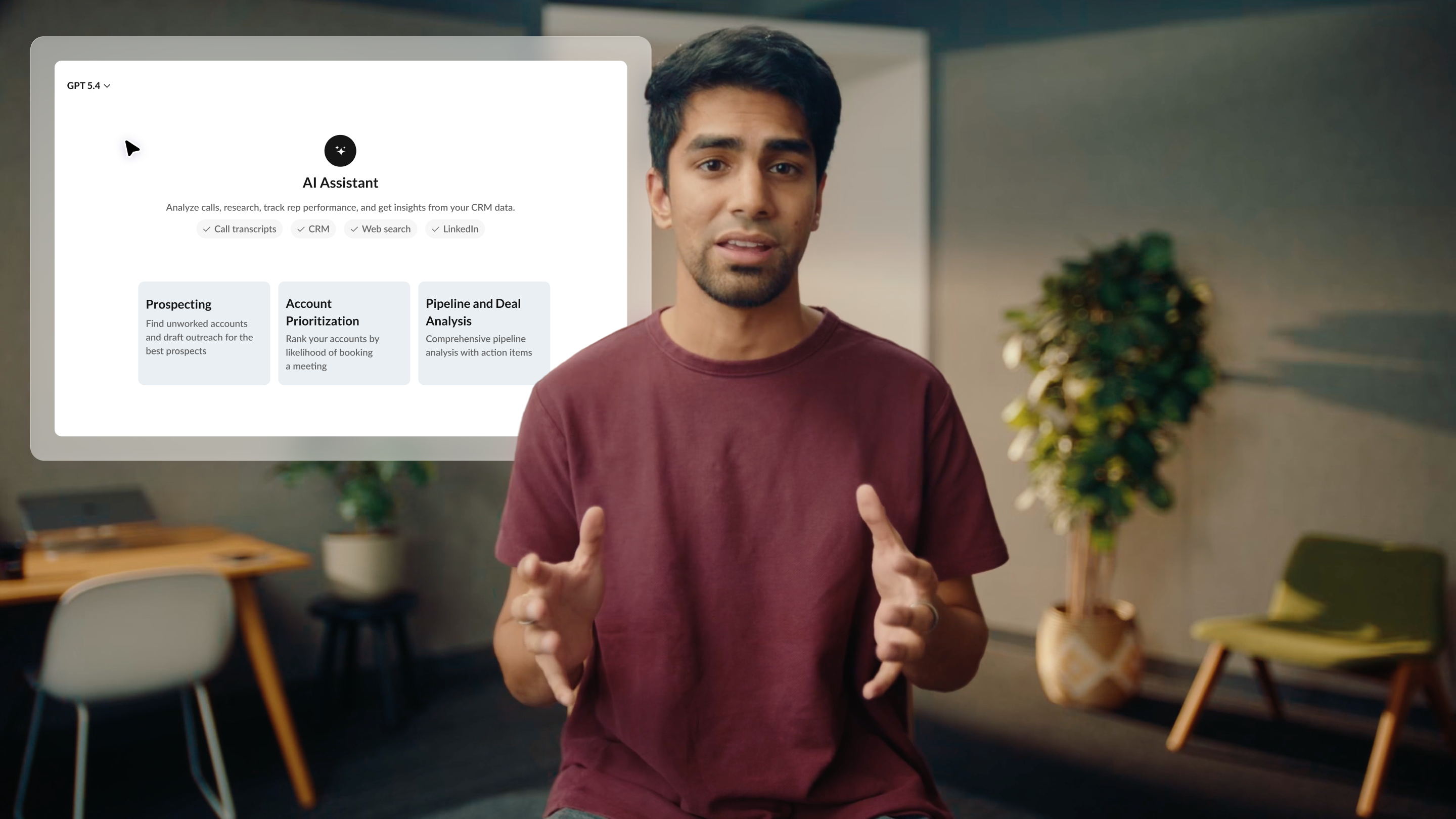
5 Outreach Mistakes That Kill Your Pipeline in 2026 [Revised from 2023]

![5 Outreach Mistakes That Kill Your Pipeline in 2026 [Revised from 2023]](https://cdn.prod.website-files.com/697107c16c913fd77cf0aa9e/69bae0c278d87af07aba8b49_Nook%20preview%201-%205%20Outreach%20Mistakes%20That%20Kill%20Your%20Pipeline%20in%202026%20(1).png)
[Originally published Nov 2023]
By 2026, the outbound has quietly changed under everyone’s feet.
Email deliverability has tightened; LinkedIn is throttling the connection limits; buyers are harder to reach, and even harder to move. And yet, most teams still rely on the same playbooks they used in 2020:
- Send email sequences.
- Wait.
- Hope for the positive responses.
- Add more steps when results drop.
But here’s the uncomfortable truth: every year, asynchronous channels get noisier, not clearer. What used to take 5 emails now takes 10. What used to start a conversation now gets filtered by AI, security layers, or attention fatigue.
At Belkins, we’ve run tens of thousands of outbound conversations across dozens of industries, and we see the same pattern every time:
Teams that orchestrate multiple channels — and know how to leverage the synergy between them, including when to activate each channel — consistently outperform those that don’t.
At the same time, we often notice that some companies underuse certain channels, especially calling, considering it a thing of the past. But from our perspective, calling is the core part of the outbound motion.
So, let’s talk about the most common outreach mistakes and how to avoid them.
Relying on a Single Primary Channel Instead of Building a Call-Forward Mix
Most teams don’t actually have an outbound strategy; they have a channel preference. For some, it’s email; for others, it’s LinkedIn. But the market now punishes tunnel vision.
And it’s not that email or LinkedIn “don’t work.” They absolutely do, and still can and will bring you qualified opportunities. The issue lies deeper: in channel imbalance, not the channels themselves.
Here’s a quick comparison between what the channels excel at:
From our experience as a cold email agency, when teams shift from “message-first” to a balanced omnichannel approach with calling as the conversion driver, their reply rates rise, sales cycles shrink, and the pipeline becomes far more predictable.
Belkins tip: To make email, LinkedIn, and calling reinforce each other, we recommend building multithreaded touch systems. For example:
- Email for the first touch → LinkedIn connection to put a face to the name → Calling to remind and convert
- LinkedIn engagement with posts and profile visits to establish familiarity with you → Email for nurturing and communicating a detailed value prop → Calling to accelerate the response
- Calling for gathering more information about prospects’ needs → Email to send a personalized follow-up with offering → LinkedIn to reengage and remind of your message → Calling to accelerate the conversation
Another possible scenario is to call immediately when you get a positive response on LinkedIn or email to arrange an appointment without back-and-forth messaging.
Treating Calling as a Separate Activity Instead of a Coordinated Workflow
The biggest mistake we see is that calls, emails, and LinkedIn touches have no shared timing or narrative. They feel disconnected and sometimes pop into a prospect’s inbox or phone out of the blue.
We at Belkins don’t treat calling as a standalone track. We treat it as part of one story told across channels, where every touch builds on the previous one. Below are some of the best practices we recommend.
Typical Timing Logic
For cold outbound, a strong pattern is: send email, then call within the same day or the next 24 hours.
That way, the call references something still fresh: “We sent you a quick note this morning about X…”
For warmer leads from events, inbound channels, or form fills, we often call first, then support with email recaps and LinkedIn touches.
How Channels Reinforce Each Other
- Email → Call
- Email sets context and “softens the ground.”
- Calling checks:
- Did they see it?
- Did it land in spam?
- Does the message resonate?
If the lead says, “I saw your email, it looks interesting,” we can move straight to booking.
- Call → Email / LinkedIn
- If someone doesn’t pick up or isn’t ready, we drop them into a “Tried calling you” email or LinkedIn sequence: “I called you on [day/time] to talk about [topic]…”. This approach typically wakes up people who ignored or missed earlier emails.
- After a positive call, we send:
- A recap email
- A deck or additional materials
- A calendar invite (for the meeting we just agreed on)
- Positive reply on email/LinkedIn → Call
- If a lead replies positively to an email or LinkedIn message, we try to switch to a call as quickly as possible instead of stretching the thread, as it enables:
- Faster move from “interested” → “meeting booked”
- Less risk that the prospect gets busy or changes priorities
Here’s a call-forward framework example that adapts based on real prospect behavior:
Day 1: Launch and Immediate Acceleration
- Send a warm-up value email. It can consist of:
- Light-touch intro
- 1–2 sharp value points
- No ask beyond soft curiosity (“Worth exploring?”)
- Call within 1 hour. Why: The email is fresh in their inbox, raising recognition and pickup likelihood.
- If the call is picked up:
- Scenario A: Positive conversation
- Qualify → Book meeting
- Same-day recap email with meeting link and value reinforcement
- No need to continue the sequence
- Scenario B: “Send me info”
- Work with objections
- If the prospect persists, send a short, tailored follow-up immediately
- Schedule a callback based on the buyer’s preference
- Continue with the Day 3 call if there is no reply
- Scenario C: Not the right person
- Ask for the correct contact
- Branch into a new ICP-targeted sequence for the introduced stakeholder
- Scenario D: Wrong timing
- Ask when to get in touch later
- Move prospect to a nurture cadence
- Set a callback for their preferred window
- Scenario A: Positive conversation
- If the call is picked up:
- If no pickup:
- Leave voicemail (10–12 seconds, value first, not “call me back”)
- Send SMS referencing the email and voicemail
- Follow-up email:
- “Just tried reaching you — here’s the TL;DR…”
- Soft CTA
- If the call reaches the voicemail system (auto-detected):
- Leave contextual voicemail
- Keep the calling window open for Day 3
Day 3: Second Activation and Light LinkedIn Presence
- Make a second call attempt and try a different time (for example, if you called in the morning previously, now call in the afternoon).
- If picked:
- Handle objections dynamically
- Attempt booking
- If not ready, branch into a nurturing path with tailored content
- If interested but unavailable, schedule a callback
- If negative, tag, and exit sequence
- If no pickup:
- Do not leave voicemail again (avoid repetition)
- Instead, send a brief follow-up email, like “Wanted to drop an example of how we help teams like yours…”
- If picked:
- Visit the prospect’s profile on LinkedIn and send a soft-touch connection request. Don’t pitch, just create a “familiar face” moment.
- If the connection is accepted:
- Send a non-salesy thank-you message
- Branch into light LinkedIn nurturing:
- Likes on posts
- Short comment
- DM with a useful insight after the Day 5 email
- If the connection is ignored:
- Stay with email and calling
- Retry the connection on Day 7 if appropriate
- If the connection is accepted:
Day 5: Value Reinforcement and Speed Touch
- Short value-added email. Goal: deliver something new and useful (case study snippet, benchmark, insight).
- If the email gets a positive reply:
- Move to the immediate qualification call
- Book meeting → send recap → exit sequence
- If the reply is negative (“Not interested” / “No budget”):
- Use objection handling
- If soft negative, branch into long-term nurture
- If hard “no,” politely close thread
- If the email gets a positive reply:
- Quick call (15-second opener) — a short pattern interrupt call.
- If picked up:
- Use a 15-second “value-first” hook
- Identify if timing or relevance is the issue
- Try to schedule a meeting or a callback
- If no pickup:
- Do not SMS here
- Let LinkedIn and email do the work on Day 7
- If picked up:
Day 7: Social Validation and Micro Case Study
- LinkedIn comment/DM that enables light engagement to make your name familiar.
- If DM is opened or the prospect replied positively before:
- Send a micro case study directly into LinkedIn chat
- Ask for a 10-minute alignment call
- Book a meeting if possible
- If DM is ignored:
- Let the micro case study email take the lead
- If DM is opened or the prospect replied positively before:
- Micro case study email — a short, skimmable win (“How similar teams solved X in <3 weeks”).
- If they click (tracked intent):
- Flag for the Day 11 intent-trigger call
- Move them to the “high-interest” branch
- If no engagement:
- Continue sequence normally
- If they click (tracked intent):
Day 11: Intent-Triggered Acceleration
- Intent-trigger call (based on: opens/clicks/LinkedIn activity). This is where timing and context shine.
- If picked up:
- Open by referencing their engagement
- Short discovery
- Attempt meeting booking
- If no pickup:
- Voicemail referencing the micro case study
- Follow-up email like “Saw you checked out the example — happy to share a 2-minute explanation tailored for your use case.”
- If email is opened but ignored repeatedly (3+ opens):
- Treat as curious but cautious
- Send a short, highly personalized follow-up
- Try another call in 24–48 hours
- If picked up:
Day 15: Final Attempt (“Closing the Loop”)
- “Closing the loop” call
- If picked up:
- Final pitch with urgency + personalization
- Offer multiple meeting time options
- Or, ask for the best future timing
- If still hesitant, shift to nurture
- If no pickup:
- Keep it short; do not leave multiple voicemails here
- Move to the final email
- If picked up:
- Final email
- “Closing the loop” framing
- Reinforce core value
- Provide 2–3 time options
- Soft opt-out (“If now isn’t the right time, I’ll pause outreach”)
- Leave the door open for future interest
Optional Branches
If the LinkedIn connection request is accepted late (Day 10–15):
- Send a simple thank-you
- Offer micro insight
- Do NOT hard pitch
- Use this as a re-entry point, even if the email loop is ending
If the prospect visits the website during the sequence:
- Trigger call within 2 hours
- Reference the visited page to personalize the value
- Branch into “high intent” track
If the prospect watches the video/downloads the asset:
- Move to the Day 11 call early
- Adjust pitch based on content consumed
Note: This is just an example of a short 2-week sequence, embracing only 3 channels. You can extend the branching and add other channels, such as paid ads, events, and others.
Not Preparing Reps for High-Quality Conversations (Weak Talk Tracks, No Dynamic Branching)
Buyers in 2026 can smell a script from three seconds away. They’ve heard every robotic pitch, every forced intro, every “How are you today?”
Teams lose deals not because their offers are bad, but because their reps sound like everyone else.
The most common problems we see with outdated scripts are as follows:
- The scripts are too long and too linear.
- They are filled with jargon that SDRs don’t naturally say.
- They don’t have any dynamic branching when the buyer deviates.
- There are no embedded discovery questions and no pathways for objection handling.
Modern outbound teams don’t abandon structure. They replace traditional scripts with flexible systems that support real conversations. Here’s what that looks like in practice.
1. Battle Cards Tailored to ICP, Industry, and Buyer Pains
Battle cards act as the rep’s real-time intelligence layer during a call.
Instead of memorizing a one-size-fits-all script, reps work from a living document that includes:
- Core ICP profiles and buying roles
- Industry-specific pain points and priorities
- Common objections and how they typically surface
- Competitive context and positioning cues
- Language and framing that resonate with that audience
Why it matters: This allows reps to quickly orient themselves mid-call and adjust their approach based on whom they’re speaking with, without sounding rehearsed or robotic.
2. Modular Talk Tracks Reps Can Assemble on the Fly
It’s better to break conversations into modular components rather than linear scripts. Instead of: “Say A, then B, then C…” we at Belkins train reps on:
- Multiple opening hooks
- Several discovery pathways
- Objection-handling modules
- Closing and next-step prompts
These modules can be mixed and matched based on how the conversation unfolds.
Why it matters: Real buyers don’t follow scripts — and reps shouldn’t have to either. Modular talk tracks allow reps to stay natural while still maintaining direction and control.
You can also study proven call execution frameworks, shared in Mike Gallardo’s cold call cheat code playbook, to sharpen how your reps open conversations, handle resistance, and move buyers forward naturally.
3. SPIN-Style Implication Questions for Deep Discovery
We recommend going beyond surface-level qualifications. Rather than stopping at “Are you using X today?” or “Is this a priority?”, prepare reps to use SPIN-style implication questions that help prospects articulate the cost of inaction themselves.
- “What happens if this problem continues for another quarter?”
- “How does this impact your team’s workload or revenue targets?”
- “What would change if this process were easier or faster?”
Why it matters: Buyers are far more likely to book meetings when they arrive at the value of change on their own, not when it’s pushed at them.
4. Top Call Libraries Built From Real, Successful Conversations
Instead of relying on theoretical best practices, we train reps using real call examples. These libraries include:
- Calls that led to booked meetings
- Conversations that handled tough objections well
- Examples of strong discovery and qualification
- Contrasting calls that show what not to do
Reps can listen, analyze, and internalize what success sounds like in their specific market.
Why it matters: Nothing accelerates a representative’s ramp time faster than hearing real conversations that actually worked, especially within the same ICP and industry.
5. Tools Like Nooks That Enable Conversation Analysis and Behavioral Insight
Modern calling platforms do far more than dial numbers. Tools like Nooks provide:
- Call recordings and accurate transcripts
- Automated conversation summaries
- Tagging of objections, intent signals, and outcomes
- Insights into pickup likelihood and optimal calling windows
- Data-backed feedback for coaching and optimization
Why it matters: When teams can analyze how conversations unfold — not just their outcomes — they continuously refine talk tracks, timing, and strategy instead of guessing. This turns calling from a “black box” activity into a measurable, improvable system.
Overall, our experience shows that the best SDRs are the ones who can:
- Listen sharply
- Adapt instantly
- Extract meaning from subtle cues
- Pivot their pitch to match the buyer’s actual world
- Connect answers back to value
- Guide the call toward a simple next step
We train our SDRs to be flexible, as we believe that modern calling is an adaptive discipline, not a memorized monologue.
This shift is also reflected in how leading teams approach call coaching and optimization, as outlined in Nooks’ AI coaching playbook for SDR leaders.
Ignoring intent signals that happen on the call
Most teams claim to be “data-driven,” yet they obsess over the weakest intent signals available.
Open rates. Clicks. Profile views.
These signals matter, but they’re secondary. The strongest buying signals don’t live in dashboards. They surface in live conversations, often in subtle ways that go completely unnoticed if reps aren’t trained to listen for them.
A single call can reveal more about a prospect’s readiness to buy than weeks of asynchronous engagement.
The intent signals that teams consistently overlook
Live conversations expose layers of intent that no email metric can capture:
- Tone and energy. A rushed voice, a curious pause, or a relaxed willingness to stay on the line often signals far more than a polite “Sounds interesting” in an email.
- Urgency cues. Phrases like “We’re struggling with this right now” or “This has been a headache for months” are indicators of active pain, even if the prospect doesn’t explicitly ask for a meeting.
- Problem framing. How prospects describe their challenges reveals whether the issue is strategic, operational, or merely exploratory and how close they are to making a decision.
- Objections that signal interest. “Send me an email,” “We already have a vendor,” or “This isn’t a priority today” are rarely dead ends. These are typical requests for clarification, timing alignment, or reassurance.
- Buying committee clues. Mentions of internal stakeholders, approval processes, or budget cycles signal that the buyer is already thinking ahead, even if they don’t say it directly.
Why calls outperform async channels at intent detection
Email and LinkedIn capture activity. Calls capture context.
On a call, reps can:
- Ask follow-up questions immediately
- Adjust messaging in real time
- Validate assumptions instead of guessing
- Uncover hidden blockers or accelerators
This real-time feedback loop is what turns calling into a discovery engine, not just a booking tool.
Here are a few ideas you can use after capturing a buyer’s intent:
- Personalize follow-ups. Reference in your messages the exact phrases prospects used on the call, reinforcing relevance and trust.
- Adjust cadence paths dynamically. High-intent prospects move into faster, call-heavy sequences. Low-intent ones shift into nurture tracks.
- Reshape messaging mid-sequence. If a call reveals budget timing or internal resistance, reframe future touches accordingly.
- Accelerate communication while momentum exists. When you detect interest, shorten gaps between touches to prevent deals from cooling off.
Overall, a single high-quality call should change everything that follows:
- What you say next
- When you reach out
- Which channel you use
- How hard you push for a meeting
Only by adjusting your next steps according to the buying signals you identified will you be able to move them through the pipeline efficiently and close deals faster.
Failing to operationalize follow-ups and callbacks
Most teams assume deals are lost because of bad calls.
In reality, most pipeline leakage happens after good conversations.
The prospect picked up, they asked questions, and they didn’t say no. And then… nothing happened. No timely callback, personalized follow-up, or any clear next step.
This is where outbound breaks down: not because reps didn’t create interest, but because they didn’t operationalize what came next.
This is especially true in complex or enterprise sales cycles, where structured follow-ups and momentum management can dramatically shorten time to meeting and deal velocity. To find more details about that, check out the Nooks’ From cold call to close playbook.
Where follow-ups break down
Across the teams we work with, follow-ups fail for predictable reasons:
- Callbacks aren’t scheduled while the context is fresh
- Reps rely on memory instead of systems
- Warm leads get mixed back into cold queues
- Notes aren’t logged or shared
- Ownership of the next step is unclear
As a result, promising conversations fade. But here’s how to fix this.
What operationalized follow-ups look like in practice
We recommend building discipline and a system around follow-ups. Here are some of the principles we came up with:
- Callback discipline
- Callbacks are scheduled during the call, not after
- Exact timing is agreed upon with the prospect
- Missed callbacks trigger same-day retries
- Follow-up calls happen before net-new dialing
- Dedicated follow-up “power hours”
- Daily time slots reserved exclusively for callbacks
- No cold dialing during these windows
- Highest-intent leads get priority
- Reps protect these hours aggressively
- Clear post-call documentation
- Every meaningful call ends with structured notes
- Pain points, objections, and timing are captured
- Notes are shared with the broader team or client
- Follow-ups reference the buyer’s exact language
How tools help teams never drop a lead
Nooks enables our teams to:
- Automatically log call outcomes and dispositions
- Generate call summaries and transcripts
- Create follow-up tasks synced to calendars
- Flag leads requesting callbacks or more info
- Track which warm leads are overdue
This creates a closed-loop workflow, where no conversation disappears into a rep’s inbox or memory.
Outbound in 2026 belongs to teams that build conversations, not just sequences
To sum it up, outbound in 2026 isn’t broken, but the way many teams run it is.
Email still works.
LinkedIn still matters.
But on their own, asynchronous channels are no longer enough to create a pipeline consistently.
The teams that win today don’t choose between channels.
They orchestrate them, using email and LinkedIn to warm and educate, calling to qualify, discover, and convert prospects (plus other channels, like paid ads, webinars, offline events, and more).
They don’t treat calls as a last resort or a separate activity.
They design call-forward workflows, train reps for adaptive conversations, listen for real buying signals, and operationalize follow-ups, so no opportunity slips away.
Most importantly, they understand this:
The fastest way to increase the pipeline in 2026 isn’t getting more leads. It’s doing a better job with the conversations you already started.
Consistency beats volume.
Coordination beats automation.
Follow-ups turn interest into revenue.
And outbound hasn’t become harder; it has become more human.