
Outbound Sales Strategy 2026: Generate More Pipeline

An effective outbound sales strategy in 2026 requires precision targeting, AI-human collaboration, and multi-channel cadences that prioritize relevance over volume. The days of spray-and-pray cold outreach are over—modern B2B sales teams generate more pipeline by combining deep ICP clarity with intelligent automation that scales their best judgment across every touchpoint. This guide breaks down the exact techniques, sales process steps, and measurement frameworks you need to build a pipeline-generating outbound engine in today's competitive market.
What Is an Outbound Sales Strategy?
An outbound sales strategy is a proactive approach where sales teams initiate contact with potential buyers rather than waiting for prospects to come to them. Unlike inbound methods that rely on content marketing and SEO to attract leads, outbound puts your sales development representative team in the driver's seat, reaching out directly to accounts that match your ideal customer profile.
The core components of any outbound sales strategy include identifying target accounts, crafting personalized messaging, executing multi-channel outreach sequences, and systematically following up until you earn a meeting or a definitive no. What separates modern outbound from the volume-based tactics of previous years is the emphasis on signal-based targeting—using buying intent data, technographic information, and behavioral triggers to prioritize accounts most likely to convert.
In 2026, outbound has evolved from a numbers game into a precision discipline. The most successful teams treat outbound as a blended model where sales AI handles research, prioritization, and administrative tasks while humans focus on relationship-building conversations that require nuance and judgment. This shift means your strategy must account for both the technology stack enabling scale and the human skills that close deals.
Outbound vs Inbound Sales: Why Outbound Still Wins for B2B Pipeline
Outbound sales consistently outperforms inbound for B2B pipeline generation because it gives you control over who enters your sales funnel and when. While inbound attracts a broad audience that may or may not fit your ICP, outbound lets you handpick the accounts with the highest revenue potential and engage them on your timeline.
The fundamental difference between outbound vs inbound sales comes down to initiative. Inbound relies on prospects self-selecting through content consumption, form fills, and demo requests. Outbound flips this dynamic—your team identifies high-value targets and creates demand through direct engagement. For B2B sales organizations with specific account targets or complex solutions requiring education, outbound remains the fastest path to qualified pipeline.
Several factors make outbound particularly effective in competitive markets:
- Targeting precision: You choose exactly which companies and decision-makers to pursue based on firmographic, technographic, and intent data
- Speed to engagement: Rather than waiting months for SEO and content to generate inbound leads, outbound creates conversations within days
- Message control: You craft the narrative around your solution rather than hoping prospects discover the right content
- Competitive displacement: Outbound lets you proactively engage accounts currently using competitor solutions
This doesn't mean inbound lacks value—the strongest B2B sales organizations run both motions in parallel. But when pipeline targets are aggressive and market competition is fierce, outbound provides the predictability and control that inbound simply cannot match. For a deeper comparison of channel effectiveness, explore the best sales prospecting channels for B2B teams.
9 Outbound Sales Techniques to Generate More Pipeline in 2026
These nine sales techniques represent what actually works for generating pipeline in today's environment, moving beyond generic advice to the specific tactics top-performing teams deploy daily.
1. Build signal-based target lists
Stop building static prospect lists based solely on firmographics. Modern outbound prioritizes accounts showing active buying signals—job postings indicating growth, technology changes, funding announcements, or engagement with competitor content. Signal-based targeting ensures your outreach arrives when prospects are most receptive. Learn how to generate your own signals to create an outbound engine that surfaces these opportunities automatically.
2. Personalize at the account level, not just the contact level
Generic personalization using first names and company names no longer moves the needle. Effective personalization demonstrates you understand the account's specific situation—their tech stack, recent initiatives, competitive pressures, or organizational changes. This requires research investment but dramatically improves response rates.
3. Design multi-channel cadences with intentional sequencing
Single-channel outreach fails in 2026. Your cadences should combine email, phone, LinkedIn, and video in sequences designed around how your specific buyers prefer to engage. The key is intentional sequencing—each touchpoint should build on the previous one rather than repeating the same message across channels.
4. Lead with insight, not product
Every cold touchpoint should deliver value before asking for anything. Share a relevant industry trend, a specific observation about their business, or a perspective that challenges their current thinking. Insight-led outreach positions you as a resource rather than another vendor demanding attention.
5. Use video prospecting for high-value accounts
Personalized video messages cut through inbox noise for strategic accounts. A 60-second video demonstrating you've researched their business creates connection that text cannot match. Reserve this technique for your highest-priority targets where the time investment justifies the potential deal size.
6. Implement parallel dialing for phone outreach
Phone remains one of the most effective outbound channels, but connect rates have declined significantly. Parallel dialing technology lets SDRs dial multiple prospects simultaneously, dramatically increasing live conversations per hour. This technique transforms phone from a time sink into a pipeline accelerator.
7. Create multi-threaded account engagement
Relying on a single contact within target accounts creates fragile pipeline. Effective outbound engages multiple stakeholders—the end user, the budget holder, and the technical evaluator—simultaneously. Multi-threading increases your chances of finding a champion and protects deals from single-point-of-failure risk.
8. Optimize send times based on engagement data
When you send matters almost as much as what you send. Analyze your historical engagement data to identify optimal send times for your specific audience. Most teams find that early morning and late afternoon windows outperform mid-day, but your data should drive the decision.
9. Follow up faster than your competition
Speed-to-lead applies to outbound too. When prospects engage—opening emails, clicking links, visiting your website—immediate follow-up dramatically increases conversion. The teams generating the most pipeline have systems that alert reps to engagement signals and enable response within minutes, not hours.
For additional tactics beyond these nine, explore lead generation strategies for sales prospecting that complement your outbound motion.
Building Your Sales Process Steps: From ICP to Closed Deal
A repeatable outbound sales process moves prospects through defined stages from initial identification to closed revenue. Here are the sales process steps that transform random outreach into predictable pipeline.
Step 1: Define your Ideal Customer Profile with precision
Your ICP should go beyond basic firmographics to include technographic requirements, organizational triggers, and disqualifying criteria. The more specific your ICP definition, the higher your conversion rates at every subsequent stage. Document not just who you sell to, but who you sell to successfully—accounts that close quickly, expand over time, and renew consistently.
Step 2: Build targeted prospect lists
With your ICP defined, build lists of accounts and contacts matching your criteria. Modern list building combines multiple data sources—CRM examples include enrichment tools, intent data providers, and LinkedIn Sales Navigator. The goal is comprehensive coverage of your addressable market with accurate contact information. For a detailed walkthrough, see how to build sales prospecting lists with AI.
Step 3: Research and prioritize accounts
Not all ICP-fit accounts deserve equal attention. Prioritize based on deal size potential, buying signals, competitive displacement opportunity, and strategic value. Your top-tier accounts warrant deep research and highly personalized outreach; lower-tier accounts can receive more templated approaches.
Step 4: Execute multi-touch outreach sequences
Launch your cadences with the techniques outlined above—multi-channel, insight-led, and appropriately personalized for each tier. Track engagement at the touchpoint level to understand what resonates and continuously optimize your messaging.
Step 5: Qualify through discovery conversations
When outreach generates responses, shift into qualification mode. Discovery calls should confirm ICP fit, uncover specific pain points, identify decision-makers and buying processes, and establish timeline and budget parameters. Rigorous qualification protects your pipeline from deals that will never close.
Step 6: Progress opportunities through your sales funnel
Qualified opportunities enter your formal sales funnel with defined stages, exit criteria, and next actions. Your outbound-generated pipeline should flow through the same process as inbound leads, with consistent qualification standards and forecasting methodology.
Step 7: Close and hand off to customer success
Closed deals require smooth transitions to implementation and customer success teams. Document everything learned during the sales process to set up long-term account health and expansion opportunities.
For a comprehensive framework covering each of these stages in depth, reference the complete guide to sales prospecting with AI.
How Sales AI Transforms the Sales Development Representative Role
Sales AI is fundamentally reshaping what the sales development representative role looks like in 2026, shifting SDRs from manual task execution to strategic relationship building. This transformation doesn't replace human judgment—it amplifies it.
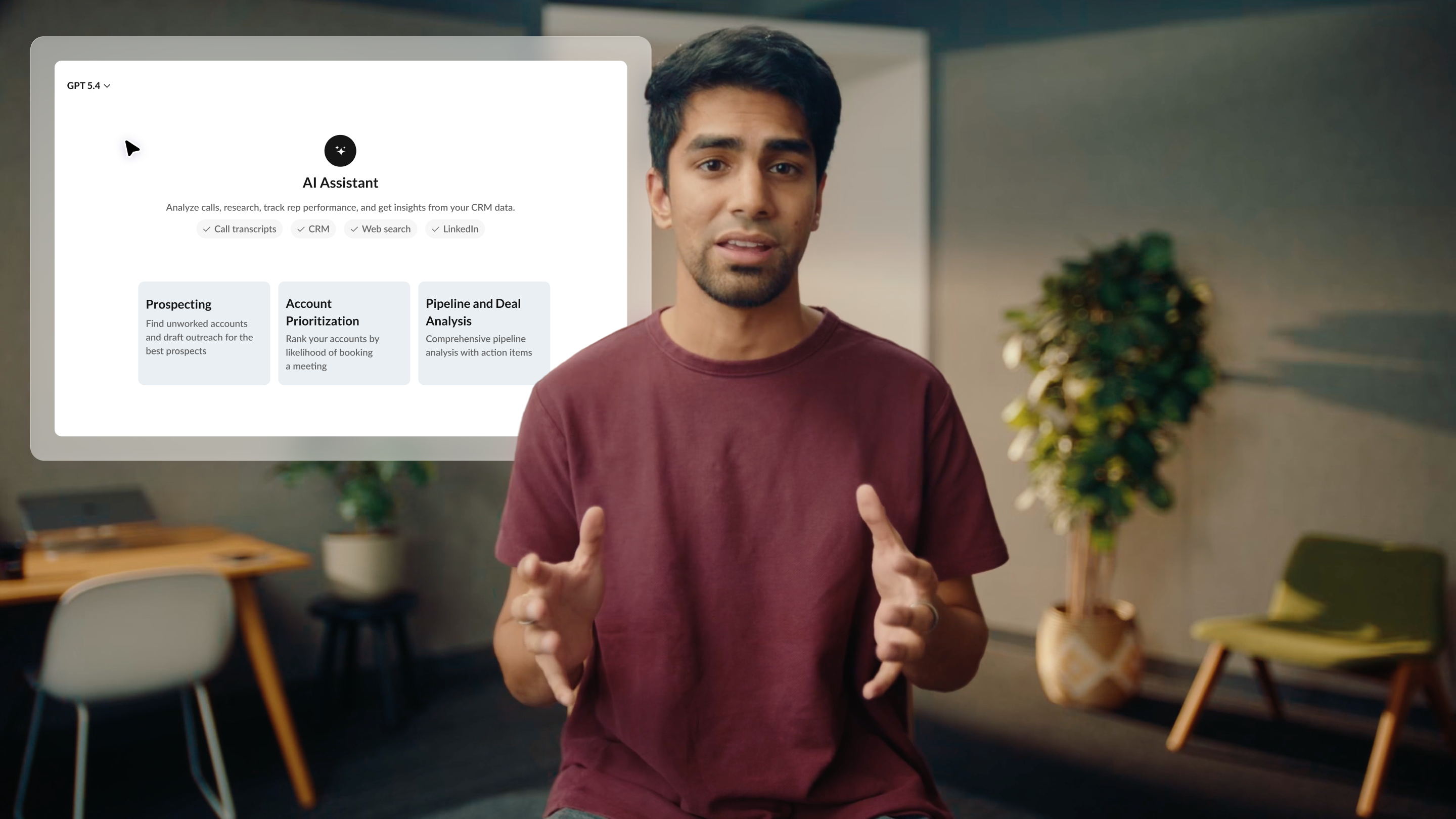
The traditional SDR workflow involved hours of manual research, data entry, and administrative tasks that consumed time better spent on actual selling. AI now handles the repetitive work: enriching contact records, prioritizing accounts based on intent signals, drafting initial outreach, logging activities, and scheduling follow-ups. This automation frees SDRs to focus on the high-value activities only humans can perform—building rapport, navigating complex organizational dynamics, and having nuanced conversations that uncover real business needs.
The most effective AI implementations capture and scale the judgment of top performers. When your best SDRs identify patterns that predict success—specific triggers, messaging angles, or qualification criteria—AI systems can apply those insights across the entire team. This creates a flywheel where human expertise trains AI systems that then elevate the performance of every rep.
Common concerns about AI depersonalizing outreach miss the point. When implemented correctly, AI handles the mechanical work so humans can be more personal, not less. An SDR who spends two hours on research and data entry has less time for thoughtful personalization than one whose AI tools surface relevant insights instantly. For evidence of how this plays out in practice, explore AI in cold calling and how it enhances human connections.
The SDR role in 2026 requires new skills: prompt engineering to get the most from AI tools, critical evaluation of AI-generated content, and the judgment to know when automation helps versus when human touch is essential. Teams that develop these capabilities outperform those clinging to purely manual workflows. For specific applications, review AI use cases for sales that actually work.
Measuring Your Sales Pipeline and Sales Funnel Performance
Effective measurement separates teams that consistently hit targets from those that hope for the best. Your sales pipeline and sales funnel metrics should answer three questions: Are we generating enough opportunities? Are those opportunities progressing efficiently? Will we hit our number?
Volume metrics track pipeline generation:
- Sales leads generated per week/month by source
- Qualified opportunities created
- Pipeline value added
- Meetings booked per SDR
These metrics tell you whether your outbound engine is producing sufficient raw material. If volume metrics lag, the problem is typically targeting, messaging, or activity levels.
Velocity metrics reveal funnel efficiency:
- Average days in each sales funnel stage
- Stage-to-stage conversion rates
- Time from first touch to qualified opportunity
- Time from qualified opportunity to closed deal
Velocity metrics expose bottlenecks. If deals stall at a particular stage, you've identified where to focus process improvements. Healthy pipelines show consistent progression; unhealthy ones accumulate stalled opportunities that inflate forecasts without generating revenue.
Quality metrics predict outcomes:
- Win rate by lead source
- Average deal size by segment
- Pipeline coverage ratio (pipeline value divided by quota)
- Forecast accuracy
Quality metrics determine whether your pipeline will actually convert to revenue. High volume with low quality creates false confidence; tracking quality ensures you're building pipeline that closes.
Activity metrics enable coaching:
- Calls made and connected
- Emails sent and replied
- LinkedIn touches and responses
- Meetings held
Activity metrics matter most for diagnosing individual rep performance. When outcomes lag, activity data reveals whether the issue is effort, skill, or targeting.
Build dashboards that surface these metrics in real-time, with the ability to drill down by rep, segment, and time period. Weekly pipeline reviews should examine trends across all four categories, with specific action items to address any metrics trending in the wrong direction.
Start Building Your Outbound Sales Engine with nooks.ai
Building a high-performing outbound sales engine requires the right strategy, process, and technology working together. The techniques and frameworks in this guide provide the strategic foundation—but execution at scale demands tools purpose-built for modern outbound.
nooks.ai helps B2B sales teams capture their best outbound judgment and scale it with AI. Rather than replacing human expertise, the platform amplifies it—automating research, prioritization, and administrative tasks so your SDRs can focus on the conversations that generate pipeline.
The shift from manual outbound to an AI-native motion doesn't happen overnight. Start by auditing your current process against the sales process steps outlined above. Identify where manual work creates bottlenecks and where AI could accelerate your team's effectiveness. Then build incrementally, measuring impact at each stage.
For teams ready to evaluate their technology stack, explore the top sales engagement platforms available in 2026. The right platform choice depends on your specific workflow, team size, and integration requirements—but the direction is clear: teams that embrace AI-human collaboration will outperform those that don't.
Your outbound sales strategy in 2026 should combine the precision targeting, multi-channel execution, and intelligent automation described throughout this guide. The competitive market rewards teams that move fast, personalize deeply, and measure rigorously. Build your engine accordingly.