
The Modern Sales Pipeline: How AI Agents and Outbound Context Drive Revenue


Every revenue leader knows the textbook definition. A sales pipeline is a visual representation of where prospects are in the purchasing process. It tells you how close you are to hitting quota and how much future revenue your team is generating.
But if you ask a VP of Sales what their pipeline actually looks like right now, they will probably tell you it is a mess.
Pipelines today are often bloated with stalled deals, unqualified leads, and prospects who ghosted after the first call. The problem usually does not start at the bottom of the funnel. It starts at the very beginning. If your outbound motion is built on bad data and zero context, your pipeline will reflect that reality.
To build a predictable revenue engine, you have to fix the inputs. Here is exactly how modern teams are using deep account research, outbound context, and AI agents to transform their sales pipeline.
What is a Sales Pipeline Stage?
To understand how to fix a broken funnel, you have to understand the mechanics of a sales pipeline stage. A stage is simply a milestone that a prospect must pass through to reach a closed deal.
While every company customizes their CRM, the standard stages usually look like this:
- Prospecting and Preparation: Identifying the account, researching the pain points, and finding the contact data.
- Connection and Discovery: The initial cold call or email that results in a booked meeting to uncover specific business needs.
- Demonstration: Showing the prospect exactly how your product solves their specific problem.
- Proposal and Negotiation: Aligning on pricing, terms, and legal requirements.
- Closed Won: The contract is signed.
The critical mistake most teams make is viewing these stages in isolation. In reality, the quality of the very first stage dictates the success of every subsequent stage. If your reps rush the prospecting and preparation phase, they will drag an unqualified prospect into the discovery stage. That deal will inevitably stall, bloating your pipeline and ruining your forecasting.
The Core of Sales Pipeline Management
Sales pipeline management is the practice of tracking and guiding deals through those specific stages to ensure a predictable flow of revenue.
Poor pipeline management usually looks like sales managers nagging reps to update their CRM fields before a Friday forecast call. Good pipeline management is entirely focused on deal velocity and conversion rates.
When you manage a pipeline effectively, you are looking for leaks. Why are deals sitting in the discovery stage for three weeks? Why are demos not converting to proposals?
Almost every time, the root cause is a lack of context. If a rep books a meeting using a generic, automated email blast, the prospect enters the pipeline with very low intent. The rep jumps into the discovery call without knowing the prospect's actual pain points, their current tech stack, or their recent company news. Because the rep lacks context, the prospect disengages, and the deal stalls.
How Outbound Context Creates a Healthier Pipeline
If you want a healthy, high converting pipeline, you need better outbound context. This requires a fundamental shift in how your team handles the research phase.
Deep account research is the foundation of outbound success. When a rep knows exactly why an account is ready to buy, they can tailor their outreach precisely. This means finding the right buying signals, discovering verified contact information, and preparing a compelling narrative before they ever pick up the phone.
When reps lead with context, they book high intent meetings. High intent meetings move rapidly through the sales pipeline stages because the prospect actually feels understood.
The problem is time. Reps do not have 10 hours a week to manually scour the internet for buying signals or cross reference messy CRM data. This is exactly where AI changes the game.
Enter the Nooks Agent Workspace
You cannot expect humans to manually process millions of data points across the internet. You need to deploy AI agents to handle the research.
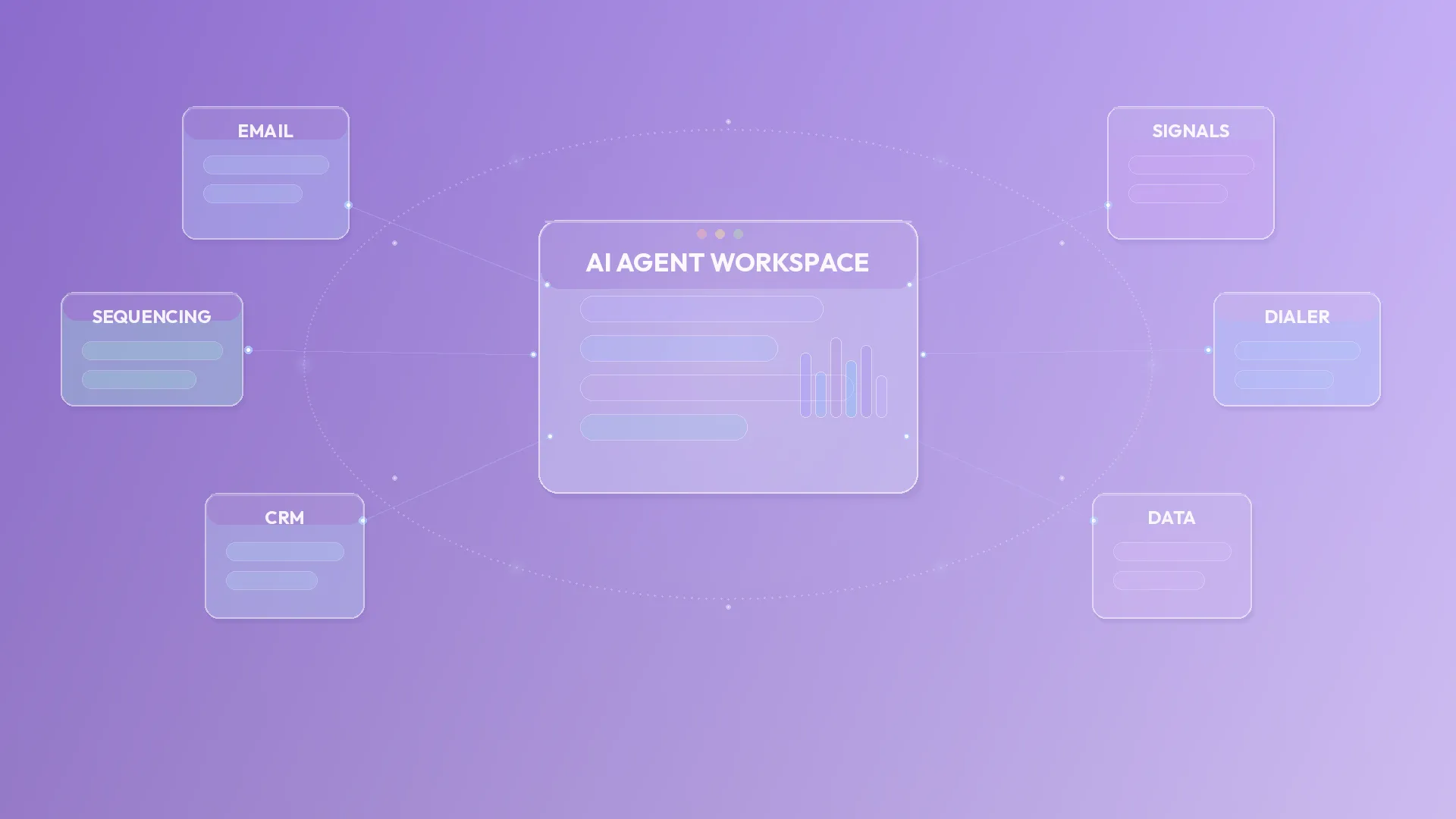
This is the core philosophy behind the Nooks Agent Workspace. Instead of reps bouncing between a dozen disconnected tools, the Agent Workspace acts as a unified command center.
The AI acts, in part, as an autonomous research assistant. It continuously scans the market for critical buying signals and alerts your reps the moment an account shows intent. It automatically handles the discovery of contact info, enriching target accounts with verified direct dials and email addresses.
More importantly, the AI agents synthesize your messy CRM data. Before a rep makes a cold call, the AI Account Assistant reviews the account history, pairs it with the real time market signals, and provides the rep with a clear, actionable brief.
This means your reps are armed with perfect context on every single dial. They are not just pitching features. They are solving specific problems. As a result, the prospects that enter your pipeline are highly qualified, thoroughly researched, and ready to engage.
Choosing the Right Sales Pipeline Software
When companies try to fix their pipeline, they usually blame their sales pipeline software. To actually drive deals forward, you need an execution layer that sits on top of that database. The Nooks Agent Workspace serves as that execution layer. It handles the heavy lifting of AI prospecting, smart sequencing, and live dialing, and then it bi-directionally syncs all of that rich activity data back into your CRM.
There are no duplicate entries. There is no manual logging. The CRM remains your single source of truth, but your reps operate out of a workspace actually designed to build and move pipeline.
You cannot manage a pipeline if the inputs are garbage. By letting AI agents handle the research and data synthesis, you give your reps the context they need to book high quality meetings. That is the only real way to build a pipeline that actually closes.