
Shawn, Sales Development Leader at Notion
Johnny DeFazio, Head of BDR North America at Notion
Spencer Gabriel, Account Executive Leader at Notion
Bill Woodward, BDR at Notion
Jackson Walker, BDR at Notion
From Inside the Sales Floor: EJ sits down with leaders and reps across Notion’s BDR and commercial Account Executive teams to unpack how the company built a proactive outbound culture. Watch the full episode below or on YouTube.
Notion built one of the strongest product-led growth engines in software. But as the company expanded its enterprise sales motion, its revenue team faced a new challenge: creating pipeline proactively and at scale.
In this episode, Notion’s sales leaders and reps explain how the company went from booking only a handful of cold-call meetings to generating 150 in a three-week Nooks pilot. They share how Pipeline Power Ups, the Nooks Virtual Sales Floor, live coaching, dynamic battlecards, and AI-powered targeting helped reps increase meeting volume by as much as 10x, and turned cold calling from an individual slog into a repeatable team motion.
Key Takeaways
- Notion booked 150 net-new cold-call meetings across the team during a three-week Nooks pilot.
- Individual reps increased cold-call meeting volume from roughly one per month to five or six per week.
- Dial volume increased 119% for BDRs and 260% for AEs.
- Commercial AEs can now generate three or four meetings from a focused 45-minute dialing session.
- Shared dialing sessions, live coaching, and leaderboards helped Notion build an outbound culture where one had not previously existed.
- Dynamic battlecards and AI-powered targeting gave reps the context to navigate Notion’s wide range of buyers and use cases.
About Notion
Industry: Enterprise SaaS and productivity
Company size: Enterprise
Website: notion.so
Notion is the collaborative AI workspace where teams and agents think and work together. Built on a company’s context, Notion gives organizations one place to manage projects, meetings, connected apps, and AI agents.
The company’s growth was historically powered by a massive product-led motion and widespread organic adoption. As Notion expanded further into the enterprise, it recognized the need to complement that inbound demand with a proactive, repeatable sales-led growth motion.
Today, a company-wide initiative spanning executive leadership, revenue operations, sales development, and commercial sales is helping Notion’s BDRs and AEs take greater control of pipeline creation.
Why was outbound difficult for a company with Notion’s product-led growth?
Notion had long benefited from what many companies spend years trying to build: tremendous brand awareness, strong inbound interest, and organic customer love.
That success also meant its revenue organization had not needed cold calling to generate pipeline at scale. Reps relied primarily on inbound demand and channels such as email and LinkedIn. A cold-call meeting was the exception.
“We had historically been really blessed by reaching a lot of our pipeline and sales targets with standard channels,” explains Shawn, a Sales Development Leader at Notion. “Calling at scale wasn’t something we did, and a cold-call meeting booked was a real rarity. Maybe one a month, or one every two weeks.”
The lack of an established calling motion shaped the team’s habits.
“Starting off at Notion, people did not want to dial,” says BDR Bill Woodward. “There was very much no dialing culture whatsoever.”
Notion’s existing workflow reinforced that resistance. Dialing was manual, slow, and widely viewed as a slog. Reps were expected to make approximately 250 calls per week, but their daily output averaged only about 25 dials.
The challenge was not a lack of accounts, intelligence, or potential buyers. It was turning that opportunity into consistent execution.
Why did Notion’s Account Executives need a more efficient way to prospect?
The time problem was especially acute for Notion’s commercial Account Executives.
AEs were responsible for creating their own pipeline while simultaneously managing active opportunities, running full sales cycles, and supporting renewals. The team understood the importance of calling, but the traditional workflow required more time than most AEs could realistically give it.
“Our best sellers knew calling was important, but they didn’t have five or six hours a day to set aside,” says AE Leader Spencer Gabriel.
That made prospecting feel like a tradeoff. Time spent manually dialing was time taken away from discovery, deal strategy, customer conversations, and closing business.
Notion needed a system that could compress hours of manual work into a focused block while still giving sellers the context required to have relevant conversations.
What was missing from Notion’s previous dialing tools?
Efficiency was only part of the problem. Sales leaders also lacked visibility into what reps were doing and saying.
“Traditional tools were just a black box,” Shawn says. “I didn’t know what my reps were saying live. Trying to get some level of visibility was a nightmare.”
Managers could review activity totals after the fact, but they could not easily observe conversations as they happened, identify where a rep needed help, or provide feedback in the moment.
That limited the team’s ability to establish consistent messaging, scale coaching, and turn individual rep performance into a repeatable operating system.
Notion wanted more than a faster way to place calls. It needed the execution infrastructure to bring targeting, calling, coaching, and performance visibility into one shared workflow.
How did Notion build a cold-calling culture with Nooks?
Notion launched a formal Nooks pilot across its BDR and commercial AE organizations. As an AI-native company, it wanted a partner that moved quickly and used AI to improve how revenue work was executed, not simply add another layer of recommendations.
One of the most important changes was organizational rather than technical.
Notion introduced “Pipeline Power Ups” every Tuesday and Thursday. Instead of dialing individually, reps joined one another in the Nooks Virtual Sales Floor for focused call sessions.
The shared environment made outbound visible, social, and competitive. Reps could hear activity happening around them, celebrate meetings together, and see results accumulate on the leaderboard.
“I watched this organic effect of reps getting excited for call blitzes,” Shawn says. “It was magic to watch as a manager.”
Johnny DeFazio, Head of BDR North America, describes the experience simply: “The floor is buzzing.”
The sessions recreated the energy of an in-person sales floor while giving a distributed organization a repeatable structure for prospecting.
How does Notion coach reps during live calls?
The Virtual Sales Floor also gave Notion’s managers the visibility they previously lacked.
Leaders can listen to conversations as they happen, identify coaching opportunities, and bring a rep into a private breakout room for immediate feedback. Instead of waiting for a scheduled call review, the manager can help the rep adjust while the situation is still fresh.
“Being able to work on the rep live is a massive confidence booster,” says Shawn. “It makes them feel like they are sharpening the sword.”
That changes coaching from a retrospective exercise into part of the team’s daily execution loop. Reps make calls, receive feedback, apply it, and continue dialing within the same session.
Managers also gain a clearer view of the entire sales floor: who is dialing, which messages are working, where conversations break down, and which reps may need additional support.
How do dynamic battlecards help Notion sell across different personas?
Notion sells across a wide range of teams, including Engineering, Product, Design, RevOps, and HR. Each persona has different priorities, workflows, and reasons for adopting the platform.
That complexity initially made some reps hesitant to call. Even when they connected with the right account, they could not predict which persona would answer or which competitive product might come up in the conversation.
Nooks’ dynamic battlecards surface relevant messaging based on the person who connects. If a prospect mentions a competitor or specific use case, the corresponding talk track appears for the rep in real time.
The rep does not need to memorize every possible scenario or search through enablement documents while speaking. The right context is available at the moment of execution.
That support is especially valuable when Notion uses calls for account intelligence. A conversation with an existing power user can reveal how the organization currently uses Notion, where adoption could expand, and who else should be involved in an enterprise evaluation.
“It used to be hard to just email a power user and say, ‘How can I get in touch with you?’” Shawn explains. “But cold calling with Nooks is incredibly efficient for intel gathering. We find out they are using Notion to one-nth of its capability, which allows us to build a stronger POV and launch $20K to $50K deals.”
The call becomes more than a meeting-booking attempt. It gives the seller the context needed to develop a stronger account strategy.
How does Notion decide who to call?
Increasing dial volume only matters if reps are calling the right people.
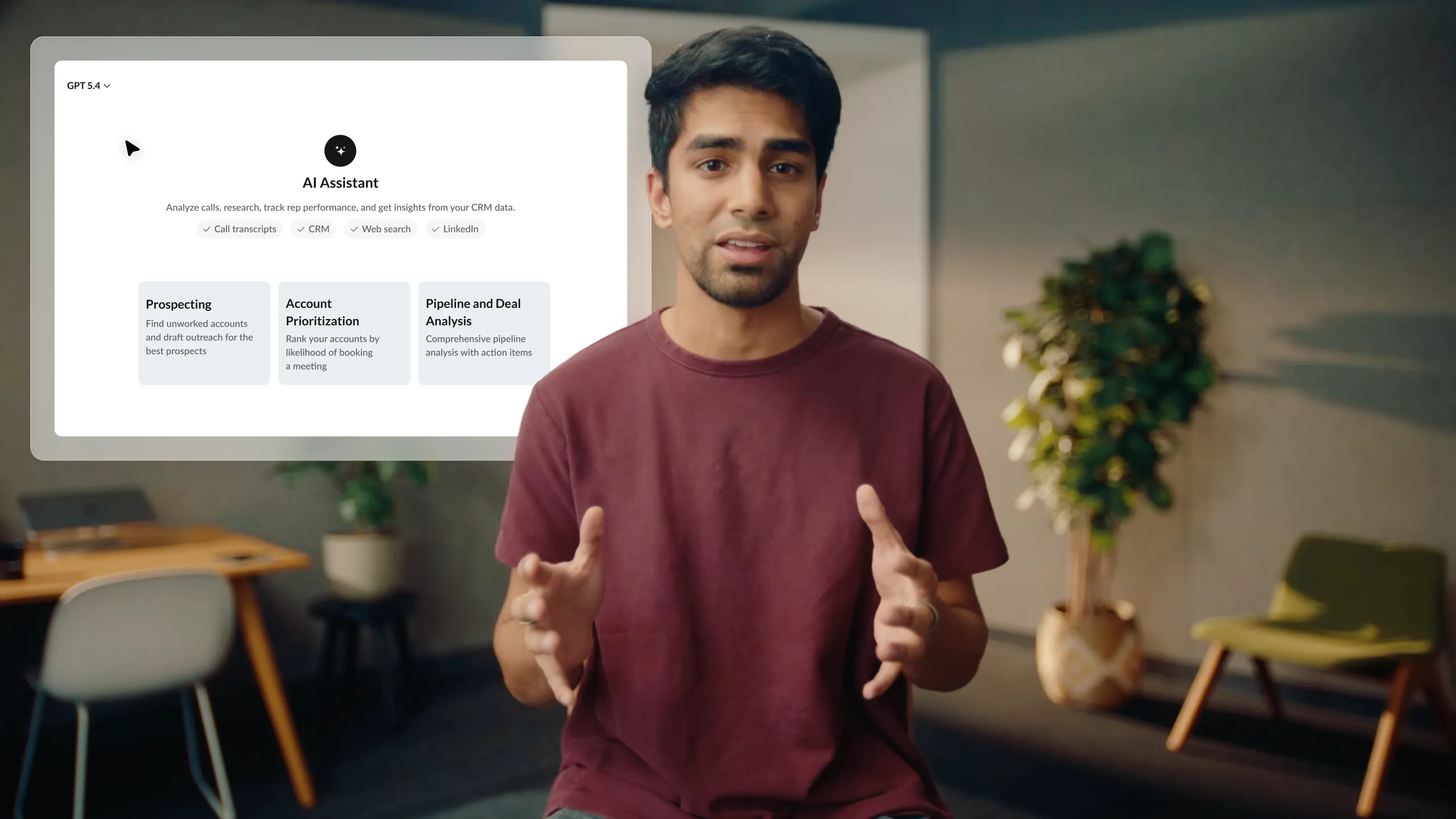
Notion’s reps use Nooks AI Smart Lists to identify prospects who have not answered recently and turn those criteria into actionable calling lists. A rep can create a list of approximately 200 viable targets without spending the session manually filtering CRM records.
That allows sellers to move from prioritization to execution without rebuilding their list every time they sit down to prospect.
Before live sessions, reps can also practice with Nooks AI Roleplay Bots. They can rehearse common objections, test new messaging, and build confidence before having the same conversation with a real buyer.
Together, these workflows give the team a more complete execution loop:
- Identify the right prospects.
- Prepare for likely conversations.
- Execute calls efficiently.
- Receive live coaching.
- Use reporting to improve the next session.
What results did Notion achieve during its Nooks pilot?
During the three-week pilot, Notion booked 150 net-new cold-call meetings across the team.
“Going from a handful of booked meetings to 150, with almost everyone across the POC contributing, was insane to watch,” Shawn says. “We went from booking maybe one cold-call meeting a month to reps booking five or six meetings per week.”
That represented a 10x to 20x increase in cold-call meeting volume for individual reps.
The pilot also drove a significant activity lift. BDR dial volume increased 119%, while AE dial volume increased 260%.
The shift was particularly notable among AEs. Sellers who had been the biggest skeptics of Notion’s previous dialer began climbing to the top of the leaderboard. A focused 45-minute session could now produce three or four meetings without taking the AE away from active deals for half the day.
Can a parallel dialer help a rep recover a missed quota?
For BDR Jackson Walker, the increase in execution capacity changed the outcome of his quarter.
During the final week of Q4, Jackson was behind his target. With Nooks, he dramatically increased the number of conversations he could create and closed approximately one-third of his entire number during that final week.
“Before we were using Nooks, it felt like booking a meeting was like rubbing two sticks together to make a fire,” Jackson says. “With Nooks, it’s like having a Zippo, or a flamethrower.”
The difference was not simply that Jackson completed more activity. He gained a way to actively change his pipeline position within a compressed period of time.
That same sense of control extended across the team. Reps no longer had to wait for an email response or depend entirely on passive inbound demand. They could create conversations when they needed them.
What changed across Notion’s outbound organization?
Nooks helped Notion turn cold calling from an isolated, manual task into a coordinated team workflow.
150 meetings in three weeks
Notion booked 150 net-new cold-call meetings during the pilot, with participation across nearly the entire proof-of-concept group.
10x to 20x more meetings per rep
Individual reps moved from approximately one or two cold-call meetings per month to five or six per week.
260% more AE dialing
AE dial volume increased 260%, showing that outbound could fit into the schedule of sellers managing full sales cycles.
119% more BDR dialing
BDRs increased their dial volume by 119% while gaining a more social, coached, and structured way to execute.
Three to four meetings in 45 minutes
Commercial AEs can now generate three or four meetings from a focused 45-minute dialing session rather than dedicating hours to manual prospecting.
Greater control over pipeline
Reps can actively create pipeline rather than relying only on inbound interest, email sequences, or LinkedIn messages.
How did Nooks help Notion move from PLG to proactive outbound?
Notion did not replace its product-led growth engine. It added a repeatable system of execution around it.
The company already had brand awareness, product usage, account signals, and a large base of potential buyers. Nooks helped its revenue team turn that context into action by making it easier to identify the right people, create more conversations, coach reps in real time, and learn from every session.
The result was more than a temporary increase in call volume. Notion established an outbound culture across BDRs and AEs while giving leaders the visibility needed to scale what worked.
“We can build our own pipeline now and not feel like we can only get it off of Outreach sequences, which I think we all know is probably a dying art,” concludes Spencer Gabriel.