
Georgeann Shoptaw, Sr Director of Outbound Sales @ Rippling
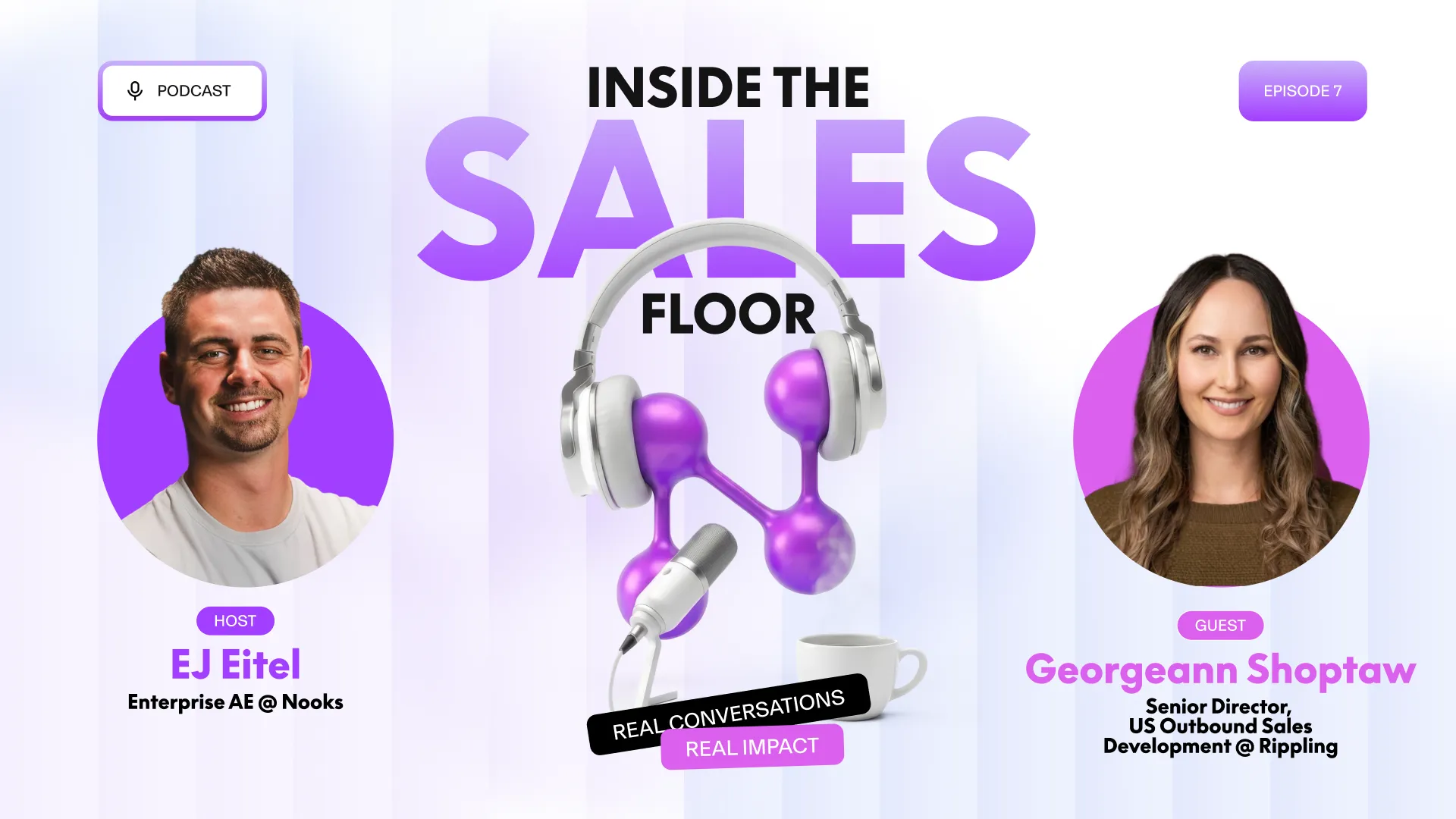
From Inside the Salesfloor. EJ sits down with Georgeann Shoptaw, who leads Rippling's US outbound org. Watch the full episode below or on YouTube.
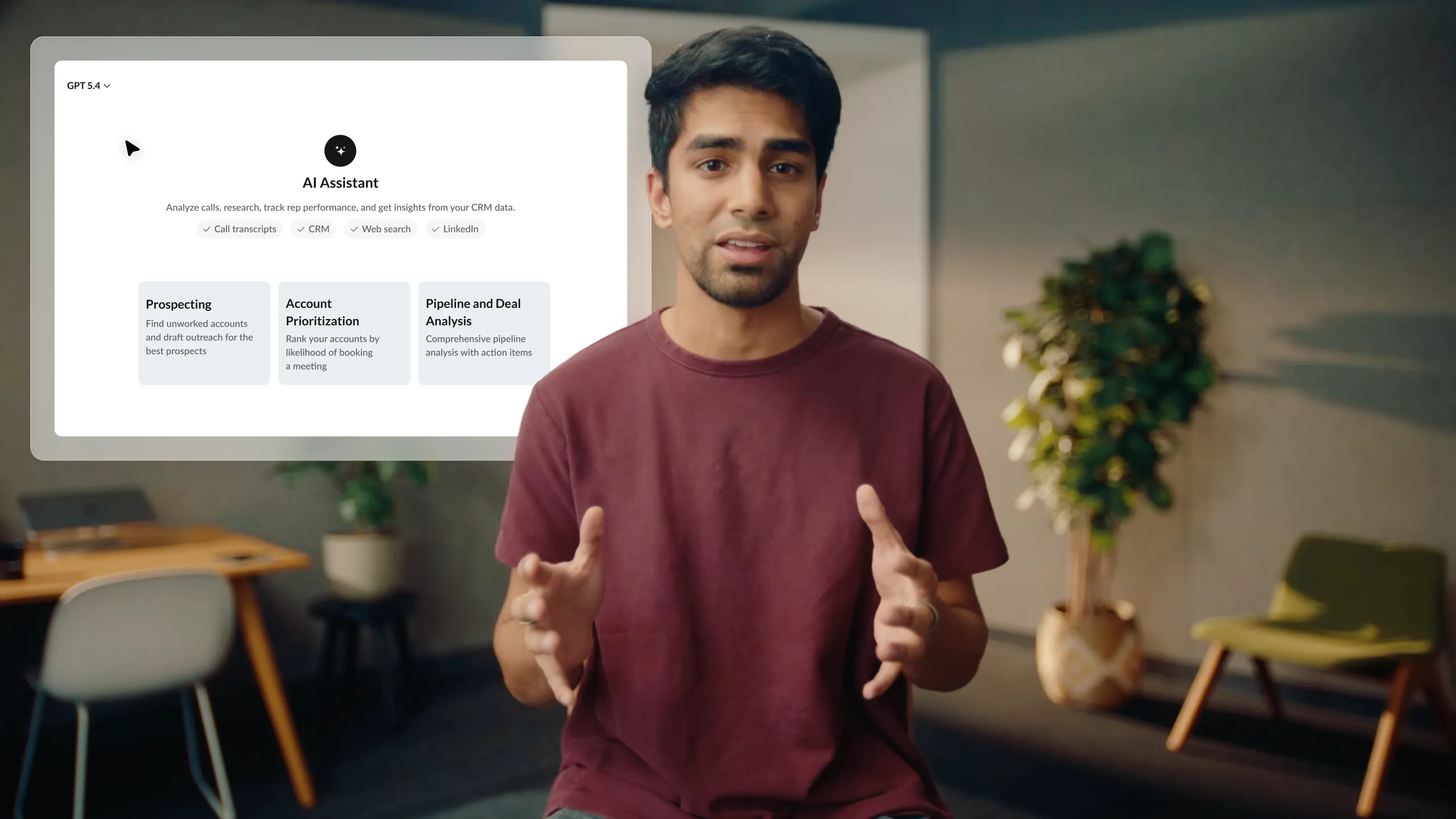
Rippling runs one of the largest SDR orgs in SaaS: roughly 250 outbound reps in the US, close to 500 worldwide. In this episode, Georgeann Shoptaw tells EJ how her team stopped spending three to four hours a day placing calls, and how a side-by-side dialer trial came down to a single metric: booked demos.
Key Takeaways
- Rippling's SDRs used to spend three to four hours a day placing calls. That time now goes to research and personalization.
- In a side-by-side trial of two parallel dialers, Nooks booked 10% more meetings on fewer dials.
- Connect rates improved about equally on both tools. Booked demos broke the tie.
- Any rep under a 3% connect rate gets monthly call-to-connect training, run with Rippling's Nooks CSM.
- Rippling hires SDRs for coachability first. Every interview includes a mock call, and the second attempt is the one that counts.
How much time were Rippling's SDRs losing to manual dialing?
Three to four hours a day, per rep. The old tool made reps do machine work: pick which of a contact's numbers to call, dial one at a time, sit through gatekeepers, office mainlines, and voicemail.
"We were taking roughly three to four hours to make our calls every single day. We were looking to drive more efficiency and save our SDRs time so they can spend that time researching, personalizing." — Georgeann Shoptaw, Rippling
Connect rates and demo rates were running below goal, and reps had no reliable way to tell a good number from a dead one. Rippling wanted that time back for the work that moves a cold call: research before the dial.
How did Rippling run its dialer evaluation?
They ran two parallel dialers side by side, with the same conditions, and let the numbers pick the winner. On call-to-connect, the tools finished in a dead heat. On meetings booked, they didn't: Nooks came out 10% ahead, on fewer dials.
"We're a very outcome-based organization. The call-to-connect increase was great, but the demo booking increase was what we really wanted to anchor on." — Georgeann Shoptaw, Rippling
Beyond the numbers, two tiebreakers: feature depth, and a roadmap moving in the same direction as Rippling's business, fast enough to notice between trial check-ins.
What changed after a year on Nooks?
The dialing block shrank and the data got trustworthy. Enrichment flags which numbers are worth calling before anyone dials. Saved views take reps straight to their high-intent accounts, their MQLs, or a specific sequence step. Managers spot patterns in reporting that a spreadsheet never surfaced, including SDRs quietly skipping dials.
What Georgeann didn't expect was the partnership after the signature. Rippling sends product feedback and watches it show up on the roadmap. Support runs on a monthly cadence instead of waiting for something to break:
"He's never afraid to come lead a call-to-connect training for everybody who's under a 3% connect rate across our team. We're doing that monthly now. It's very proactive versus reactive." — Georgeann Shoptaw, Rippling, on working with her Nooks CSM
What does Rippling look for when hiring SDRs?
Coachability. Rippling can teach product and process; it can't teach a rep to take feedback and use it. So every interview loop includes a mock call, feedback, and a second attempt. The second attempt is the interview.
"We can teach anybody anything, but we can't lead a horse to water." — Georgeann Shoptaw, Rippling
Homework counts too. Candidates who researched the product and ask specific, detailed questions stand out. "Tell me about the team" does not.
Does a cold call ever work on the person who runs 250 SDRs?
Yes. Georgeann answers cold calls, as long as the number isn't flagged as spam. The ones that land were earned before the dial: the rep talked to her managers or her SDRs first, learned something real about the team, and opened with it.
"Somebody who's done their research and can come to the table with something other than 'hey, we went to the same college.'" — Georgeann Shoptaw, Rippling
What's a good connect rate for cold calling?
There's no universal benchmark — it depends on your list quality and data. What's useful is Rippling's operating rule: any rep under a 3% connect rate gets flagged for a monthly call-to-connect training, led by their Nooks CSM. They treat connect rate as a coaching trigger, not a vanity stat — and Nooks reporting is how they surface the data to run that discipline at scale.
How do you run a parallel dialer evaluation?
Run them side by side, with the same team over the same period, and judge on the outcome metric (meetings booked or connected demos), not on connect rate alone. In Rippling's trial, connect rates improved about equally on both dialers; meetings booked is where the 10% gap showed up — in Nooks' favor, on fewer dials. Check roadmap velocity too: the tool should be shipping in the direction your team is growing. For how parallel and power dialers differ on setup and compliance, see Parallel Dialer vs. Power Dialer.
How long should SDRs spend dialing each day?
Less than they probably do. Rippling's reps spent three to four hours a day placing calls with a single-line workflow. After switching to Nooks, that block shrank — and the reclaimed time went into research and personalization instead. A parallel dialer compresses the same call volume into a fraction of the time; the win is spending the rest of the day having better conversations, not just more of them.