AI Slashes Friction in the Sales Process


AI Slashes Friction in the Sales Process
A Recap of the OpsStars Panel on AI in your GTM Stack
AI is officially in every corner of the GTM stack. Every vendor has an AI feature. Every board is asking about the AI strategy. Every Ops team is getting pulled into evaluations.
At OpsStars 2025, Cliff Simon (Polaris Ops), Randy Likas (Nektar AI), Charlie Wiebe (Nooks), and Prakash Raina (Subskribe) sat down to talk about a more practical question:
Where does AI actually reduce friction across the funnel instead of just giving us more tools to manage?
Cliff framed the stack as a system of record, a system of activation, and a system of information. Randy went deep on using AI to automatically attach buying group members to opportunities to clean up forecasting and attribution. Prakash focused on the deal desk, arguing that AI-powered CPQ should suggest smart structures rather than slow deals down with manual approvals.
Very useful perspectives. But most of my attention, not surprisingly, was on how Charlie described what we are doing at Nooks.
The Real Problem Is Not “More Activity.” It Is “Why Target These People.”
Charlie talks with many people in the industry, including partners, prospects, vendors, and more. He opened the panel by discussing the friction he is seeing across the many GTM orgs he speaks to each quarter:
- Deals are taking longer.
- “Committed” deals are slipping.
- Expansion and attachments are harder than they should be.
Under all of that is one simple reality. Buying groups are bigger and more fluid than the way most CRMs model them. There is rarely a single champion anymore. You have six to ten people with different priorities dipping in and out of the process.
If your systems still treat an opportunity like a one-contact record, you feel that pain in every forecast call.
That problem starts at the very top of the funnel.
When Nooks first focused on parallel dialing and automating cold calling, the goal was simple: help reps have more live conversations. That is still important. But it surfaced a harder question that Charlie put plainly:
“I can connect with a whole bunch of folks today, but who am I connecting with and why does it matter?”
To answer that question, sales people need to know:
- Why this account.
- Why this person inside that account.
- Why now.
“Relevance Over Polish” As A RevOps Principle
Inside Nooks, Charlie pushes a simple mantra: relevance over polish.
Before you scale activity, you have to decide who is actually worth your reps’ time. And whether or not your team would be wasting the prospect’s time too. That is what drove the first internal versions of AI Prospector. We were trying to solve the “two hours fumbling around the CRM before calling” problem.
The way we approach it:
- Blend third party signals like funding, hiring velocity, and tech stack.
- Layer in first party signals like past conversations, product usage, upcoming renewals, and competitive context.
- Respect rep knowledge instead of pretending the model knows everything.
The result is a ranked, dynamic list of accounts and people that reflects what your team already knows, not just firmographic filters and generic intent.
Charlie’s line here is one I have heard him repeat inside the company:
“The goal is to get high cost sellers doing what we actually pay them to do, which is selling, not searching.”
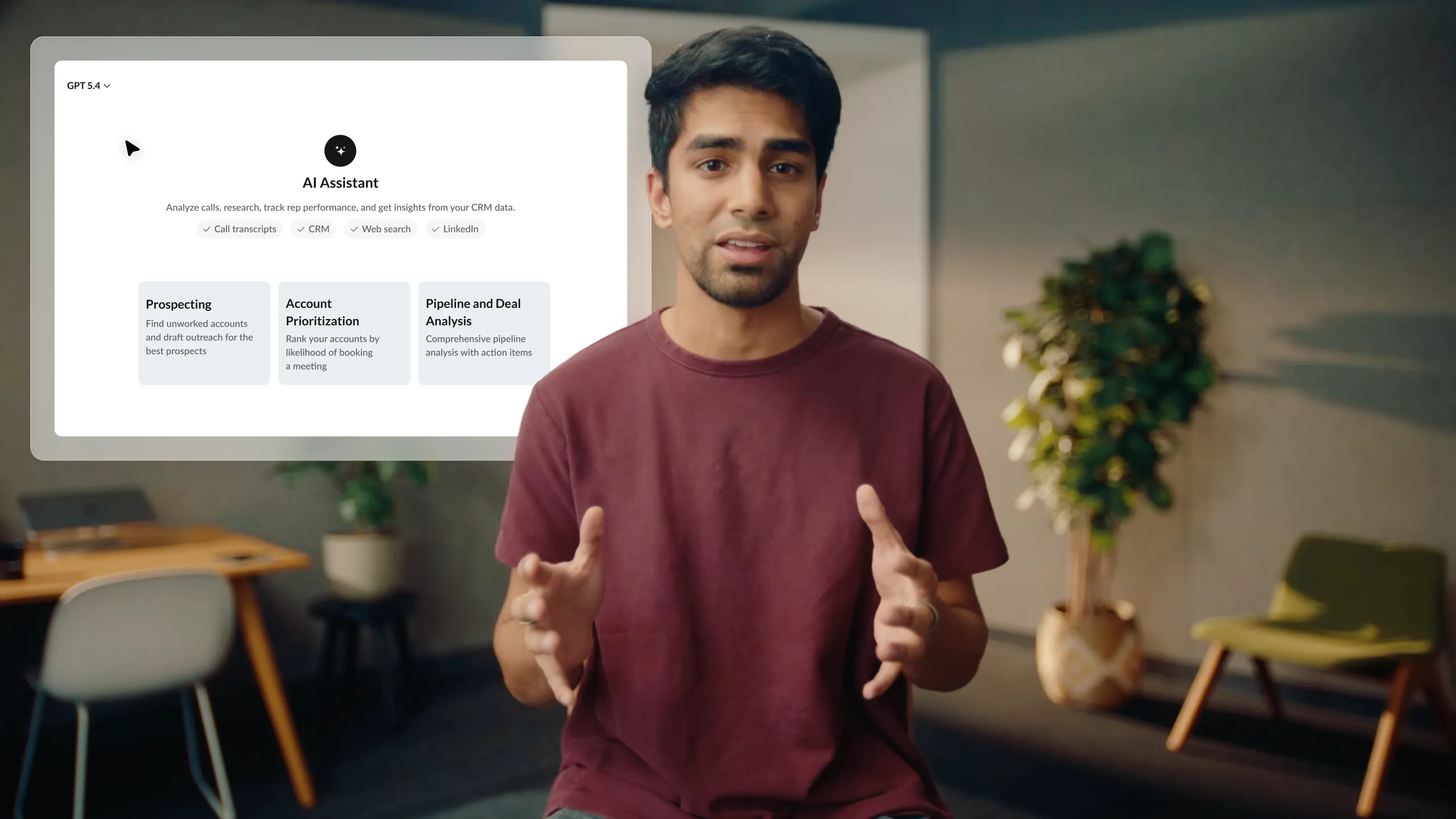
AI Prospector pulls in the mess of signals, organizes them, and presents a clear set of next best accounts and contacts. It does not just spit out a pretty research paragraph. It tells an SDR: here is who to talk to, here is why, and here is the context you should care about.
Reps As General Contractors. AI As Subcontractors.
Charlie’s favorite metaphor on the panel was from his pre-tech life building houses:
“Your AE or your SDR is the general contractor and whatever suite of AI tools they have at their disposal, those are their subcontractors.”
A general contractor does not personally install the roof or wire the house. Their job is to coordinate:
- The right subcontractors.
- In the right order.
- To build the right thing.
In our world:
- SDRs and AEs are the general contractors.
- AI tools and automations are the subcontractors.
At Nooks, that shows up in two ways.
First, we keep reps in the driver’s seat. We are not trying to have AI “own the deal.” Charlie put it this way:
“Our primary goal is to keep an SDR, keep an AE in the driver’s seat and coach and train them to ask questions like, what is one thing that AI could never know about this prospect?”
Second, we let AI take on heavy tasks:
- Researching the account with deep insight across internet research, past call data, CRM data, and more
- Pulling account history into one view.
- Enriching contacts and accounts.
- Syncing activities back into the CRM.
- Preparing a first version of a sequence or talk track.
We coach reps to layer on additional human insight that AI cannot see on its own. And that usually comes from a live conversation you have. By speaking to a person at the target account, you can mine for intelligence that you can distill and form a compelling narrative.
The machine assembles context. The rep makes the call.
How We Think About The Stack Inside Nooks
A big chunk of the panel was about “what should your stack look like now that AI is everywhere.”
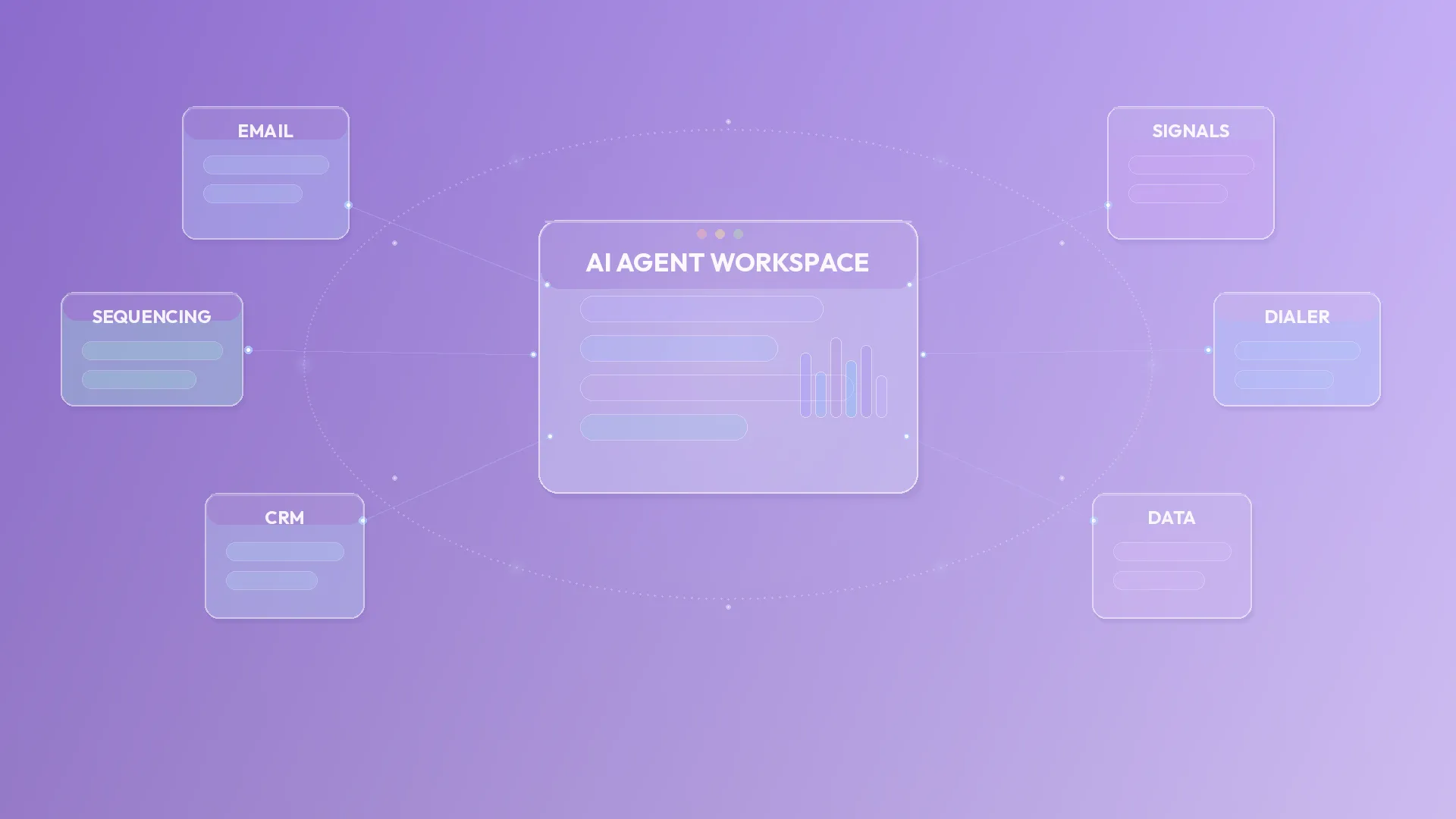
Cliff gave a useful frame: system of record, system of activation, system of information. Charlie supplemented that discussion with something very concrete we use internally.
We treat the GTM stack as three layers:
- Canonical CRM
Pick your CRM and actually treat it as the source of truth. Clean, deduped, consistently enriched. Opportunities should have real buying groups attached, not a single name. Activities should write back correctly. This is where RevOps earns its keep. - Automation Layer
Anything you can describe as “recurring and rules based” should be automated once and not thought about again. Charlie’s example on stage:- SDR reaches out to person X at company Y for the first time.
- The system creates the account, enriches it, enriches the person, and logs the activity. The rep should not be clicking through tools to make that happen.
- Engagement Hub Where Reps Actually Live
For us, this is Nooks. Dialing, tasks, notes, and account context in one place. Charlie’s target is simple:- “Ideally, an SDR and AE in their selling time, like 95 percent of it is in one UI.”
- “Ideally, an SDR and AE in their selling time, like 95 percent of it is in one UI.”
AI threads through all three layers. In the CRM, it helps maintain clean, structured data. In the automation layer, it moves data and triggers workflows. In the engagement hub, it summarizes and prioritizes so reps know how to spend the next 30 minutes.
Charlie has a simple test for any new tool or feature:
“The point of a go to market tech stack is to turn insight into action, not to admire dashboards.”
If it looks more like a museum than a machine, it probably does not make the cut.
The “Boring” Workflow That Actually Cuts Cycle Time
The last part of the session was rapid fire. Each panelist had to pick one workflow or tool they would prioritize if a team wanted to cut sales cycle time by 30 percent.
Charlie did not pick an exotic AI model.
He picked speed to lead.
“Inbound, instant enrichment and lead routing. Speed to lead, maybe the number one pipeline killer.”
In practice, here is how we think about it at Nooks:
- A qualified buyer fills out a pricing or demo form.
- Within seconds, the system enriches who they are, where they work, validates the email, and checks ICP fit.
- It pulls in intent signals like LinkedIn ad engagement and key page views.
- All of that context lands inside Nooks, where the owning SDR sees a very clear “call this person now” signal in their normal workspace.
- If they cannot reach them live, an email and easy booking options go out automatically to keep the window open.
There is plenty of AI under the hood, but the experience is human: a timely, relevant follow up from a rep who seems prepared.
What This Means For Ops Leaders
If you are in RevOps, Sales Ops, or Marketing Ops right now, you are being asked to “do AI,” cut spend, improve conversion, and fix pipeline visibility all at once.
The OpsStars conversation, especially Charlie’s side of it, gave a simple filter:
- Aim AI at relevance, not just polish.
- Treat reps as general contractors who orchestrate AI, not as operators for a bot.
- Use tools like AI Prospector to decide who is worth your time before you accelerate activity.
- Keep a clean CRM, a strong automation layer, and a single engagement hub where reps live.
- Make speed to lead a non negotiable, automated motion.
You do not need more AI stories. You need a clearer way to turn signals into action, keep humans in the loop, and remove the friction that is slowing deals down.
That is the work we are trying to tackle at Nooks every day.