
The 7 Best Sales Prospecting Tools in 2026


A sales prospecting tool helps reps find the right potential buyers, get accurate contact data for them, and prioritize who to reach out to first. That covers a wider range of software than it used to: pure data providers that sell verified contact records, signal and intent platforms that flag who's in-market right now, and newer AI-native platforms that combine sourcing, prioritization, and outreach in one workflow. The right one depends less on which tool has the biggest database and more on what your team is actually bottlenecked on: finding people, knowing who to call first, or turning a list into real conversations.
Most teams don't have a prospecting-tool shortage. They have a data-without-action problem: a subscription to a provider that's excellent at finding contacts and useless at telling reps who to call today. The tools below cover both ends of that spectrum, what each one is built to do well, and where each one hands the problem back to your reps.
Key Takeaways
- Sales prospecting tools split into two real categories: data providers that sell verified contact and firmographic records, and signal-based platforms that prioritize who to contact based on real-time buying activity. Most teams need both jobs covered, not necessarily from the same tool.
- A downloaded list goes stale the moment it's pulled. The tools worth paying for either re-prioritize automatically as new signals arrive, or make it fast enough to re-pull that staleness doesn't matter.
- Data coverage and accuracy vary meaningfully by tool and by region; no single provider has complete coverage, which is why waterfall enrichment (stacking multiple providers) has become standard practice rather than a nice-to-have.
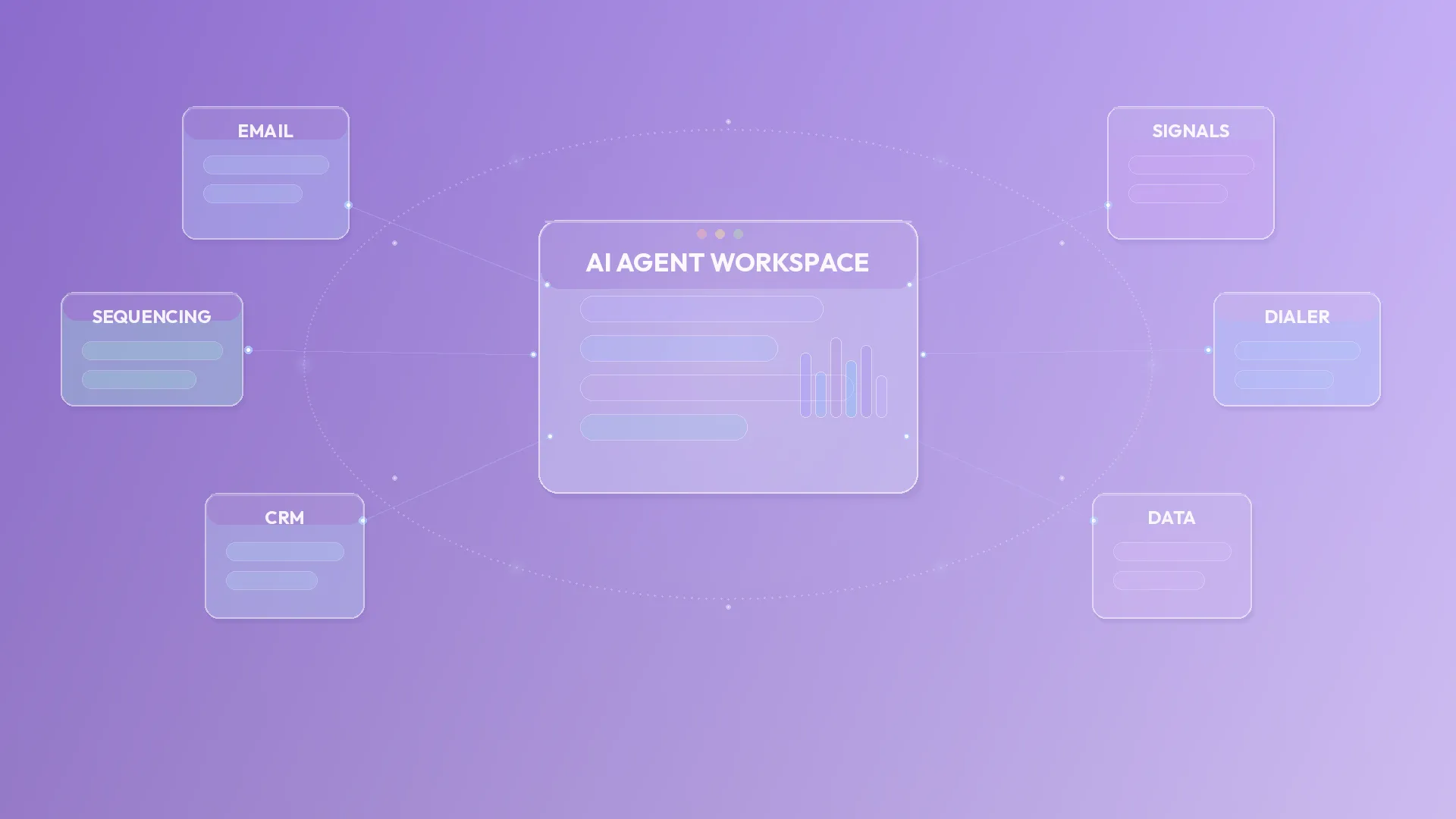
- Nooks isn't a data provider in the traditional sense. Its AI Prospecting product surfaces and prioritizes prospects from live CRM, web, and LinkedIn signals, then hands them directly into sequencing and dialing, so the data doesn't sit in a spreadsheet waiting for a rep to act on it.
The 7 Best Sales Prospecting Tools in 2026
1. Nooks: Best for Signal-Based Prospecting Inside a Full Outbound Platform
Nooks isn't a data provider competing on database size. Its AI Prospecting product is the signal engine inside the platform: it aggregates signals from CRM activity, web behavior, LinkedIn, call transcripts, and third-party intent sources, then automatically surfaces and prioritizes new high-fit prospects instead of leaving reps to build lists by hand.
Key features:
- Automatic prospect sourcing from CRM, web, LinkedIn, and call-transcript signals, not a static database pull
- Buying-trigger detection: competitor renewals, funding rounds, leadership hires, headcount jumps, job postings, and 20+ more
- Waterfall contact enrichment for verified emails and mobile numbers across top data providers
- Prospects flow directly into AI Sequencing and the AI Dialer, so sourcing and execution live in one workflow instead of a handoff between tools
- CRM-first architecture: no shadow CRM, prospect and activity data write back to Salesforce in real time
Best for: Teams that want prospecting to feed straight into outreach, with the AI Assistant turning those signals into a narrative and a next action a rep can use instead of a data export to load into a separate tool.
The gap Nooks is built to close: most prospecting tools are excellent at finding people and hand the problem back to the rep the moment the list is built. Pendo reports that 1 in 3 of their meetings are now sourced directly from Nooks' AI signals, and Modern Health books 60% of its pipeline using the AI Prospector, results that come from prospecting being one step in a live workflow rather than a separate research phase reps have to context-switch into.
2. ZoomInfo: Best for Enterprise Data Coverage
ZoomInfo is one of the largest B2B contact and intent databases on the market, and a tool many enterprise RevOps teams default to when data coverage is the top priority.
Key features:
- Deep firmographic and technographic data across millions of companies
- Intent data showing which accounts are actively researching relevant topics
- Org charts and buying-committee mapping for complex enterprise deals
- Native integrations with major CRMs and sales engagement platforms
- Chrome extension for in-browser prospecting
Best for: Teams that need the broadest possible data coverage and are willing to pay for it.
ZoomInfo's strength is breadth. It doesn't prioritize or sequence outreach on its own, so most teams pair it with a separate execution layer, which is exactly the tool-stacking problem a signal-based, workflow-native tool like Nooks is built to reduce.
3. Apollo.io: Best for Combined Data and Outreach
Apollo.io pairs a prospecting database with built-in sequencing, so teams get contact data and outbound execution without stitching two separate platforms together.
Key features:
- Contact and company database with built-in enrichment
- Native email sequencing and a basic dialer
- Intent signals layered on top of firmographic data
- Chrome extension and CRM sync
- Pricing accessible to smaller teams, not just enterprise budgets
Best for: Teams that want data and lightweight outbound execution in a single, affordably priced platform.
Apollo covers more ground than a pure data provider, but its sequencing and dialing are add-ons to a database product, not a platform built around signal-driven prioritization the way Nooks is.
4. Clay: Best for Custom Enrichment Workflows
Clay pulls from dozens of data providers into a single spreadsheet-style interface, letting RevOps and GTM teams build custom enrichment and scoring logic instead of relying on one vendor's fixed data set.
Key features:
- Waterfall enrichment that falls back across multiple providers automatically
- Custom formulas and AI-assisted research for account and contact scoring
- Flexible list-building logic beyond simple filters
- Integrations that push enriched data into a CRM or outbound tool
- Strong fit for teams with a data or RevOps function that wants full control
Best for: Teams building highly specific, custom-scored prospect lists rather than working from a vendor's default filters.
Clay's flexibility is also its tradeoff: it's a build-your-own-workflow tool, which means someone on the team needs to own and maintain the logic. It enriches and scores; it doesn't execute outreach itself.
5. Lusha: Best for Fast, Accurate Contact Lookups
Lusha is built for speed: a browser extension and search tool that gets reps verified direct dials and emails quickly, without the setup overhead of a full data platform.
Key features:
- Verified direct-dial phone numbers and business emails
- Chrome extension for in-the-moment lookups on LinkedIn and company sites
- Simple, self-serve pricing built for individual reps and small teams
- Bulk enrichment for list-building at scale
- CRM integrations for major platforms
Best for: Individual reps and small teams that need quick, accurate contact lookups without a heavy platform commitment.
Lusha trades platform depth for simplicity. It's a strong fit for contact lookup, not a system for prioritizing or sequencing outreach.
6. Seamless.ai: Best for High-Volume Contact Search
Seamless.ai is built around real-time contact and company search, aimed at teams that prioritize search volume and speed over deep enrichment logic.
Key features:
- AI-powered real-time contact and company search
- Chrome extension for prospecting directly from LinkedIn and company sites
- Bulk list-building and export tools
- Basic intent and buying-signal data
- CRM and sequencing tool integrations
Best for: Teams prioritizing search volume and speed of list-building over deep data enrichment or signal-based prioritization.
Seamless.ai is closer to a search engine for contacts than a prioritization system: it's fast at finding people, but the sorting and prioritization work still falls to the rep or a separate tool.
7. LinkedIn Sales Navigator: Best for Social Selling and Account Research
Sales Navigator is a default choice for prospecting inside LinkedIn itself: advanced search, InMail, and signals like job changes and account activity that don't exist anywhere else.
Key features:
- Advanced search filters across LinkedIn's full professional network
- InMail for reaching prospects outside a rep's existing network
- Lead and account alerts for job changes, posts, and company news
- CRM sync for major platforms
- TeamLink for warm-path introductions through colleagues' networks
Best for: Reps who prospect socially and need LinkedIn-native signals that data providers don't capture.
Sales Navigator's data lives inside LinkedIn's walled garden. It's the strongest tool here for social-selling signals specifically, but it isn't a substitute for verified email and phone data at scale.
How We Evaluated These Prospecting Tools
A prospecting tool earns a spot on this list by doing one of two jobs well: providing accurate, well-covered contact data, or turning signals into a prioritized list a rep can act on immediately. The criteria that mattered:
- Data accuracy and coverage. Verified emails and direct dials that don't bounce or go to a disconnected line, across a meaningful share of the accounts a team actually targets.
- Signal quality, not just signal volume. A tool that surfaces 50 buying triggers a rep ignores is worse than one that surfaces 5 a rep actually acts on.
- How far the tool goes past sourcing. Some tools stop at the list. The strongest ones connect sourcing to what happens next: sequencing, dialing, or at minimum a live CRM sync.
- Fit for team size and budget. An enterprise data platform priced for a 200-person RevOps org isn't the right recommendation for a 5-person SDR team, and vice versa.
How to Choose the Right Sales Prospecting Tool
The right tool depends on which part of prospecting is actually broken for your team.
Start With What's Actually Bottlenecked
If reps can't find enough qualified contacts, the problem is data coverage, and a provider like ZoomInfo or Apollo is the right fix. If reps have plenty of contacts but no way to tell who to call first, the problem is prioritization, and a signal-based tool is the better fit. Buying a bigger database doesn't fix a prioritization problem, and buying a signal tool doesn't fix a coverage gap.
Check Whether the Tool Executes or Just Sources
A prospecting tool that stops at the list hands the hardest part of the job back to the rep. Ask whether prospects flow into outreach automatically or whether someone has to export, upload, and manually load a new tool before a single call gets made.
Don't Rely on a Single Data Provider
No provider has complete coverage. Waterfall enrichment, stacking multiple providers so a miss on one gets caught by another, has become standard practice for teams serious about contact accuracy, whether that's built manually with a tool like Clay or handled automatically inside a platform like Nooks.
Weigh CRM Architecture, Not Just Data Quality
A prospecting tool that syncs to Salesforce on a delay, or builds its own database alongside it, creates a second version of the truth that RevOps ends up reconciling. Ask whether the tool references the CRM live or copies data into its own system before committing to it.
Sales Prospecting Trends Shaping 2026
Signal-based prioritization is replacing static list-building. The default prospecting motion used to be: pull a list, work it top to bottom, pull a new one when it's exhausted. That's being replaced by tools that continuously re-rank prospects as new buying signals arrive, so reps work a live queue instead of a frozen export.
Waterfall enrichment is now the expectation, not a differentiator. Buyers increasingly assume any serious prospecting tool stacks multiple data sources rather than relying on one provider's coverage gaps.
The line between "prospecting tool" and "outbound platform" is blurring. Standalone data providers are adding sequencing; standalone sequencing tools are adding data. The tools winning attention in 2026 are the ones that close the gap between finding a prospect and reaching them, not just one half of that job.
Final Thought: The Best Prospecting Tool Is the One That Doesn't Stop at the List
Every tool on this list can help a team find more prospects. The differentiator that actually matters is what happens after the list exists: does it sit in a spreadsheet waiting for a rep to act on it, or does it flow directly into outreach while the signal is still fresh?
That's the gap Nooks is built to close. AI Prospecting doesn't just surface high-fit accounts, it hands them straight into sequencing and dialing, so the moment between "we found a good prospect" and "a rep reached out" shrinks from days to minutes. Request a demo.