
Top 7 Sales Prospecting Criteria for Prioritizing Accounts in 2026


Last Updated May 2026
Sales prospecting criteria are the standards teams use to rank and prioritize accounts, helping determine which accounts are most likely to engage and convert at a given moment.
Most sales teams no longer struggle to find accounts. They struggle to agree on which ones deserve attention first. When every list looks qualified, and every data source signals interest, prioritization becomes subjective, and reps end up spreading effort across too many accounts that never engage.
That tension drives a common question from sales leaders and reps alike: How do I find the best accounts to target for sales prospecting when volume is high but clarity is low?
In 2026, sales prospecting depends less on static lists and more on how teams evaluate accounts using consistent criteria. This guide is for B2B sales leaders and reps who need a clearer way to decide who to call and why. You'll also see how modern teams use platforms like Nooks to learn from real outbound activity instead of relying on assumptions.
Key takeaways
- Apply strong sales prospecting criteria to prioritize accounts instead of chasing volume.
- Balance fit, timing, and reachability when making targeting decisions.
- Monitor signals that change over time rather than relying on static lists.
- Analyze outbound outcomes like connects and conversations to reveal which accounts matter.
- Leverage Nooks to automate account research and surface intent signals that help reps prioritize the right accounts.
Sales Prospecting Criteria Comparison Table
How to think about sales prospecting criteria in 2026
The problem shifted from finding accounts to ranking them
In 2026, most B2B teams can generate long lists of accounts that look qualified. Data access isn't the constraint it once was. The real challenge is deciding which accounts deserve attention first when time and attention are limited. When everything looks like a potential target, prioritization becomes inconsistent, and reps fall back on gut feel or outdated rules.
This is why the question of which accounts to target for sales prospecting has changed. It's no longer about discovering accounts. It's about ranking them using criteria that reflect how buyers actually behave today.
Static criteria break down as buyer behavior changes
Traditional sales prospecting often relied on static filters like industry, company size, or title. Those still matter, but they don't explain urgency.
Two accounts can look identical on paper and behave completely differently in reality. One may be actively evaluating change. The other may be stable and uninterested for months.
Modern sales prospecting criteria need to account for movement. Buying decisions are increasingly tied to internal changes, shifting priorities, and short evaluation windows. When criteria don't update as conditions change, teams end up spending equal effort on accounts that are not equally ready.
This creates a gap between activity and results. Reps stay busy, but pipeline doesn't grow at the same pace.
The best criteria are grounded in real-world signals
Effective account prioritization now depends on signals you can observe and validate. That includes engagement patterns, organizational changes, reachability, and how similar accounts have responded in the past. These signals help teams distinguish between accounts that could buy someday and accounts that are worth calling this week.
The most reliable criteria are also practical. They help reps make decisions quickly without overthinking. When sales prospecting criteria are clear, teams align on why certain accounts rise to the top and others fall. That alignment reduces wasted effort and makes outcomes easier to learn from over time.
Before choosing specific criteria, it helps to understand this shift. The goal isn't perfection. Clarity improves decision-making and adapts as buyer behavior continues to change.
Top sales prospecting criteria to prioritize in 2026
These criteria are designed to help reps and leaders answer one question consistently:
Should I prioritize this account over another one right now?
In 2026, the most effective sales teams prioritize accounts using a consistent set of prospecting criteria:
- Strength of account fit
- Degree of urgency
- Likelihood of live connection
- Quality of recent engagement
- Presence of relevant organizational change
- Historical outbound performance
- The ability to learn from real outbound outcomes over time.
How to evaluate account fit for sales prospecting
Account fit measures how closely an account aligns with how deals actually close, based on operational maturity, ownership of the problem, and the team's ability to absorb change.
Criterion: Strength of account fit
Account fit measures how closely an account aligns with how deals actually close, not just how the account looks on paper. Strong-fit accounts align with how your product is bought, implemented, and used. That includes industry and size, as well as operational maturity, ownership of the problem, and the team's ability to absorb change.
The most reliable way to evaluate fit is to work backward from closed-won and expansion accounts. Patterns often show up in places teams don't initially expect, such as org structure, process maturity, or internal complexity. These factors influence whether an account can move from interest to execution.
Fit matters most at the top of prioritization. It helps eliminate accounts that will never convert, regardless of timing or messaging. When fit criteria are vague, reps waste effort trying to manufacture urgency where structural barriers exist. Clear fit criteria don't guarantee success, but they ensure effort is spent where success is possible.
Applying fit evaluation at scale
Assessing account fit manually works at low volume, but it breaks down as pipelines expand. Reps often default to surface-level attributes like industry or company size because deeper fit signals are harder to track consistently. Over time, this leads to uneven prioritization and repeated effort on accounts that look good on paper but rarely convert.
Platforms like Nooks help teams operationalize fit by learning from historical outbound outcomes. As calls are made and meetings are booked, patterns emerge around which account characteristics actually correlate with progress. Those patterns can be fed back into prioritization so reps start with accounts that resemble past wins, rather than relying on static filters or assumptions.
How to assess urgency and timing for sales prospecting
Urgency reflects whether an account is likely to welcome a conversation now, based on internal changes, shifting priorities, or active evaluation windows.
Criterion: Degree of urgency
Urgency reflects whether an account is likely to welcome a conversation now instead of sometime in the future. Two accounts may match fit criteria equally well, yet behave very differently based on what's happening inside the business. One may be stable and uninterested. The other may be navigating change and actively reassessing tools or workflows.
Urgency shows up through signals like leadership transitions, growth initiatives, reorganizations, or visible inefficiencies. These moments increase receptiveness, even when budgets or timelines are still being formed. The goal isn't to predict purchase with certainty. It's to recognize when outreach is more likely to be welcomed.
Urgency matters most when rep time is limited. Prioritizing accounts with real movement improves response rates and makes conversations feel relevant instead of interruptive. According to Gartner research, B2B buyers spend only 17% of their buying journey meeting with potential suppliers, making timing critical for engagement.
Applying degree of urgency at scale
Manually tracking timing signals across hundreds of accounts quickly becomes unsustainable. Modern prospecting platforms help by monitoring signals automatically.
For example, AI Prospector in platforms like Nooks tracks 20+ buying signals, including job changes, funding rounds, hiring patterns, and tech stack changes, then surfaces accounts showing fresh urgency signals. This allows reps to focus on accounts with real movement without spending hours researching each one.
How to evaluate reachability for sales prospecting
Reachability measures whether your team can realistically connect with the right people at an account through live outbound outreach.
Criterion: Likelihood of live connection
Reachability measures whether your team can realistically connect with the right people at an account through live outbound outreach. In modern outbound, access is a fundamental constraint. Unknown numbers get screened. Inboxes are saturated. Poor contact data quietly drains rep time.
Evaluating reachability means examining practical indicators such as contact data quality, persona pickup patterns, time-zone alignment, and historical connect rates by role or segment. These signals often predict the likelihood of a conversation more accurately than theoretical interest.
Reachability matters because accounts that never answer aren't neutral. They reduce efficiency and slow learning. Including reachability as a criterion protects call blocks and ensures reps spend time where conversations are possible. This doesn't mean abandoning hard-to-reach accounts forever. It just means sequencing them intentionally instead of letting them dominate daily outreach.
How teams apply reachability assessment at scale
Reachability is one of the hardest criteria to manage consistently because it depends on real-world behavior. Contact data may be technically "valid," yet still lead to low pickup rates due to timing, role, or channel fatigue. When reps evaluate reachability ad hoc, unreachable accounts often consume disproportionate call time.
At scale, reachability needs to be inferred from outcomes. In systems like Nooks, call results create signals around which personas, roles, and segments are most likely to answer. Over time, these patterns help teams prioritize accounts where live conversations are statistically more likely, protecting call blocks and improving overall efficiency without abandoning harder segments entirely.
How to weigh engagement signals for sales prospecting
Engagement quality indicates whether account behavior reflects active evaluation or casual curiosity, based on recency, repetition, and intent signals.
Criterion: Strength of recent, relevant engagement
Engagement becomes a useful prospecting signal only when it reflects recent, relevant behavior tied to active evaluation. Website visits, email clicks, or content views often signal curiosity, but only some engagement indicates active evaluation.
Stronger engagement tends to be recent, repeated, and tied to high-intent areas like pricing, implementation, or product workflows. Account-level engagement, especially across multiple people, is usually more meaningful than isolated actions by a single contact.
This criterion works best when layered with fit and urgency. Engagement alone can inflate priority for accounts that aren't ready to act. When interpreted in context, it helps teams decide which accounts deserve faster follow-up or more tailored outreach. The result is better early conversations driven by observable behavior rather than assumptions.
How teams apply engagement signals at scale
Engagement data becomes noisy as volume increases. Reps are often flooded with alerts that treat all clicks or visits as equal, making it difficult to distinguish genuine buying behavior from casual interest. This can lead to over-prioritizing curious but inactive accounts.
Teams need context and filtering to apply engagement at scale. Platforms like Nooks surface engagement alongside fit, urgency, and outbound outcomes, helping reps interpret signals in combination rather than isolation. This allows teams to move quickly on meaningful engagement while avoiding false positives that don't translate into conversations.
How to factor organizational change into sales prospecting
Organizational change signals whether an account is actively reassessing how work gets done in ways that align with your solution.
Criterion: Presence of relevant organizational change
Relevant organizational change signals whether an account is actively reassessing how work gets done in ways that align with your solution. New leaders, new teams, and new mandates force companies to reconsider how work gets done. When change aligns with the problem you solve, it becomes a strong prioritization signal.
Not all change matters equally. A new SDR leader suggests different priorities than a new RevOps hire. Hiring growth signals something different than restructuring or consolidation. The key is relevance. Change only increases priority when it intersects with your value proposition.
This criterion helps create a believable reason to reach out. Outreach grounded in real internal change feels timely rather than generic. Teams that prioritize relevant change signals often see higher engagement because they recognize urgency rather than trying to manufacture it.
How teams apply organizational change signals at scale
Organizational change is one of the strongest buying indicators, but it's also difficult to track manually across hundreds of accounts. Reps may catch obvious changes like funding announcements, but subtler shifts like team expansion or leadership turnover are easy to miss.
Modern prospecting systems help by monitoring these signals automatically and tying them back to relevance. In Nooks, users can evaluate change signals alongside historical outcomes, helping teams learn which types of change actually precede productive conversations. This prevents overreacting to irrelevant updates while reinforcing outreach grounded in meaningful change.
How to use historical outbound performance for sales prospecting
Historical outbound performance reveals which accounts and segments are more likely to engage based on real call outcomes like connects, conversations, and meetings booked.
Criterion: Historical outbound performance
Historical outbound performance reveals which accounts and segments are more likely to engage based on real call outcomes. Who answers, who pushes back, and who books meetings all provide signals about account quality that no enrichment tool can replace.
Evaluating this criterion doesn't require complex analytics. Consistent review of outcome categories can surface patterns by role, industry, or trigger type. Over time, these patterns help teams adjust priorities based on real results rather than static assumptions.
This criterion becomes stronger as volume increases. More calls create clearer trends. When historical performance feeds back into targeting, prioritization improves naturally. Accounts that consistently convert earn more attention. Accounts that repeatedly stall move down until conditions change.
How teams apply historical outbound performance at scale
Reviewing outbound performance manually can surface insights, but it's often done too infrequently to influence daily prioritization. By the time patterns emerge, reps have already repeated the same outreach mistakes across dozens of accounts.
At scale, historical performance needs to feed directly into targeting. Nooks enables this by connecting call outcomes back to accounts and segments in real time. As reps call, results update the system's understanding of what works, allowing prioritization to evolve continuously instead of relying on quarterly retrospectives.
How to build sales prospecting criteria that improve over time
Learning capability measures whether your prospecting process can adapt over time based on real outbound results and changing buyer behavior.
Criterion: Ability to learn from real outbound outcomes
This criterion measures whether your prospecting process can adapt over time based on real outbound results. It's about whether your prioritization process can adapt. Markets shift, buyers change behavior, and criteria that worked last quarter won't always hold.
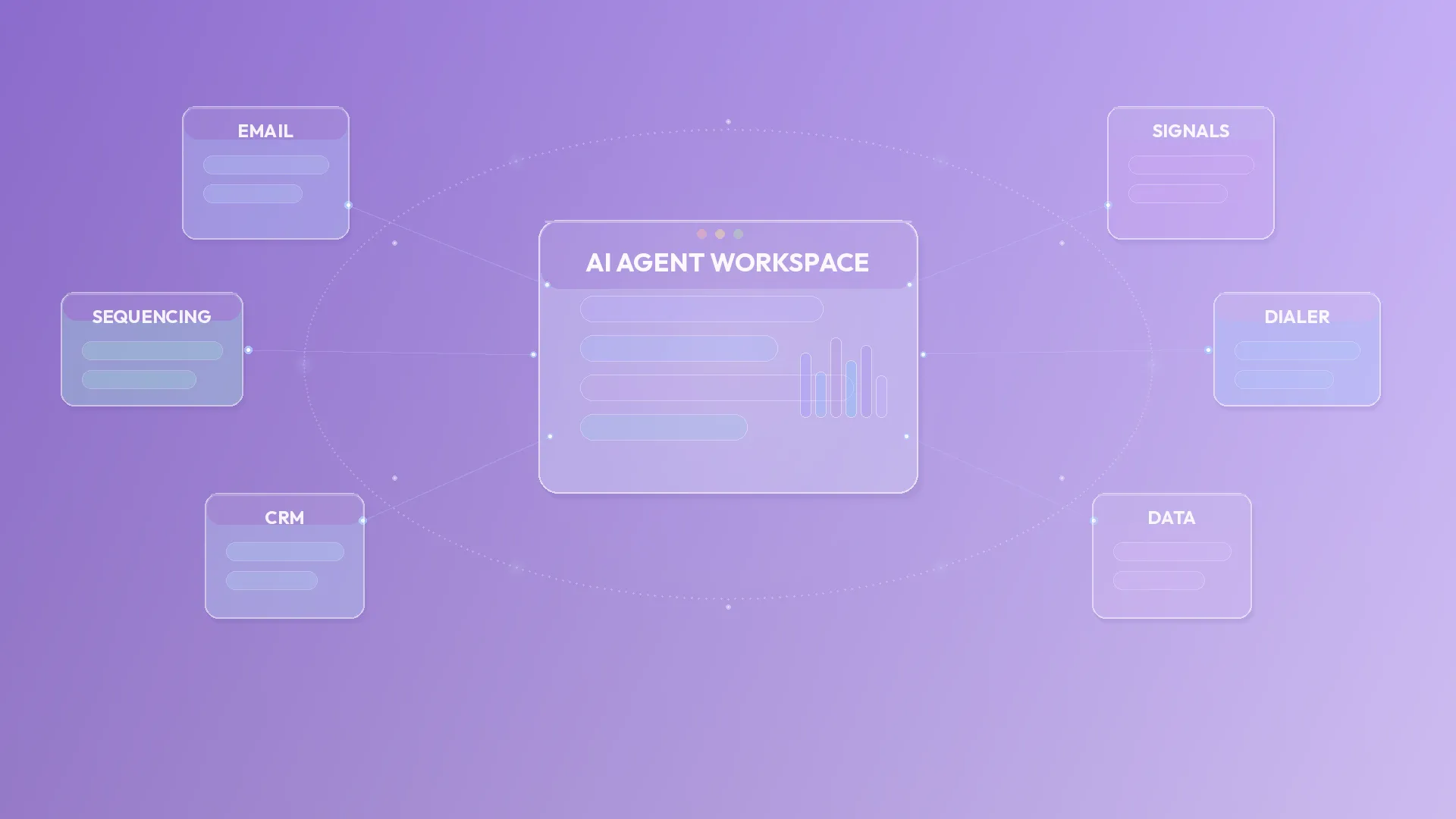
Nooks supports sales prospecting by integrating prospecting, dialing, and coaching into a single system where outbound activity drives learning. As reps call, outcomes generate signals about reachability, engagement, and relevance. Those signals influence future prioritization instead of getting lost in reports.
This criterion matters because static models decay. When prioritization is tied to real conversations, teams can adjust faster and with more confidence. Coaching reinforces what works on live calls, improving execution and the quality of the signals feeding back into targeting. Over time, this creates a system that gets better at choosing accounts as it's used.
How teams apply learning and adaptation at scale
Learning breaks down when signals are siloed. Prospecting tools, dialers, and coaching systems often operate independently, making it hard to translate insights from one area into action in another. As volume increases, this fragmentation slows improvement.
Nooks addresses this by treating prospecting, dialing, and coaching as a single system. Outbound activity generates signals, those signals influence future prioritization, and coaching reinforces the behaviors that produce results. Because learning is embedded in daily execution, prioritization improves naturally as the system is used, without constant manual recalibration.
How to choose the right sales prospecting approach for your team in 2026
Early-stage sales teams building their first outbound motion
If your team is still validating who to target, start with fit and urgency. Clear fit criteria prevent wasted effort, while basic timing signals help reps focus on accounts that are more likely to engage. At this stage, simplicity matters more than precision, because consistency creates cleaner learning.
Scaling teams managing higher outbound volume
As volume increases, reachability and historical performance become more important. Small differences in connect rates and early engagement compound quickly at scale. Teams in this phase benefit from prioritization rules that protect call time and reduce low-return activity without slowing reps down.
Teams running account-based or complex sales motions
When multiple stakeholders influence decisions, coverage and organizational change should carry more weight. Prioritizing accounts with relevant change helps reps find internal momentum, while role-based coverage reduces dependence on a single contact. This approach keeps accounts alive even when one path stalls.
Teams with strong inbound but inconsistent outbound results
Inbound engagement should inform outbound prioritization, not replace it. Teams in this position get better results by elevating engaged accounts into outbound sequences while still applying fit and urgency filters. This keeps outreach focused and avoids chasing activity that never converts.
Teams optimizing for long-term improvement
If your goal is to make targeting better over time, prioritize criteria that learn from outcomes. Capturing call results and feeding them back into prioritization helps teams adapt as markets shift. Over time, this reduces reliance on static rules and keeps sales prospecting decisions aligned with real buyer behavior.
Common sales prospecting mistakes to avoid
- Treating criteria as a one-time setup: Sales prospecting criteria lose accuracy as buyer behavior shifts. When teams don't revisit them, prioritization drifts and reps spend time on accounts that no longer reflect real buying conditions.
- Overweighting a single signal: No single input explains readiness on its own. When intent data or engagement dominates prioritization, teams often chase visible activity without confirming fit or urgency.
- Ignoring reachability until performance drops: Low connect rates usually show up after weeks of wasted effort. If reachability isn't considered early, reps burn their best call time on accounts they can't actually reach.
- Confusing activity with learning: High activity doesn't equal progress if outcomes aren't reused. When teams don't review call results, the same low-return accounts stay prioritized and targeting never improves.
- Overcomplicating prioritization rules: Granular scoring models slow reps down and reduce consistency. When prioritization feels hard to apply, reps fall back on instinct instead of shared criteria.
- Failing to align criteria across the team: If each rep interprets prioritization differently, results become noisy. Shared sales prospecting criteria make outcomes easier to compare and patterns easier to learn from.
Final thought: Nooks' AI sales assistant platform helps teams implement a living, learning system in 2026
Sales prospecting works best when account selection is deliberate instead of reactive. The strongest teams don't ask whether an account fits in theory. They ask whether it deserves attention now. That's why clear sales prospecting criteria matter. They help teams compare accounts using signals that reflect real buyer behavior, not just surface-level data.
Effective sales prospecting combines fit, urgency, reachability, and learning from past outcomes. When those criteria are applied consistently, reps spend more time in meaningful conversations and less time chasing accounts that were never likely to engage. Over time, this creates a more predictable path to pipeline.
Nooks fits naturally into this approach by treating prospecting as an active decision-making layer, not just a source of lists. The platform automates account research, applies intent and engagement signals, and surfaces clear context on who to call and why directly in the outbound workflow. As reps dial, real conversation outcomes feed back into those signals, refining prioritization over time. The result is a sales prospecting system that stays current and gets smarter with use, rather than a static list that slowly loses relevance.
Frequently asked questions
What is sales prospecting?
Sales prospecting is the process of identifying, prioritizing, and engaging accounts that are likely to become customers. It focuses on deciding who to contact, when to reach out, and how to start productive conversations.
What are sales prospecting criteria?
Sales prospecting criteria are the standards teams use to rank and prioritize accounts. They help determine which accounts are most likely to engage and convert at a given moment.
How do I find the best accounts to target for sales prospecting?
Start by filtering for fit, then layer in timing and reachability signals. Finally, refine prioritization using engagement and past outbound outcomes to focus on accounts that consistently produce conversations.
Are sales prospecting criteria better than lead lists?
Lead lists provide raw inputs, but criteria determine how those inputs are used. Criteria help teams decide which accounts matter now instead of treating all leads equally.
What if my team doesn't have enough data to apply criteria yet?
Begin with simple fit and timing signals, then capture outbound outcomes consistently. Even a few weeks of call results can improve prioritization decisions.
How does Nooks support sales prospecting criteria over time?
Nooks connects prospecting, dialing, and coaching so outbound outcomes inform future prioritization. This feedback helps teams refine sales prospecting criteria as buyer behavior changes.