Personalized Outreach Automation With AI: How B2B Teams Scale Without More Rep Work

Personalization has become table stakes in outbound, yet most teams still treat it as a trade-off. You can personalize messages by hand and slow reps down, or you can automate outreach and accept that it sounds generic. As inboxes get noisier and buyers tune out templated messaging faster, that compromise breaks down.
That pressure leads many sales teams to explore how they can use AI to craft personalized prospecting and outreach at scale without increasing rep workload.
This guide explains how B2B sales leaders and reps can use personalization to improve response rates without bogging down their teams. You’ll see how modern teams approach personalized outreach automation with AI, including how platforms like Nooks use real outbound activity to make personalization more relevant over time.
Key takeaways
- Personalized outreach drives engagement, but manual personalization doesn’t scale.
- Personalized outreach automation with AI makes each message more relevant to the buyer.
- Effective personalization adapts to account context, timing, and role.
- AI improves personalization when it learns from real outbound outcomes.
- Nooks supports personalized outreach by connecting prospecting, dialing, and coaching into one learning system.
How to think about personalization in 2026
Personalization expectations have changed
Buyers now expect outreach to reflect their reality. Generic messaging stands out immediately, even when it’s technically customized with a name or company field.
What buyers respond to is relevance. They want to see that the outreach reflects their role, their priorities, and what’s happening inside their organization.
This shift raises the bar for personalized outreach. It’s no longer enough to reference surface-level details. Effective personalization needs to connect to timing, context, and the problem the buyer is likely dealing with right now. As a result, teams that rely on static templates struggle to earn replies, even when their data looks clean.
Manual personalization doesn’t scale with outbound volume
Most teams learned personalized outreach by doing it manually. Reps research accounts, skim LinkedIn, and write custom openers. That approach can work at low volume, but it breaks down quickly as activity targets rise. Reps either slow their pace or default to shortcuts, and personalization quality drops.
The issue is consistency. Human-driven personalization varies by rep, time pressure, and energy level. That variability makes results unpredictable and hard to improve systematically. Teams end up choosing between speed and relevance, even though both are required to win attention.
Automation alone doesn’t solve the problem
Early automation focused on efficiency. It made it easier to send more messages, but it didn’t make those messages more relevant. Without context, automation just scaled noise. Buyers learned to spot templated language immediately, which eroded trust in automated outreach.
Modern personalized outreach automation with AI needs to operate differently. It has to interpret signals before it writes anything. That includes understanding account context, recognizing when timing shifts, and adjusting messaging based on real-world conditions.
Personalization improves when it’s treated as a learning system
The teams that scale personalization successfully treat it as a learning problem. They pay attention to what buyers respond to, which messages lead to conversations, and where outreach falls flat. Over time, those outcomes inform how future messages are shaped.
When personalized outreach adapts based on real results, it becomes possible to maintain relevance at scale. Instead of asking reps to do more research, teams rely on systems that learn from outbound activity and refine personalization continuously.
How top B2B sales teams scale personalized outreach automation with AI
How do I personalize outreach using account context instead of surface details?
Personalized outreach improves when it reflects how an account operates as well as who the buyer is. Account context includes the company’s business model, team structure, and the operational pressures that role is likely facing.
AI helps synthesize this context at scale. Instead of asking reps to research every account manually, systems can pull together firmographic patterns, role expectations, and known pain points to shape more relevant messaging.
This approach is most effective when reps are working medium to high volume. Context-driven personalization stays consistent across accounts and doesn’t rely on novelty. It also gives teams a stronger foundation to refine messaging over time, since context changes more slowly than surface-level details.
How do I tailor messaging by role without writing everything from scratch?
Different roles experience the same problem in different ways. A sales leader, an SDR manager, and a RevOps partner care about different outcomes, even inside the same account.
Role-based personalization starts from those differences. AI can learn which themes resonate with each role and surface language that aligns with their priorities. Reps begin with a role-appropriate baseline instead of a blank page.
This matters most when teams sell into repeatable personas. Over time, role-based personalization improves as systems observe which messages lead to replies and conversations. Reps spend less time editing and more time engaging, while outreach stays aligned with how buyers think.
How do I incorporate timing signals into personalized outreach?
Timing adds relevance when personalization alone isn’t enough. Outreach lands differently when it reflects a recent change inside the account, such as hiring, leadership movement, or shifting priorities.
AI can track these signals continuously and adjust outreach to match what’s happening now. Messages feel more intentional when they align with moments of change rather than generic pain points.
This approach works especially well in fast-moving markets where priorities shift quickly. Timing-aware personalization gives reps a clearer reason to reach out and improves the odds that messages are read as relevant rather than automated.
How do I personalize outreach without increasing rep workload?
Manual personalization requires individual effort, making it hard to scale. As activity targets rise, reps either slow down or simplify their messaging.
AI changes the workflow by handling preparation before reps engage. Systems can generate personalized drafts or talking points based on shared context, leaving reps to review and adjust instead of starting from scratch.
This keeps the workload stable while improving consistency. It’s most effective when personalization is embedded directly into existing workflows. When reps don’t have to switch tools or add steps, personalization supports productivity instead of competing with it.
How do I keep automated personalization from sounding generic?
Automation sounds generic when messages never change. Personalization improves when systems learn from outcomes rather than relying on fixed templates.
Replies, objections, and conversations all provide feedback about which messages resonate. AI can use that feedback to strengthen language that leads to engagement and phase out language that doesn’t.
This works best when feedback is tied to real conversations instead of vanity metrics. Over time, automated personalization reflects how buyers actually respond, which keeps messaging grounded and harder to ignore.
How do I align personalized outreach across email and calls?
Personalized outreach works better when email and calls reinforce the same context. When channels feel disconnected, conversations restart from zero.
AI can ensure insights used in written outreach also inform call preparation. Reps enter conversations with the same understanding that shaped the initial message.
This alignment matters most for teams that rely heavily on phone-based prospecting. When calls reflect prior outreach, conversations start faster and feel more coherent. It also makes coaching easier, since patterns show up consistently across channels.
How can I support personalized outreach automation with AI over time?
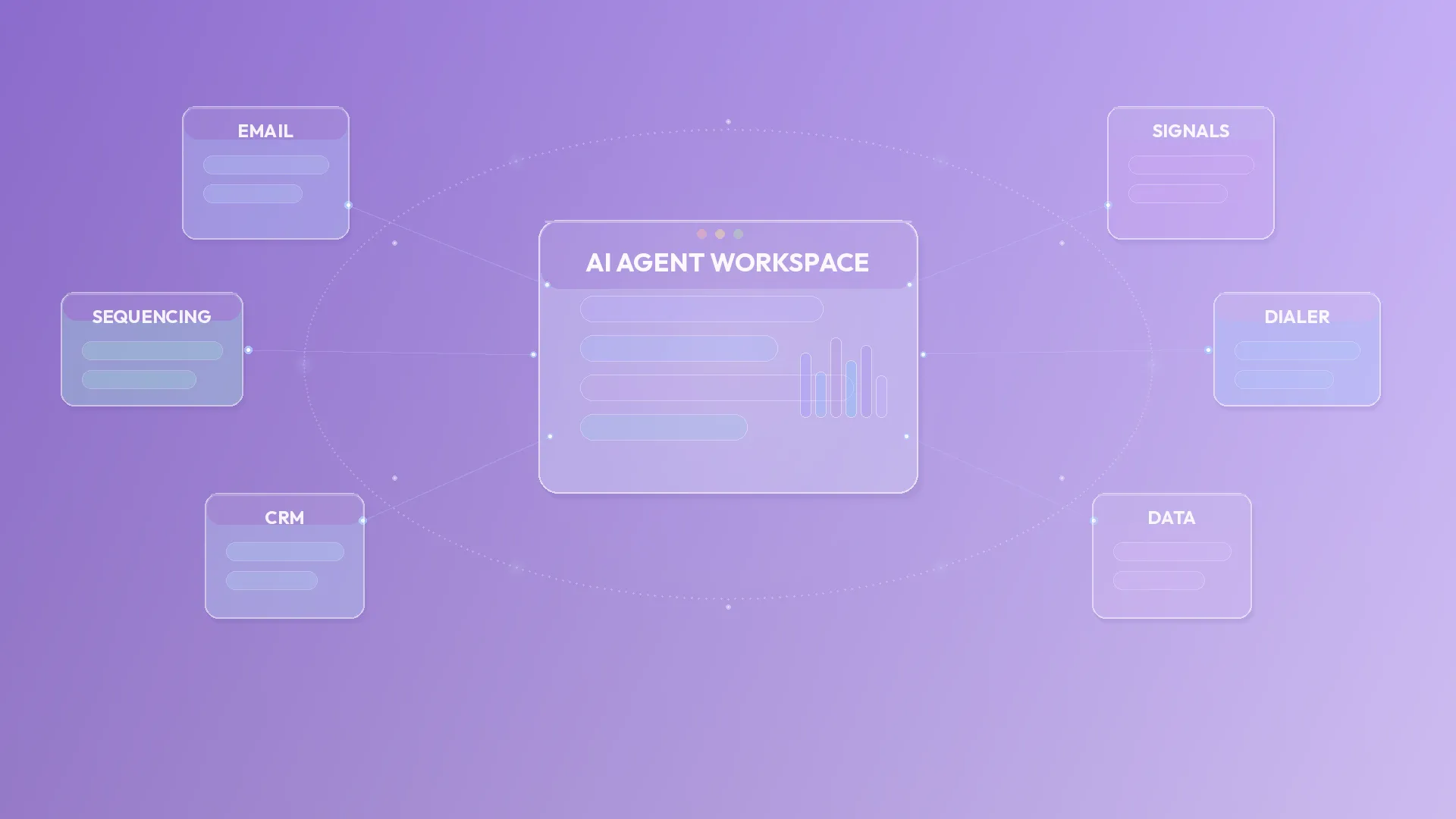
The Nooks platform supports personalized outreach by integrating prospecting, dialing, and coaching into a single system that learns from real outbound activity. Each conversation creates signals about which messages resonate, which roles engage, and which timing cues matter.
Those signals inform future outreach, so personalization improves without adding manual work. Messaging evolves based on real buyer responses rather than static assumptions.
Because coaching is grounded in live calls, patterns that lead to conversations get reinforced. Over time, personalized outreach automation with AI becomes more accurate as Nooks adapts to how buyers actually respond.
How to choose the right approach for your team
Teams early in outbound adoption
If your team is still building consistent outbound habits, focus on approaches that reduce prep work without lowering message quality. Personalization should rely on shared context and role-level patterns rather than individual research. At this stage, consistency matters more than nuance because it creates a baseline you can learn from.
Teams scaling volume without adding headcount
As activity targets increase, manual personalization becomes harder to sustain. Teams in this phase benefit from AI-driven approaches that prepare relevant drafts or talking points automatically. The goal is to keep rep workload flat while improving relevance across a larger number of accounts.
Teams selling into well-defined personas
When your ICP and buyer roles are clear, role-based personalization delivers the most value. Approaches that recognize how different roles experience the same problem help reps sound informed without rewriting messaging for every contact. This works best when patterns repeat across accounts and segments.
Teams operating in fast-changing markets
If buyer priorities shift frequently, timing-aware personalization becomes more important. Approaches that incorporate hiring signals, leadership changes, or strategic shifts help outreach stay relevant as conditions change. This reduces reliance on static templates that age quickly.
Teams optimizing for continuous improvement
For teams focused on long-term performance, the ability to learn from outcomes matters most. Approaches that connect personalization to real conversations make it easier to refine messaging over time. This reduces guesswork and keeps personalization aligned with how buyers actually respond, even as markets evolve.
Common outbound personalization mistakes to avoid
- Equating personalization with manual research: Many teams assume personalization requires deep, one-off research for every account. That belief limits scale and creates burnout. When personalization depends on individual effort, quality drops as volume rises and results become inconsistent.
- Relying on surface-level details: Referencing a job title, recent post, or company name doesn’t signal relevance on its own. Buyers recognize shallow personalization quickly. When outreach focuses on easily scraped details instead of meaningful context, messages blend into the noise.
- Over-automating without learning loops: Automation fails when messages stay static. If systems don’t adjust based on replies, objections, or conversations, personalization degrades over time. Without feedback from real outcomes, automation simply repeats what no longer works.
- Treating channels as separate workflows: Personalized outreach breaks down when email, calls, and follow-ups aren’t aligned. When reps have to reestablish context on every touch, conversations stall. Consistency across channels is required for personalization to feel coherent.
- Adding personalization as an extra step: When personalization sits outside core workflows, reps treat it as optional. Extra steps get skipped under pressure. Personalization works best when it’s embedded into the same systems reps already use.
- Measuring success with vanity metrics: Opens and clicks don’t reflect whether personalization is effective. Conversations and replies provide stronger signals. When teams optimize for surface metrics, they miss opportunities to refine personalization based on real buyer responses.
Final thought: Personalized outreach runs best at scale with the Nooks platform
Personalized outreach matters because buyers decide quickly whether a message feels relevant. In 2026, relevance comes from context, timing, and consistency. Personalized outreach succeeds when teams can adapt messages as buyer behavior changes without asking reps to slow down.
That’s why personalized outreach automation with AI has become central to modern outbound. When AI supports personalization by learning from real interactions, teams can scale relevance while keeping workload stable. Over time, outreach improves because it reflects what buyers respond to.
Nooks fits into this approach by treating personalized outreach as part of a broader system. By connecting prospecting, dialing, and coaching, Nooks helps teams refine how they personalize based on live conversations. The result is outreach that stays relevant as volume grows and markets evolve.