The 9 Best AI Dialers for Sales Teams in 2026

Picking an AI dialer usually starts with one question: how many more conversations can this get my reps into, without burning through their day on voicemails and dead air? That's a harder question than it sounds. Most tools marketed as "AI dialers" are legacy predictive or power dialers with a chatbot bolted on.
Key Takeaways
- The best AI dialers combine parallel dialing, live-answer detection, and signal-based prioritization.
- Most "AI dialer" tools bolt AI onto a legacy calling stack. Fewer connect dialing directly to CRM data, sequencing, and coaching in one platform.
- Reps using Nooks report 5x more dials, 4x more conversations, and 3x more meetings booked using parallel dialing with live-answer detection.
- Evaluate on connect rate, CRM-native reporting, and whether the tool replaces or adds to your existing stack.
We compared the seven strongest AI dialers for outbound sales teams: what each one actually does, who it's built for, and where it falls short. Our selection and ranking are based on parallel dialing capability, live-answer detection, CRM-native reporting, and how far the tool extends beyond dialing into sequencing and coaching, drawn from vendor documentation and published reviews.
What to Look for in an AI Dialer
- Parallel dialing with live-answer detection. The dialer should call multiple numbers at once and connect your rep the moment a human picks up, not after a beat of dead air that gives away the automation.
- Signal-based prioritization. A good AI dialer surfaces who to call next based on CRM activity and buying signals.
- CRM-native reporting. Every call should log back to Salesforce (or your CRM of choice) automatically. A shadow database you have to reconcile later isn't a feature.
- Room to grow into more than a dialer. Teams often outgrow a standalone dialer fast. Worth checking whether the tool connects to sequencing and coaching, or whether that's a separate purchase down the line, and how it fits into the rest of your SDR tech stack.
How We Evaluated
Most tools marketed as "AI dialers" make similar claims on a features page. The differences that actually matter only show up under real call volume, so we ranked these seven dialers on four criteria: parallel dialing capability (how many lines a tool runs at once and how cleanly it detects a live human), live-answer detection accuracy, CRM-native reporting (does every call log automatically, or does someone reconcile it by hand later), and how far the tool extends beyond dialing into sequencing and coaching.
We evaluated more than a dozen tools surfacing in AI-dialer and outbound-dialer search results and vendor round-ups before narrowing to the list here. Names like Convoso, Salesfinity, GetVOIP, and RetellAI didn't make the cut because they don't rank organically for the terms sales teams actually search.
Rankings draw on G2 ratings across the six competitors covered here (8,350 combined reviews), vendor documentation, and published head-to-head comparisons. Nooks' placement reflects the customer results cited throughout this piece, not a self-rating.
Quick Comparison
1. Nooks: Best for Dialing Inside a Full Outbound Platform
Nooks puts parallel dialing inside the same platform where reps sequence, prospect, and get coached, so a connected call updates the CRM, the sequence, and the coaching record without a rep touching three different tools.
Key features:
- Parallel dialing with live-answer detection: skips voicemails, busy signals, and disconnected numbers automatically
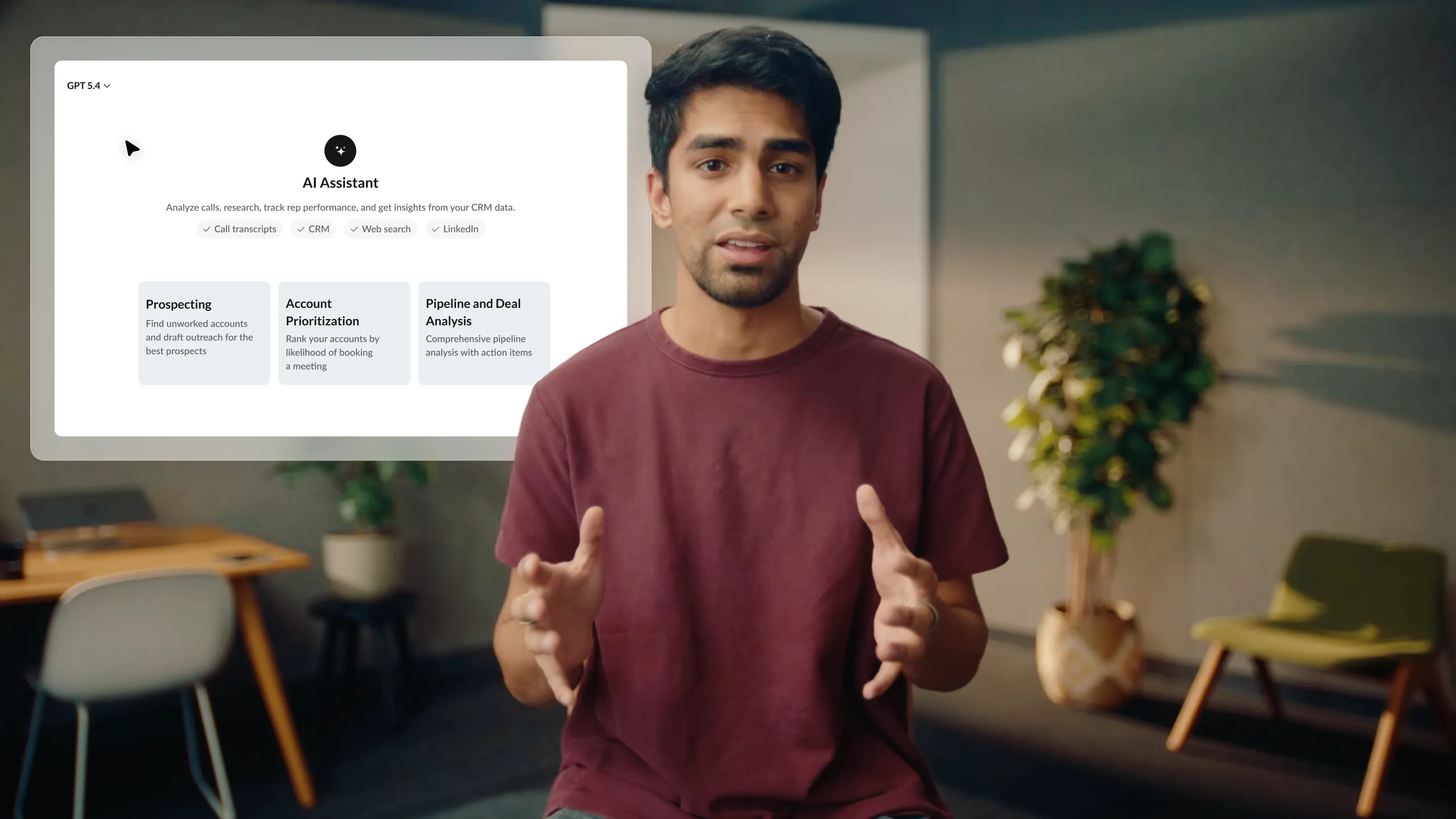
- AI Assistant generates account research, call scripts, and battlecards before each call, and updates after
- Virtual salesfloor for live call blitzes and real-time manager coaching
- CRM-first architecture: every call logs directly to Salesforce, no shadow database
Results: 5x more dials, 4x more conversations, 3x more meetings booked (customer aggregate). HubSpot saw a 95% increase in dials and a 50% increase in connect rate. Greenhouse saw 4x dials and 7x connect rate.
Where it's a stretch: coaching depth outside of live call-blitz sessions is narrower, and dialing is closer to the whole product rather than one piece of a broader outbound platform. Some users report occasional connect delays during high-volume sessions.
2. Orum: Best for Structured Call Blitzes
Orum focuses on high-volume parallel dialing with a virtual salesfloor built for team call-blitz sessions and live manager coaching during calls, drawing on a dataset of more than a billion recorded sales calls to help decide who to dial next.
G2 rating: 4.6/5 (1,096 reviews)
Where it's a stretch: a narrower, dialing-only product compared to a full outbound platform, and its small review base skews mixed, with reported friction around onboarding and support. Worth a closer look during a trial before committing budget.
3. Koncert: Best for Dialing-Mode Flexibility
Koncert offers both parallel and power dialing modes, giving teams a choice in how aggressively they dial through a list, plus an AI coaching layer that scores tone and talk-to-listen ratio in real time.
G2 rating: 4.6/5 (420 reviews)
Where it's a stretch: narrower than a full outbound platform; dialing and CRM logging are the focus rather than sequencing or coaching. Some users report inconsistent customer support responsiveness and occasional call-quality issues on longer calls.
4. CloudTalk: Best for Teams That Need Broader Call-Center Infrastructure
CloudTalk is a cloud call-center platform with dialer functionality built in, aimed at teams that need broader telephony infrastructure, not just sales-specific dialing.
G2 rating: 4.4/5 (1,850 reviews)
Where it's a stretch: built for call-center use cases generally, not purpose-built for outbound sales workflows the way a sales-specific dialer is. Some users report advanced features get expensive for smaller teams, plus occasional call connection issues.
5. JustCall: Best for High-Volume Outbound Throughput
JustCall positions its AI dialer around high-volume outbound calling, aimed at teams prioritizing call throughput, with built-in analytics for tracking rep-level call KPIs.
G2 rating: 4.3/5 (2,392 reviews)
Where it's a stretch: the AI layer is focused on call handling and volume rather than connecting dialing to the rest of the outbound motion (sequencing, coaching, CRM). Some users report call quality gets inconsistent on weaker internet connections.
6. PowerDialer.ai: Best for Teams Comparing Power vs. Parallel Dialing
PowerDialer.ai markets both power and parallel dialing modes under one product, useful for teams still deciding which approach fits their motion, a decision covered in more detail in our parallel dialer vs. power dialer comparison.
G2 rating: 2.2/5 (6 reviews)
Where it's a stretch: a narrower, dialing-only product compared to a full outbound platform, and its small review base skews mixed, with reported friction around onboarding and support. Worth a closer look during a trial before committing budget.
7. Talkdesk: Best for Enterprise Contact-Center Needs
Talkdesk is an enterprise contact-center platform, now positioned around broader customer experience automation, with dialer capability built for large organizations that need deep telephony and reporting infrastructure.
G2 rating: 4.4/5 (2,586 reviews)
Where it's a stretch: built around contact-center and CX use cases first, dialer functionality second, a heavier platform than most outbound sales teams need. Some users note occasional technical issues at scale.
8. Aircall: Best for Teams That Want One Phone System Across Sales and Support
Aircall is a cloud business-phone platform built around voice, SMS, and unified messaging across 250+ integrations, with dialer functionality as one part of a broader communications system rather than the primary product.
G2 rating: 4.4/5 (1,645 reviews)
Where it's a stretch: built for general business calling across sales and support, not purpose-built for outbound sales dialing the way a dedicated AI dialer is. Some users report call routing and connectivity issues at high volume (5,000+ calls per number per day).
9. Kixie: Best for Outbound Teams That Want Dialer-Specific Features Without a Full Platform
Kixie centers on a multi-line PowerDialer with AI human-voice detection, local presence dialing, and spam-risk mitigation, aimed specifically at outbound sales and BDR teams rather than general business calling.
G2 rating: 4.8/5 (866 reviews)
Where it's a stretch: narrower than a full outbound platform; dialing and CRM logging are the focus rather than sequencing or coaching. Some users report inconsistent customer support responsiveness and occasional call-quality issues on longer calls.
Does It Work With Your CRM?
An AI dialer is only as good as how cleanly it syncs with the system your team already lives in. Two integrations matter most for outbound teams: Salesforce and HubSpot.
Salesforce. The strongest AI dialers treat Salesforce as the source of truth: every call, note, and outcome logs there automatically, no manual entry, no separate database to reconcile later. Nooks writes call activity straight to Salesforce in real time, so reporting is accurate the moment a call ends.
HubSpot. The same principle applies for HubSpot-native teams: call details and outcomes should write directly to HubSpot's CRM fields, so reps can call, text, and follow up from one place instead of reconciling a second tool. HubSpot's own BDR team saw a 59% increase in live conversations after switching. That kind of CRM-first architecture is what separates a true AI dialer for sales teams from one with AI bolted on.
Need Scripts, Not Just a Dialer?
An AI dialer gets your reps into more conversations. What they say once connected still matters. If you're building or refreshing your team's talk tracks, see our cold calling scripts guide for openers built to survive the first ten seconds of a cold call.
Trends Shaping AI Dialers in 2026
Parallel dialing is now the default, not the upgrade. A few years ago, parallel dialing was a power-user setup. In 2026 it's the baseline expectation for any team running real outbound volume. Reps calling one number at a time are competing against teams already dialing six to ten lines simultaneously, and the math doesn't work in single-line dialing's favor anymore.
Spam and carrier flagging are the new differentiator, not voicemail drop. Voicemail drop stopped being a differentiator a few years back; every dialer worth evaluating has it now. What separates tools today is whether they actively manage caller ID reputation: rotating numbers, monitoring carrier flags, and re-registering before a number gets marked "Spam Likely" and connect rates quietly collapse.
Real-time coaching is moving from a nice-to-have to a retention tool. A manager reviewing a call a week later is coaching a version of the rep that no longer exists. Tools that surface battlecards and talk-track suggestions during the call, not just after it, close that gap and are becoming the expectation for teams serious about ramp time.
Signal-based dialing is replacing static call lists. The next step past faster dialing is smarter list management: using CRM activity, funding events, and job changes to decide who gets called next, not just working a CSV top to bottom. Nooks' own Signals & Intelligence engine is one example of this shift, automatically resurfacing high-fit prospects as new buying signals appear rather than waiting for a rep to notice.