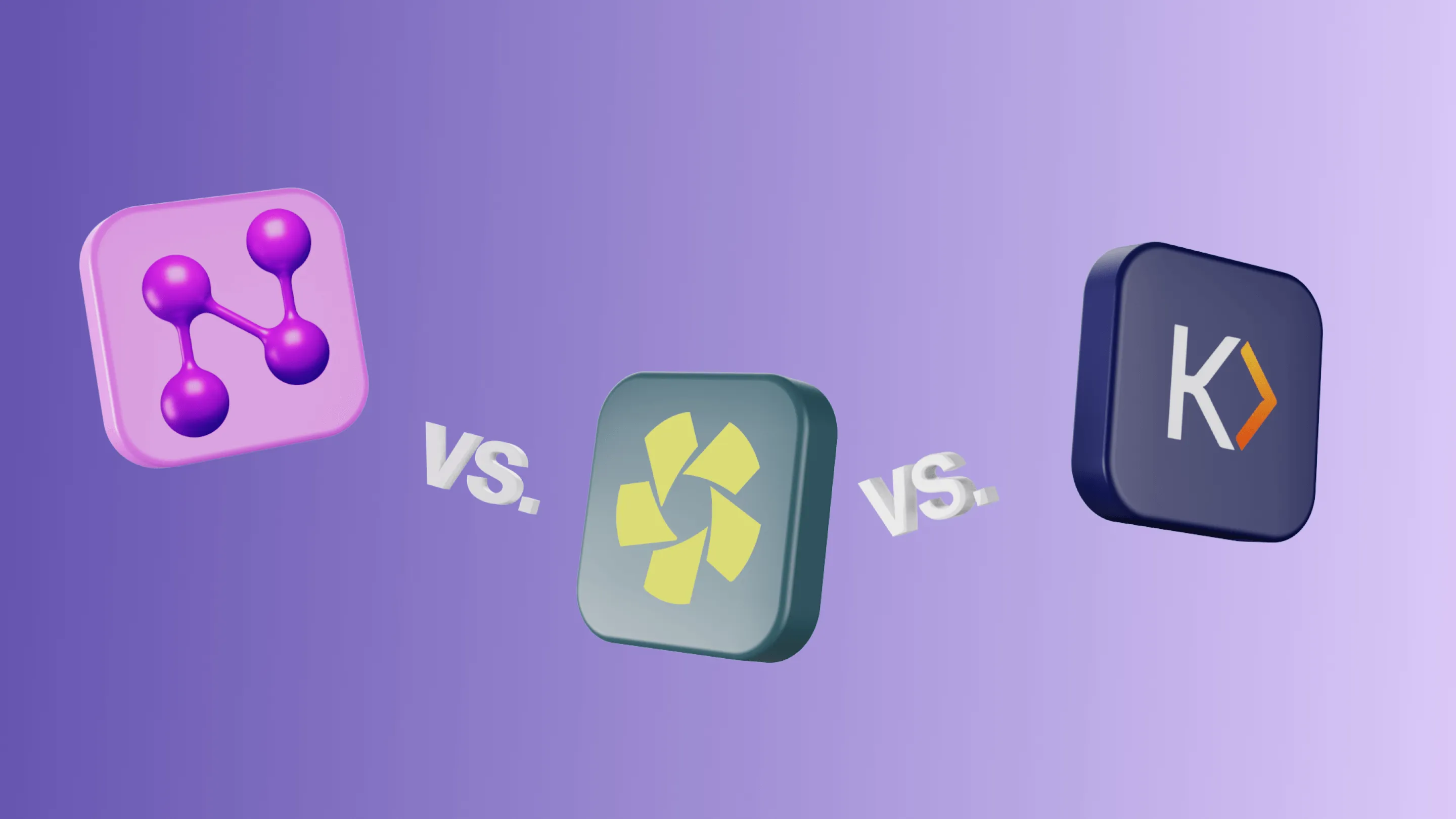
Nooks vs Orum vs Koncert: 2026 Outbound Dialer Software Comparison

Pipeline targets keep climbing, but your prospects are time-constrained and fewer reps have uninterrupted time to grind through call blocks. That's why teams invest in outbound dialer software that turns call attempts into more live conversations without adding headcount or admin work.
An outbound dialer is software that helps sales teams place calls faster and more consistently by automating parts of the dialing workflow. This comparison is for sales leaders, SDR managers, and RevOps teams evaluating Nooks, Orum, and Koncert for modern outbound.
For teams that want dialing to improve over time through tighter coordination with prospecting and coaching, Nooks stands out as the most complete option. Evaluating beyond just these two vendors? The best AI dialer comparison covers the wider field.
Key takeaways
- Outbound dialer software is no longer just about dialing faster. The best platforms improve connection quality and rep focus.
- An outbound dialer is most effective when it fits into the full outbound workflow, not when it operates as a standalone system.
- Nooks combines outbound dialing with built-in prospecting and coaching so insights from calls improve future outreach; Orum and Koncert are both dialer-first, with prospecting and coaching handled by separate tools.
- Orum focuses primarily on parallel and power dialing to help teams increase call volume quickly, and carries the highest review count of the three on G2 (4.6/5, 1,096 reviews).
- Koncert offers multiple dialing modes, including agent-assisted options, for teams that want flexibility by workflow (4.6/5, 420 reviews on G2).
- System design matters more than individual features when choosing outbound dialer software for long-term results.
Nooks vs Orum vs Koncert: Outbound Dialer Software Comparison
Nooks: The Best Overall Choice for Outbound Dialer Software
Nooks is tthe only platform in this comparison that brings prospecting, dialing, and coaching together in a single system. Rather than treating an outbound dialer as a standalone tool, Nooks connects these workflows so every call produces insights that improve who reps call next, how they prepare for conversations, and how managers coach performance. That creates a continuous loop where real outbound activity informs prioritization and coaching, and those improvements show up immediately in the next set of calls. Over time, the system gets more effective without adding tools or operational overhead.
Key strengths:
- Combines outbound dialing, prospecting, and coaching in a single system rather than separate tools
- Uses real call data to inform who reps call next and how they prepare for conversations
- Embeds coaching directly into outbound execution, grounded in actual calls
- Reduces rep busywork through automation while keeping context visible during call blocks
- Improves results over time as dialing outcomes feed back into prioritization and coaching
G2 rating: 4.8/5 (1,676 reviews)
Best for: Sales teams that want outbound dialer software that improves targeting, conversations, and performance with every call.
Orum
Orum is a dialer-first platform focused on helping sales teams increase call volume through parallel and power dialing.
Key differentiators:
- Parallel and power dialing optimized for speed
- Focused setup for high-volume call blocks
- Integrates with external prospecting and sales tools
G2 rating: 4.6/5 (1,096 reviews)
Best for: Teams that prioritize dialing speed and already have separate systems for prospecting and coaching.
Where it's a stretch: prospecting and coaching both live outside the platform, so teams get dialing speed without the feedback loop between call outcomes and who gets called next.
Koncert
Koncert is an outbound dialer platform that offers multiple dialing modes to support different sales workflows.
Key differentiators:
- Multiple dialing options, including AI parallel, flow, and agent-assisted modes
- Supports varied workflows across roles and teams
- CRM integrations for managing call activity
G2 rating: 4.6/5 (420 reviews)
Best for: Teams that want flexibility across dialing styles and are comfortable managing workflows across tools.
Where it's a stretch: switching between multiple dialing modes can introduce variation in rep experience, and coaching isn't tightly connected to prospecting or dialing decisions.
What a Modern Outbound Dialer Needs to Do in 2026
Modern sales teams need more than faster dialing. The most effective outbound dialer software supports the entire outbound motion and improves results as conditions change.
- Support both power and parallel dialing without forcing teams to choose speed over conversation quality
- Optimize for live conversations by reducing bridge time, improving answer detection, and protecting number health
- Help reps decide who to call by surfacing prioritization signals and prospect context before a call
- Keep reps in one platform so call blocks, follow-up, and context aren't fragmented across tools
- Use real call data to inform coaching, messaging, and practice rather than relying on theory
- Improve performance over time by allowing insights from calls to influence future dialing and prospecting decisions
Outbound Dialer Feature-by-Feature Breakdown
Dialing Experience and Modes
Dialing experience shapes how much time reps actually spend talking to prospects versus managing call mechanics.
Nooks supports both power and parallel dialing, with calls launching with prospect context already available and manual tasks like logging and dispositioning automated. Because dialing lives in the same platform as prospecting and coaching, reps move through call blocks with less friction.
Orum centers its experience on parallel and power dialing to help reps place more calls per hour, with context and preparation handled in external tools. For the full mechanics of what a parallel dialer is, including how it differs from power and predictive dialing, see the dedicated guide. Koncert offers several dialing modes, including AI parallel, flow dialing, and agent-assisted options, giving teams flexibility to match different roles, though switching modes can introduce variation in rep experience. See the direct parallel dialer vs. power dialer breakdown for how the two modes compare on connect rate and call quality.
Speed to Live Conversations
The true measure of an outbound dialer is how quickly reps reach real people and stay in productive conversations.
Nooks minimizes the gap between dialing and conversation through answer detection, reduced bridge time, and number health management, with dialing strategies adjusting based on what actually results in conversations. Orum emphasizes speed through parallel dialing; connection quality and follow-up depend heavily on how teams configure supporting tools outside the dialer. Koncert balances speed with flexibility across its dialing modes, with live connection rates varying by which mode a team uses.
Spam Risk and Number Health
As carriers and spam filters become more aggressive, dialing speed alone can create long-term deliverability problems if number reputation isn't actively managed.
Nooks treats spam risk as part of the outbound system: dialing behavior, connection outcomes, and number performance are monitored together, so teams can adjust before deliverability drops. Other high-volume dialing platforms offer number rotation or multiple dialing modes, but managing number health often depends on manual configuration and ongoing operational discipline. See why iOS call screening won't kill parallel dialing for how this plays out against carrier-side changes specifically.
Prospecting and Prioritization
Calling faster doesn't help if reps are calling the wrong people.
Nooks treats prospecting as decision support: third-party signals and previous call insights inform which accounts and contacts are most likely to engage, with relevant context surfaced before the call starts. Orum relies on external prospecting and list-building tools; the dialer executes efficiently, but prioritization logic lives outside the platform. Koncert follows a list-driven prospecting model, with prioritization typically set before leads enter the dialer and adjustments requiring manual updates.
Coaching and Performance Improvement
Dialing more only creates leverage if reps get better at what they say on live calls.
Nooks embeds coaching directly into the outbound workflow: real calls power call scoring and role-play practice, so managers can coach specific behaviors tied to outcomes like openers and objections, with insights flowing back into prospecting and dialing. Orum offers call recordings and activity data managers can review manually. Koncert supports call recording and basic coaching workflows, though coaching isn't tightly connected to prospecting or dialing decisions.
Reporting and Manager Visibility
Managers need timely visibility into what's happening on the phones so they can adjust during the week, not after the quarter ends.
Nooks gives managers real-time visibility through a live sales floor and call-level insights tied directly to dialing, prospecting, and coaching. Orum provides activity reporting focused on call volume and connection metrics, with broader performance insights typically pulled from external systems. Koncert offers reporting across its dialing modes, with deeper performance analysis often requiring data from other tools.
Integrations and Scalability
Outbound tools need to fit cleanly into an existing sales stack and keep working as teams grow.
Nooks is CRM-first: Salesforce is the source of truth, with no shadow database and no sync delay, so teams can scale headcount without adding layers of tools. Orum integrates with common CRMs and sales engagement platforms; as teams grow, additional tools are typically required for prospecting, coaching, and performance management. Koncert integrates with CRM systems and supports scaling across dialing modes, though managing consistency depends on how well integrations and processes are maintained. See how the AI Dialer product page details the full Salesforce and HubSpot integration.
Methodology: How We Selected the Top Outbound Dialer Software
To compare outbound dialer platforms fairly, the evaluation focused on how well each product supports consistent outbound performance over time, not just short-term activity gains.
- Execution alignment: the dialer must fit naturally into daily rep workflows so call blocks stay focused on conversations instead of tool management.
- Coaching depth: effective platforms use real outbound calls to improve messaging and behavior, rather than relying on generic training or isolated call reviews.
- Feedback loops: the strongest systems allow insights from live calls to influence future dialing, prioritization, and preparation without manual intervention.
- Manager visibility: leaders need clear, timely insight into what's happening on the phones so they can coach and adjust during active selling periods.
- Scalability: the platform should support growth in team size and activity without adding operational complexity or fragmenting workflows.
- Time to value: teams should see improvements in conversations and efficiency quickly, without long implementation cycles.
Vendor names, review counts, and star ratings reflect current G2 listings as of August 2026.
How to Choose the Right Outbound Dialer
Choosing an outbound dialer affects more than call volume. It shapes how reps spend their time, how managers coach, and how quickly teams can adapt when results change.
Look beyond dialing speed. High call volume is easy to measure, but it isn't a reliable indicator of success. Pay attention to how quickly reps reach real conversations and whether the system reduces wasted attempts.
Evaluate how the dialer fits into daily workflows. Reps perform better when they can stay in one platform during call blocks. Frequent switching between prospecting tools, dialers, and coaching systems creates friction and shortens effective selling time.
Prioritize systems that improve decision-making. An outbound dialer should help reps decide who to call and how to approach each conversation. Platforms that surface context and prioritization signals before a call reduce guesswork.
Consider how coaching actually happens. Coaching works best when it's grounded in real calls and close to execution. Look for tools that make it easy to identify patterns and adjust messaging quickly, since delayed or disconnected coaching slows improvement.
Think about long-term scalability. As teams grow, fragmented tools create reporting gaps and operational overhead. A dialer that supports consistent visibility and coaching across reps and managers makes it easier to scale without reworking processes every quarter.
Real-World Proof: Nooks Customer Results
Brian DeRosa, VP Global Business Development at HubSpot, reported 95% more dials and a 50% higher connect rate after switching to Nooks. Mariah Donnelly, Senior Director of Sales Development at Greenhouse, reported a 933% cold-call pipeline increase and a 550% cold-call revenue increase. Orum and Koncert don't publish a directly comparable outbound-specific case study on their own G2 or product pages. For a deeper vendor-by-vendor breakdown, see the full Nooks outbound dialer software review.
Final Thought: Nooks Is the Most Complete Outbound Dialer Software for Sales Teams in 2026
Outbound dialing plays a critical role in pipeline generation, but the platform behind it matters more than raw call volume. The best outbound dialer software helps teams reach the right people, support better conversations, and adapt based on what actually happens on live calls.
For teams thinking long term, Nooks offers a more complete approach by treating dialing as part of an integrated outbound system. By connecting prospecting, dialing, and coaching in one platform, Nooks improves continuously without adding complexity.
Request a demo to see how Nooks compares on your own call data, or check pricing.