Parallel Dialer vs. Power Dialer: What’s the best choice?


Key Takeaways
- Power dialers automate calling but keep the same linear math: one rep, one line, one call at a time. Parallel dialers change the model entirely by dialing multiple numbers simultaneously and only connecting reps when a live person answers.
- The result is 2-5x more live conversations per hour without sacrificing call quality or compliance.
- Parallel dialing becomes a force multiplier when paired with AI prospecting and coaching. Reps spend time talking to high-intent prospects, get real-time guidance on calls, and improve faster than post-call review alone.
- Power dialers still have their place for focused follow-up, strategic outreach, or smaller teams with lower volume. For high-velocity teams chasing pipeline at scale, parallel dialing wins.
The Future of AI-Powered Dialing
Sales teams are always looking for ways to increase efficiency without sacrificing the quality of conversations with prospects. The right dialing technology can make all the difference, yet many sales leaders are still relying on manual dialing or outdated auto dialer software that slows down outreach.The
With parallel dialers, sales reps can maximize their talk time, reduce idle time, and connect with more potential clients faster. Companies leveraging AI-powered dialing solutions are seeing dramatic improvements in sales performance, outbound call efficiency, and return on investment (ROI).
But what exactly is parallel dialing, and how does it compare to other dialing solutions like power dialers, auto dialers, and AI-driven dialers? In this guide, we’ll break down everything you need to know to optimize your sales strategy with modern parallel dialing technology.
What Is Power Dialing?
Power dialing is an automated dialing method that calls one prospect at a time from a preloaded list and automatically dials the next number as soon as the previous call ends. Unlike traditional manual dialing, which requires reps to physically enter each number, power dialers eliminate downtime by ensuring a continuous flow of calls. This method is best suited for sales teams that prioritize personalized, one-on-one conversations over sheer call volume. While power dialing increases efficiency compared to manual dialing, it still requires reps to wait for each call to connect—making it less effective than parallel dialing for high-volume outreach. We'll start by introducing parallel and power dialing, and then jump into our comparison.
What Is Parallel Dialing?
Parallel dialing is a multi-line dialing technique that enables sales reps to call multiple prospects at once. Instead of waiting for busy signals, voicemails, or unanswered calls, the system automatically connects the rep to the first live answer while dropping all other lines.
This eliminates wasted time between calls and allows reps to have real conversations instead of waiting through busy lines and disconnected numbers. Unlike traditional auto dialer records, where reps are left to deal with calls to voicemails or non-responsive numbers, parallel dialers increase contact rates significantly.
Key Benefits of Parallel Dialing:
- Reach live prospects 5x faster than manual dialing.
- Bypass unanswered calls, busy signals, and voicemails automatically.
- Improve sales team efficiency by keeping reps engaged in active conversations.
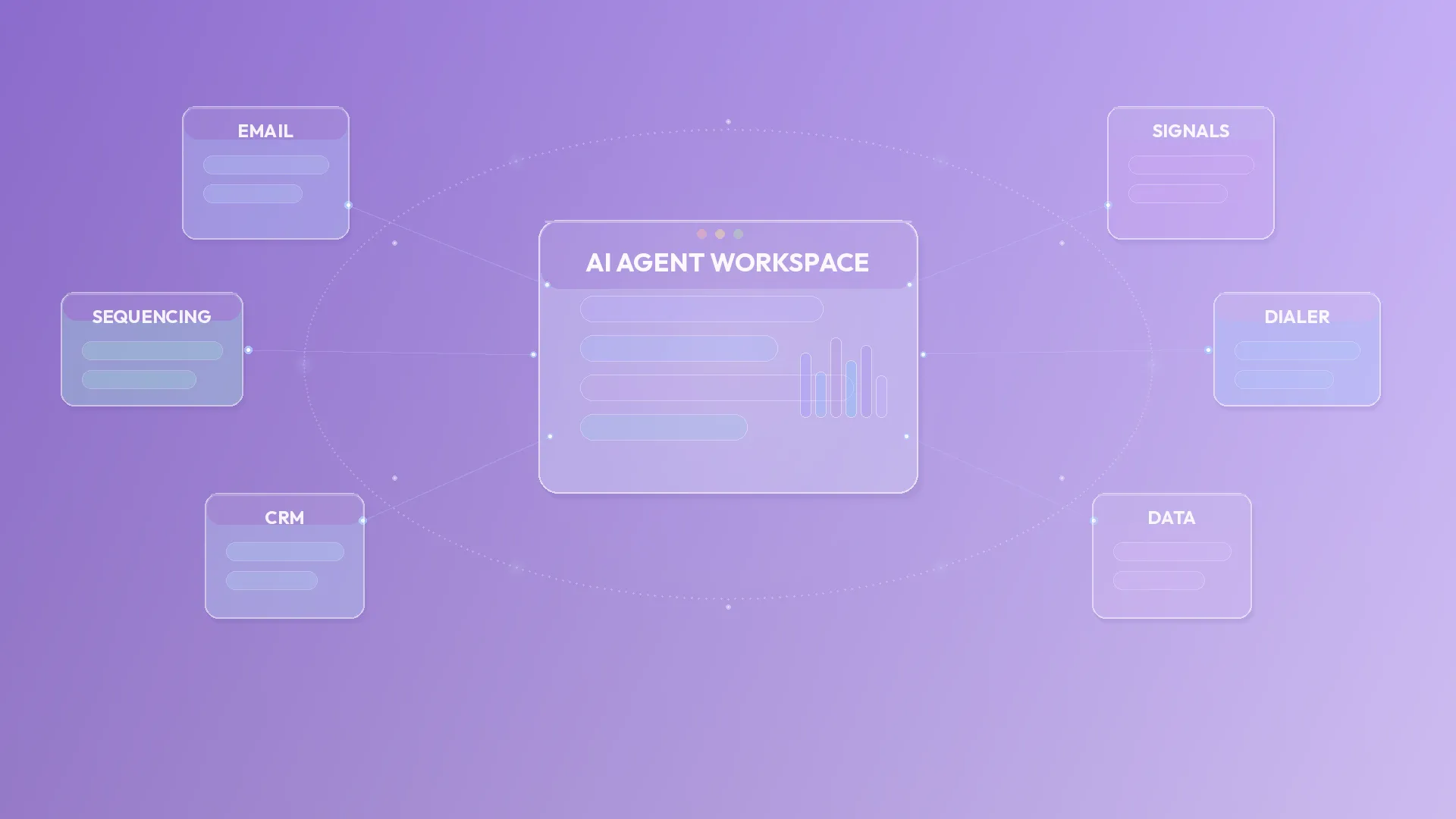
- Enhance sales process workflows by integrating directly into B2B sales teams' tech stacks.
How Does Parallel Dialing Work?
A parallel dialer is designed to streamline outbound calls and reduce downtime between dials. Here’s how it operates:
- The dialer selects multiple numbers from the prospect list and calls them simultaneously.
- AI-powered answering machine detection determines whether a live person picks up or if it’s a voicemail.
- If a prospect answers, the dialer instantly connects them to the rep, while other lines drop.
- If no one answers, the dialer automatically moves on to the next batch of numbers, ensuring continuous dialing sessions.
Using advanced AI-driven analytics, these systems optimize the calling process by analyzing average pick-up rates, connection rates, and campaign performance, helping reps fine-tune their sales strategies.
Parallel Dialing vs. Power Dialing: What’s the Difference?
Both parallel dialing and power dialing aim to increase the efficiency of outbound sales calls, but they work in different ways.
Parallel dialing calls multiple prospects at the same time, ensuring faster connections and more conversations per hour. This is best for high-volume outreach teams looking to maximize efficiency and reach more potential clients quickly.
Power dialing, on the other hand, calls one prospect at a time but automatically dials the next number as soon as a call ends. This is ideal for strategic sales teams that prioritize personalized conversations over speed.
For B2B sales teams conducting high-volume outreach, parallel dialing is the best option to maximize connection rates and conversations per hour.
How the Top Parallel Dialers Compare
Maximizing Both Conversation Rate and Quality with Nooks' AI-Powered Dialing
Nooks combines the best of power and parallel dialing to help sales teams maximize both conversation rates and conversation quality. By using parallel dialing, reps can connect with more live prospects faster, while power dialing ensures focused, one-on-one conversations when personalization is key. But Nooks goes beyond just dialing—its suite of AI-powered tools enhances every interaction.
Battle cards provide real-time guidance to handle objections effectively, smart lists prioritize high-intent leads for better targeting, and waterfall enrichment ensures reps always have the most up-to-date contact information. This combination of speed, precision, and intelligence helps sales teams increase efficiency without sacrificing the quality of their conversations, leading to better engagement, higher conversion rates, and more closed deals.
Key Features of AI-Powered Dialing Platforms
When evaluating parallel dialing software, sales leaders should look for advanced features that enhance team performance and efficiency.
- AI-Powered Answering Machine Detection: Reduces time on voicemails by identifying live conversations faster.
- Dialer Dashboard & Analytics Tools: Track campaign performance, call quality, and sales engagement in real time.
- CRM & Native Integrations: Seamless integration with Salesforce, HubSpot, Outreach, and other sales automation platforms.
- Multi-line Power Dialer Configurations: Adjust dialing speeds to match sales team bandwidth and agent efficiency.
- AI-Generated Call Notes: Automated post-call summaries and insights help reps focus on selling instead of manual tasks.
How Parallel Dialing Increases Pipeline Growth
Adopting AI-driven dialers significantly enhances sales pipeline growth by:
- Eliminating wasted time on unanswered calls and busy signals.
- Increasing live conversations per hour, leading to more meetings booked.
- Boosting contact rates by automatically prioritizing hot leads and prospects most likely to pick up.
- Enhancing the buyer-seller experience by making outreach more efficient and data-driven.
For example, teams using parallel dialing software report 2-3x more prospects reached per call block, significantly impacting revenue growth and pipeline acceleration.
How Nooks Enhances Parallel Dialing
Nooks’ AI-powered dialing platform is built for fast-paced sales environments, helping outbound teams reach more prospects in less time.
Key Features of Nooks’ Parallel Dialer:
- AI-powered spam detection to increase connection rates.
- Smart lists & hot numbers to target high-intent leads.
- Real-time analytics to optimize calling performance.
- Automated compliance management to ensure regulatory standards are met.
With Nooks, sales teams bypass ghosting prospects, reduce admin time, and focus on closing deals instead of navigating outdated dialing technology.
Conclusion: The Future of AI-Powered Dialing
Parallel dialing is revolutionizing outbound sales, allowing teams to reach more prospects efficiently while maintaining high-quality conversations.
For sales teams looking to maximize conversations per hour, increase conversion rates, and enhance customer experience, AI-powered dialing is the future.
Want to see how Nooks can transform your outbound sales?
[Book a demo today!] 🚀