
What is a Parallel Dialer? (and How Nooks Redefined the Standard)

A parallel dialer is technology that calls multiple phone numbers simultaneously and connects the rep to the first prospect who picks up, eliminating the idle time of sequential dialing and increasing live conversations per hour.
Key Takeaways
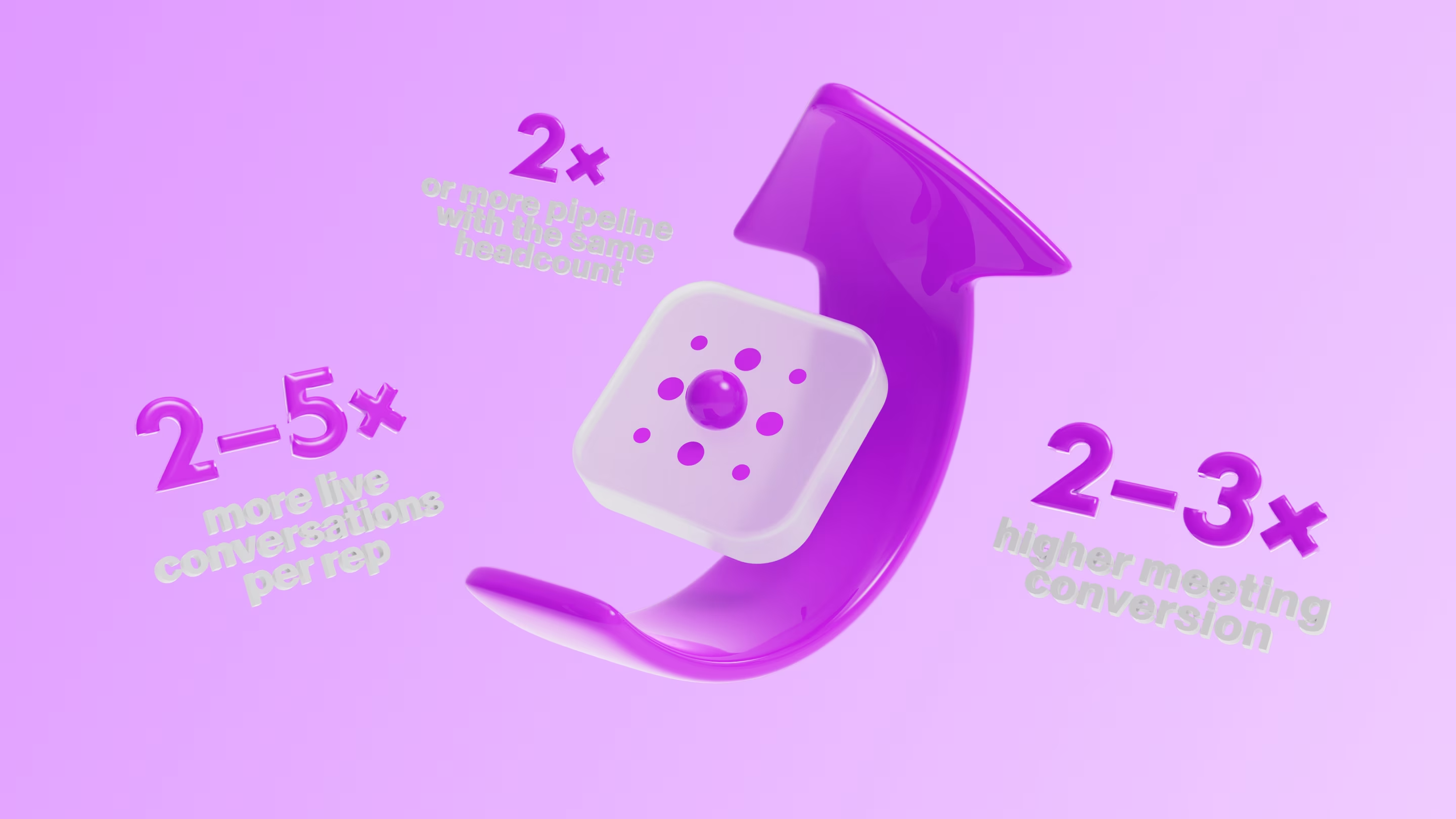
- A parallel dialer calls several numbers at once and connects you to the first live answer, giving SDRs 2-5x more conversations per hour than manual or power dialing.
- The metric that matters is live conversation rate (how many quality connects a rep has in a day), not raw dial counts.
- Modern parallel dialers combine live answer detection, number reputation management, direct CRM updates, and signal-based call prioritization in one system.
- Done right, parallel dialing doesn't trade call quality for volume: number rotation and reputation monitoring are what keep connect rates high instead of triggering spam flags.
- Brian DeRosa, VP Global Business Development at HubSpot, reported 95% more dials and a 50% higher connect rate after switching to Nooks.
The Problem with Old-School Dialing
Sequential dialing wastes the majority of an SDR's day on hold time, voicemail, and manual logging. That idle time between conversations is the core problem parallel dialing was designed to solve.
The classic outbound workflow looks like this: rep dials one number, waits, hits voicemail, logs the attempt, moves to the next. After an hour, they've maybe had one real conversation. Teams work hard but pipeline doesn't keep pace.
The bottleneck is mechanics: the dialers themselves can't deliver more conversations per hour, regardless of how hard reps work.
Early parallel dialers tried to solve this with sheer volume. But dialing faster without dialing smarter just means more voicemails, more spam flags, and more reps burning through contact lists that don't produce conversations. The metric that matters is live conversation rate: how many quality connects each rep has in a day. That's what leads to meetings, learning, and revenue.
How a Parallel Dialer Works
A parallel dialer calls several numbers at once and connects the rep to the first live answer. Instead of waiting on a single ring cycle, the system handles idle time so reps can focus on talking with prospects.
Modern parallel dialers also:
- Filter out voicemails and busy signals before connecting the rep
- Rotate numbers to protect domain reputation and spam scores
- Use local presence so calls appear familiar to the person receiving them
- Update Salesforce or HubSpot directly with every call outcome, no manual logging
The dialer's job is giving reps more chances to have real conversations that move deals forward.
The Evolution of Dialing
Dialing technology has gone through four distinct phases, each solving a different bottleneck.
Manual dialing meant one number at a time, pen-and-paper notes, and hours of admin for a handful of conversations. Power dialers automated the single line, cutting dead time between calls. Predictive dialers tried to anticipate when reps would be free and dialed ahead, but often connected late and left prospects with an awkward pause before anyone spoke.
Parallel dialing fixed that. By calling multiple numbers at once and connecting instantly to the first live answer, reps multiplied conversations per hour without losing call quality.
Now comes the AI era. Today's systems learn who's most likely to pick up, route the next best contact automatically, and feed call data into coaching platforms in real time. The shift is building strategic momentum: signal-driven prioritization gets reps talking to the right prospects, and continuous coaching means every call makes the next one better.
Parallel Dialer vs. Power Dialer vs. Predictive Dialer
Three terms that come up together, each describing a different approach:
Power dialer: Calls one number at a time in sequence and moves automatically when a call ends or goes to voicemail. More efficient than manual dialing, but still limited to one call at a time.
Predictive dialer: Uses algorithms to dial before a rep is free, which often results in the awkward pause when a prospect answers before the rep is ready. Common in high-volume call centers; not well suited to B2B outbound where call quality matters.
Parallel dialer: Calls multiple numbers simultaneously and connects the rep to the first live answer. No predictive algorithms, no awkward pauses, no hold-time waste.
For a deeper breakdown of when each approach makes sense, see the full power dialer vs. parallel dialer comparison covering connect rates, call quality, and which model fits high-velocity B2B outbound.
Does Parallel Dialing Hurt Call Quality or Trigger Spam Flags?
No, not when the dialer manages number reputation actively. This is the most common concern teams raise before adopting parallel dialing, and it's a fair one: dialing more numbers faster sounds like it should mean more spam flags and worse conversations.
The risk is real with dialers that don't manage it. Calling many numbers from the same line in a short window is exactly the pattern carriers flag as robocalling. Without active number rotation and reputation monitoring, a high-volume dialer can get caller IDs marked "Spam Likely" within days, which tanks connect rates regardless of how many lines the system runs.
What actually protects call quality and number reputation:
- Live-answer detection. The rep only gets connected once a human is on the line, so the parallel calling happens silently in the background instead of creating dead air or robotic-sounding pickups.
- Automatic number rotation. Spreading calls across a pool of numbers, rather than hammering the same line, keeps any single number's call volume inside normal human-dialing patterns.
- Carrier reputation monitoring. Watching for spam-flag signals from carriers and retiring or re-registering numbers before reputation degrades, rather than after connect rates already dropped.
- Local presence. Matching area codes to the region being called increases pickup likelihood on its own, independent of spam-flag risk.
Nooks manages all four automatically. Teams don't choose between volume and quality: the system is built so scaling call volume doesn't scale spam risk alongside it.
What Makes a Great Parallel Dialer
When you evaluate dialers, look for these seven capabilities.
High connect rate. Measure success by conversations per hour, not dials per hour. A dialer that increases dials but not connects is moving the bottleneck, not removing it.
Local presence and number reputation. Clean numbers and regional IDs keep connect rates high. Without automated number rotation and spam monitoring, high-volume dialing degrades deliverability over time.
CRM and workflow integration. Every call outcome should log automatically so reps stay in flow. Manual logging after every call is time lost on the next one.
Built-in compliance. Guardrails for DNC lists, time-zone enforcement, and call pacing keep your program safe in the U.S., Canada, and EMEA without manual oversight.
Real-time coaching and analytics. Live dashboards and call recordings help teams improve faster. The best platforms surface coaching moments during the call, not days after.
Signal-based call prioritization. Using buying signals like website visits, intent data, past call history, and LinkedIn activity to identify who to call next increases connect-to-meeting conversion, not just raw connects.
Support for quality conversations. Talk tracks, live battlecards, and prospect context available mid-call help reps have personalized conversations rather than generic pitches.
What's the Best Parallel Dialer Setup for Small Teams vs. Growing SDR Orgs?
The right setup depends more on team size and process maturity than on company size alone.
A team of 2-5 reps usually gets more value from getting the fundamentals right than from advanced signal prioritization: clean lists, reliable number rotation, and a CRM that updates itself without manual entry. At this scale, the biggest lever is just making sure every rep-hour goes toward live conversations instead of admin work, since there's no bench of reps to absorb the loss if one person's pipeline stalls.
A team of roughly 10-20 reps, a common SDR org size, is where signal-based prioritization starts to matter more than raw dialing capacity. With a 15-rep team, the constraint usually isn't getting enough dials in, it's making sure those dials go to the right prospects first. Teams at this size benefit from a dialer that connects to CRM activity and intent signals so reps aren't working a static list top to bottom, and from real-time coaching, since a manager can no longer listen to every call personally at this headcount.
Larger, multi-region SDR organizations add compliance and reputation management as first-order requirements, not nice-to-haves: DNC enforcement, time-zone-aware calling windows, and number reputation monitoring at a scale where a handful of bad numbers can affect connect rates across the whole team.
Across all three, the vendor count matters as much as the team count. A parallel dialer that requires separate sequencing, prospecting, and coaching platforms adds coordination overhead that a small team feels immediately and a large team feels in fragmented reporting. See our full breakdown of building an SDR tech stack without vendor sprawl for how to think about consolidation at any team size.
How Parallel Dialing Powers Modern Prospecting
The modern prospecting workflow depends on speed and timing. Parallel dialing gives SDRs more at-bats, but the real edge comes from knowing who to call and when.
Nooks connects its dialer with AI Prospecting and real-time signal data: website visits, past call history, LinkedIn insights, and third-party intent signals. Reps can prioritize the highest-intent buyers and turn cold lists into warm conversations without switching platforms.
That's what separates a parallel dialer embedded in a unified platform from a standalone dialing app: the signals that should inform every call are available in the same interface where the call happens.
Why Coaching and AI Signals Multiply Results
Every conversation generates learning. Nooks AI Coaching analyzes live calls, identifies patterns, and surfaces coaching moments while the rep is still talking. Managers see which openers create engagement, which objections stall deals, and which talk tracks consistently convert to meetings.
Instead of reviewing calls days later, teams improve in real time. That feedback loop creates compounding gains: more connects, better calls, immediate coaching, week over week.
The Metrics That Matter
The right data keeps reps focused on outcomes, not activity. Top teams track these weekly and coach around the trends:
- Connect rate: live answers divided by dials placed
- Conversation-to-meeting rate: quality connects that book a next step
- Pipeline per rep: revenue attributed to each SDR's dialing activity
- Ramp time: how quickly new reps reach full conversation volume
Real-World Proof: Customer Results with Nooks
- Greenhouse: 933% pipeline growth and 550% revenue increase. Mariah Donnelly, Senior Director of Sales Development at Greenhouse, attributes the results to dramatically higher connect volume and faster rep ramp with Nooks.
- HubSpot: Brian DeRosa, VP Global Business Development, reported 95% more dials and a 50% higher connect rate.
- Modern Health: 5x increase in dials and a 50% lift in meetings booked.
- Seismic: 40% reduction in ramp time and triple the meetings booked per rep.
- Oyster: 9x more connects and 10x more conversations per rep.
These gains come from more live conversations powered by signal intelligence and real-time coaching, not just higher dial counts.
How to Evaluate a Parallel Dialer for Your Team
When picking a platform, sales leaders should weigh:
Conversation volume. How many live connects per rep per day does the platform actually deliver? Ask vendors for customer benchmarks, not theoretical maximums.
Integration depth. Does it write directly to Salesforce, HubSpot, and your existing GTM stack, or does it require manual export? Shallow integrations mean manual logging or data silos.
Coaching capabilities. Can managers review or guide calls live? Does the platform surface coaching moments automatically, or does it only store recordings for later review?
Number management. Are spam scores and local presence managed automatically? Manual number hygiene at scale is operationally expensive.
Signal intelligence. Does the system help prioritize who to call first based on buying intent, or does it dial through static lists in sequence?
Unified vs. standalone. Is the dialer a standalone system that requires integration with your SEP, data provider, and coaching platform? Or is it part of a unified platform where those data sources are already connected?
Ease of use. Can a new rep start calling within minutes? Adoption problems often trace back to onboarding friction, not capability gaps.
The best dialer fits naturally into your workflow and makes your existing team more productive.
Global and Compliance Perspective
Nooks manages local presence, time-zone enforcement, and DNC compliance automatically for teams in the U.S., Canada, and EMEA. Every call appears familiar to the person receiving it because Nooks matches area codes to the prospect's region automatically. Numbers rotate intelligently so reputation stays healthy even under heavy call volume. Outbound leaders use Nooks to scale safely across geographies without risking brand trust.
The Short Version
A parallel dialer calls multiple numbers at once and connects reps only to live answers, turning idle dialing time into more real conversations. The concern that volume trades off against call quality or number reputation is fair, but a solved problem for platforms that manage it actively rather than as an afterthought. The right setup scales with team size, from getting fundamentals right at 2-5 reps to signal-based prioritization at 10-20, to compliance-first management at larger, multi-region scale. Nooks brings parallel dialing, prospecting intelligence, AI coaching, and sequencing together in one platform.
If your team is evaluating how to get more live conversations without adding headcount, Request a demo to see how the platform performs for teams like yours.